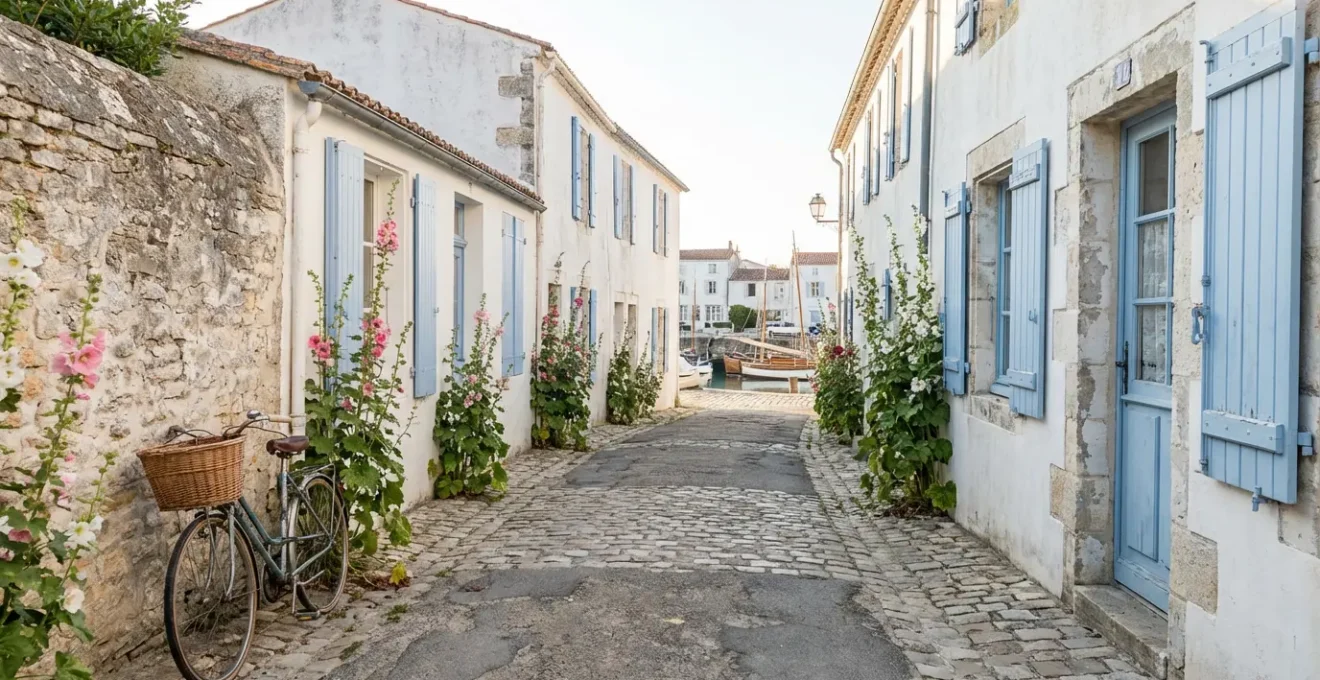
The bicycle bells reach you first. Then the salt air, carrying notes of oysters and wild fennel from the marshes. You cross a 2.9-kilometre bridge from La Rochelle, and somewhere between the mainland and this slender island, your shoulders drop. I have watched this transformation happen to guests countless times. The Île de Ré does something to people. It slows them down, whether they planned for it or not.
Île de Ré rental essentials in 30 seconds
- The island offers a rare blend of luxury and authenticity on France’s Atlantic coast
- Quality villa agencies provide hotel-style services in private settings
- Concierge access unlocks experiences unavailable through standard booking platforms
- Peak season runs July-August—advance planning is essential
The island that runs on its own clock
What I have observed time and again: guests arrive with packed itineraries. Museums to visit. Restaurants booked for every evening. Day trips planned to the mainland. By day three, those itineraries sit forgotten on kitchen counters. The island has its own agenda.
According to official cycling path data, Île de Ré offers 110 kilometres of dedicated routes weaving through salt marshes, pine forests, and nature reserves. That sounds like a statistic. On the ground, the reality is different. You wake up, grab a bicycle, and suddenly three hours have vanished. You stopped at an oyster cabin. You watched herons in the marshes. A stranger pointed you toward a beach with no name on any map.
The fortifications of Saint-Martin-de-Ré were inscribed as a UNESCO World Heritage site in 2008. Fourteen kilometres of ramparts designed by Vauban himself. But here is the thing: you do not visit them as a tourist. You walk their length at sunset with a glass of local wine. You sit on centuries-old stone and watch fishing boats return. History becomes backdrop, not destination.
I remember coordinating a stay for James and Catherine, a British couple celebrating their anniversary. They arrived with restaurant reservations for ten consecutive evenings. By night four, they had cancelled half of them. A private chef now cooked in their villa three times that week. They spent evenings on their terrace watching the sun sink behind the lighthouse at Phare des Baleines. Less planning. More living.
-
Arrival stress—finding the property, unpacking, adjusting -
Discovering the rhythm—markets, cycling, first beach discoveries -
Complete immersion—reluctance to leave, plans to return
What transforms a villa into a genuine holiday
There is renting a property. Then there is renting an experience. The mistake I see most often? Guests booking based solely on photographs. The villa looks stunning online—infinity pool, sea views, designer furniture. They arrive to find no one has stocked the fridge, the nearest market is twenty minutes away, and they spend their first precious hours hunting for basics.
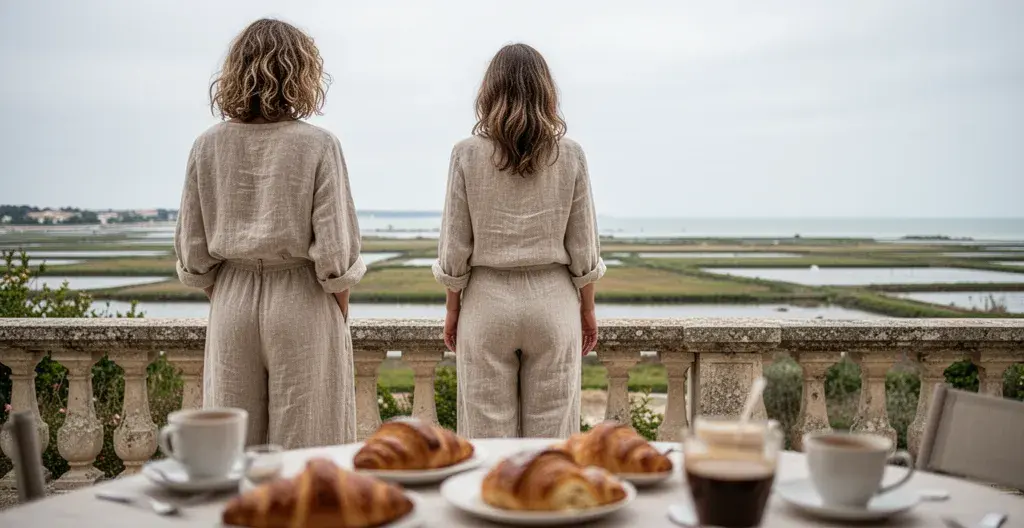
Agencies like www.travelparadise.fr operate on a different model. Each property is personally inspected. Arrival means finding fresh produce waiting, local wine chilling, and someone available to answer questions about where to eat, which beaches suit children, how to avoid tourist traps. It sounds simple. Frankly, it changes everything.
Curated villa with services
-
Welcome provisions and local orientation on arrival
-
Concierge handles restaurant bookings and activities
-
Rapid problem resolution without language barriers
-
Access to insider experiences and local producers
Standard platform booking
-
Self-navigation on arrival, no local guidance
-
Managing bookings yourself in French systems
-
Limited recourse if property disappoints
-
Tourist-facing recommendations only
I always suggest guests allow at least one week. Here is why: shorter stays never quite shake off the logistics. You spend day one settling in, the final day packing. Five days in between barely scratches what the island offers. A week lets you find your beach, your favourite market stall, your evening walk route. You stop being a visitor.
Experiences you cannot book on a standard travel site
According to Lonely Planet‘s travel guide, visitor numbers reach millions in summer, with the vast majority arriving in July and August. Yet the island rarely feels overrun. The secret lies in knowing where to go—and when. This is where concierge services earn their value.
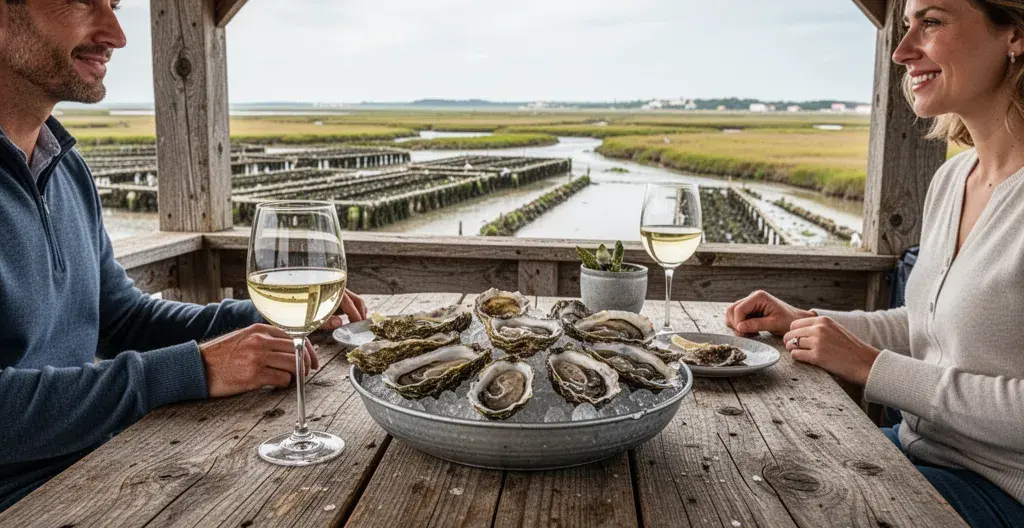
What quality concierge services actually arrange: Private oyster tastings with producers who do not advertise publicly. Bicycle routes avoiding summer crowds. Restaurant tables at places that never appear on TripAdvisor. Boat trips to sandbanks that emerge only at low tide. Private chef evenings featuring produce bought that morning from the market.
Understanding the pitfalls matters too. Many guests learn the hard way about luxury villa rental scams and properties that look nothing like their photographs. Quality agencies eliminate this risk through personal inspection.
The Henderson family transformation
I coordinated a villa stay for the Henderson family from Surrey during August. Their teenagers, 14 and 16, had made their objections clear: a small French island sounded boring. No nightlife. Nothing to do. The first day confirmed their fears—it rained. By day three, everything had shifted. The daughter discovered sailing lessons through the concierge. The son spent hours cycling to remote beaches with a snorkelling kit arranged by the villa team. When departure came, the teenagers asked their parents: can we book again for next summer?
The island works its magic on everyone. Sometimes it just needs a day or two.
Your questions about renting on Île de Ré
Is Île de Ré worth the premium over other French coastal destinations?
Soyons clairs: the island charges more than generic beach resorts. What you receive in return is atmosphere impossible to replicate elsewhere. The car-free village centres, the cycling culture, the tidal rhythms that structure each day—these create something beyond a beach holiday. If you want loungers by a pool and all-inclusive buffets, look elsewhere. If you want to remember this trip in twenty years, the premium pays for itself.
Can we manage without speaking French?
English is widely understood in tourist-facing businesses. The challenge comes elsewhere: securing restaurant reservations, communicating with local tradespeople, understanding market vendors. This is precisely where concierge support proves invaluable. A single phone call handles what might otherwise become an afternoon of frustration.
When should we book for summer?
Peak season runs July through August, and quality villas book six months ahead—sometimes more. I have seen families contact me in April for July stays and find the best properties already taken. My recommendation: for summer, begin searching in January. Shoulder seasons (May-June, September) offer more flexibility and often better weather for cycling.
Will teenagers find enough to do?
The honest answer: teenagers often resist at first. No amusement parks. No shopping centres. Then they discover the freedom of cycling anywhere on flat, safe paths. Water sports—sailing, paddleboarding, surfing on the Atlantic side. Evening gelato runs to village squares. The island offers independence in a safe environment, which teenagers ultimately appreciate more than they admit.
What should I ask a villa agency before booking?
Three questions reveal quality immediately: Have you personally visited this property? What happens if something goes wrong during our stay? Can you arrange experiences beyond the villa itself? Agencies that hesitate on any of these deserve hesitation in return. The best agencies welcome the questions—they know their answers set them apart.
For those ready to explore what an Île de Ré holiday might look like, villa rental booking on Île de Ré offers a natural starting point.
The question worth asking yourself: When you imagine this holiday a year from now, what do you want to remember? If the answer involves genuine relaxation rather than logistics management, authentic local immersion rather than tourist circuits, and stories worth retelling rather than photographs from crowds—the island is waiting. Pack fewer plans than you think you need. The bicycle bells will guide you from there.