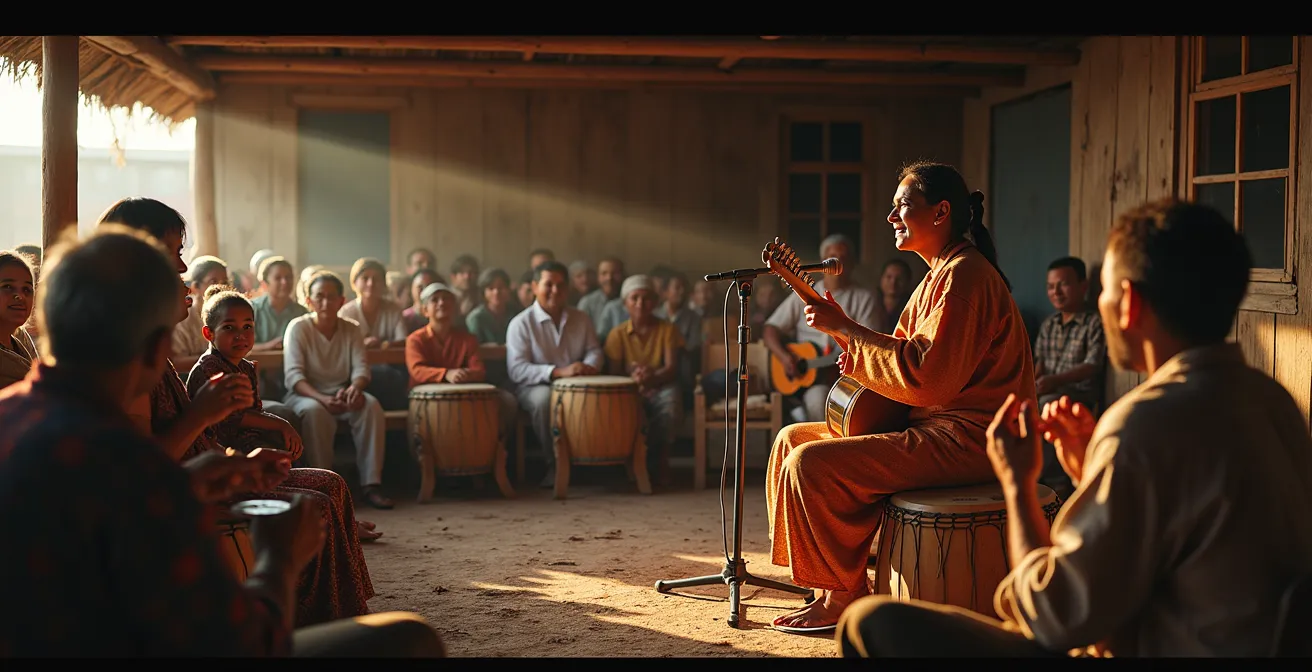
Truly accessing authentic performance requires shifting from a tourist’s quest for a location to an observer’s understanding of the cultural systems that give it life.
- Authenticity thrives in community-run spaces where ritual and social meaning take precedence over commercial entertainment.
- Respectful access is earned through pre-visit research and a deep understanding of local etiquette, especially regarding photography and patronage.
Recommendation: Approach your next journey not as a consumer of culture, but as a temporary patron who listens, understands the context, and contributes to the vitality of the art form.
The feeling is a familiar one for any dedicated culture seeker: you travel across the globe hoping for a genuine connection, only to find yourself in a brightly lit hotel ballroom. The performance is polished, the costumes are immaculate, and the experience is utterly sterile. It’s a cultural product, neatly packaged for consumption, but devoid of the very soul you came to find. The common advice—to “go off the beaten path” or “talk to locals”—often leads to a dead end, leaving you wandering aimlessly, still on the outside looking in. This quest for authenticity is a powerful driver; in fact, recent market analysis shows that 73% of global travelers now seek more authentic, local experiences to immerse themselves in a culture.
But what if the secret to access isn’t about finding a hidden alley or a secret password? What if the key lies not in geography, but in perception? As an ethnomusicologist, I’ve learned that authentic performances resonate within a specific ‘cultural acoustic’—the unique combination of social relationships, ritual purpose, and economic realities that give the art its power and meaning. To hear the music, you must first learn to listen to the space it inhabits. This is not a passive act of consumption; it is an active practice of respectful observation and participation.
This guide moves beyond the platitudes. It provides a framework for understanding these cultural systems, enabling you to find, appreciate, and ethically support the vibrant, living traditions that exist far from the tourist stage. We will explore how to identify meaningful events, the etiquette of observation and documentation, and how to become a positive force in the cultural ecosystem you visit.
This article will guide you through the essential strategies for finding and appreciating genuine cultural expressions. The following sections offer a comprehensive roadmap, from identifying authentic venues to understanding the subtle rules of engagement.
Summary: How to Access Authentic Cultural Performances Not Made for Tourists?
- Why a Community Hall Performance Beats a Hotel Dinner Show?
- How to Research the Meaning of a Ritual Before Watching It?
- When Is It Taboo to Photograph a Sacred Performance?
- Why You Should Pay for the “Free” Street Performance?
- Where to Sit to Hear Acoustic Instruments Best?
- How to Use Social Media to Find Tonight’s Underground Events?
- Why Visiting at Noon Ruins Your Photos of Historic Facades?
- How to Find the Underground Culture in a City of Tourist Traps?
Why a Community Hall Performance Beats a Hotel Dinner Show?
The difference between a performance in a community hall and one in a tourist hotel is not merely a matter of venue; it is a fundamental difference in purpose, audience, and energy. A hotel show is a product designed for profit, with a primary goal of entertainment. Its structure is rehearsed to perfection, eliminating risk, spontaneity, and any element that might confuse an outsider. The ‘cultural acoustic’ is sterile, designed for passive consumption.
In contrast, a community event is a living cultural act. Its purpose often transcends entertainment, serving vital social or ritual functions like a rite of passage, a harvest celebration, or collective mourning. The audience is not a group of detached spectators but active participants—family, neighbors, critics, and elders who understand the cultural nuances and respond with an energy that fuels the performers. This dynamic creates a space for authentic improvisation and accepts the risk of human error, which are often the most powerful moments of connection. The economic model is also different, relying on social obligation, local patronage, or grants rather than ticket sales, which allows for greater artistic complexity.
This model of local ownership is crucial for cultural sustainability. When communities control how their heritage is presented, they ensure that the economic benefits are distributed equitably and that the performance remains true to its roots. This is the essence of community-based tourism, where visitors are guests in a living system rather than consumers of a staged product. The performance is not for you, but you are privileged to witness it.
How to Research the Meaning of a Ritual Before Watching It?
Attending a sacred ritual without any context is like listening to a symphony with earmuffs. You may see the movements, but you miss the music. The most profound act of respect a visitor can offer is to invest time in understanding the meaning behind the performance. This research transforms you from a passive spectator into an informed observer, capable of appreciating the subtle layers of symbolism, history, and social significance.
Your research should begin long before you arrive. Start with broad, authoritative sources. A crucial resource is the UNESCO Intangible Cultural Heritage list, which provides detailed documentation, photos, and videos of traditions from around the world. From there, dive deeper into academic databases, searching for papers from university anthropology or ethnomusicology departments. These scholarly works offer nuanced analysis that you won’t find in a travel guide. Look for the lineage of specific performers or the history of the community group to understand their unique place within the tradition.
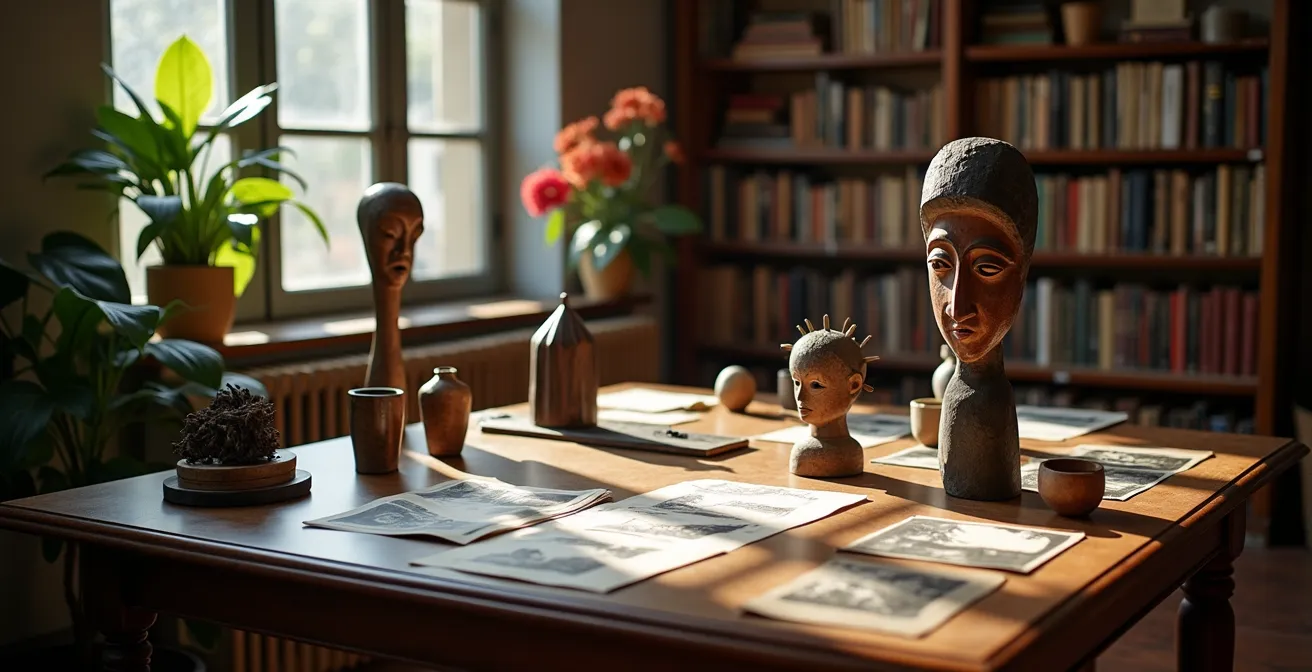
As you gather information, focus on identifying recurring symbols, musical motifs, or character archetypes. Watching past recordings of similar events on platforms like YouTube or Vimeo can also provide invaluable insight into the structure of the ritual and the expected reactions of the local audience. The goal is not to “spoil” the narrative, but to build a foundational knowledge that allows you to recognize and appreciate the performance’s deeper resonance when you witness it live.
Your 5-Step Checklist for Pre-Performance Research
- Identify Key Elements: List the primary symbols, characters, and musical instruments associated with the ritual to create a “listening guide” for yourself.
- Gather Contextual Materials: Collect at least two sources—one academic paper and one visual recording—to understand both the theory and the practice.
- Check for Local Sensitivities: Review community forums or cultural heritage sites to identify any known taboos regarding observation, dress code, or interaction.
- Assess Your Role: Based on your research, determine if the event is fully public or if your presence should be as discreet as possible. Is there an expected form of participation?
- Formulate Questions: Prepare a few respectful, informed questions you might ask a local guide or host *after* the event, demonstrating your genuine interest.
When Is It Taboo to Photograph a Sacred Performance?
The presence of a camera can fundamentally alter the energy of a sacred event, shifting its focus from an internal spiritual act to an external spectacle. The question of whether to take a photograph is not just about rules; it’s about understanding the “Observer Effect” and the concept of spiritual copyright. Many rituals are considered the collective intellectual property of a community, not intended for mass distribution or decontextualization on a social media feed.
The most important rule is to observe the locals. If elders and community members do not have their phones or cameras out, yours should remain in your bag. This is the clearest social cue you will receive. It’s also crucial to distinguish between “sacred time” and “social time.” The core religious rites of a ceremony may be strictly off-limits to photography, while the communal gathering or celebration that follows might be more relaxed. Wait for this shift in energy. The default assumption should always be no photography unless you see clear, widespread acceptance from those leading and participating in the event.
Ignoring these unwritten rules can be perceived as a profound act of disrespect. It suggests that your desire to capture a moment is more important than the integrity of the moment itself. This is particularly sensitive for the many traditions protected as intangible heritage. As of today, UNESCO’s list now includes 678 elements from 140 countries, each with its own unique set of protocols and sensitivities. Treating each one with individual respect is paramount. Ultimately, ask yourself: does your photograph serve the community and honor the tradition, or does it merely serve your own desire for a souvenir?
Why You Should Pay for the “Free” Street Performance?
When you encounter a “free” performance in a public square—a musician, a dancer, a storyteller—the act of payment is far more than a simple transaction. It is a completion of the reciprocity cycle. The artist offers their skill, their energy, and a piece of their culture; your payment offers respect, sustenance, and recognition of their value. To watch and walk away is to leave this cycle incomplete, taking without giving back.
It’s helpful to reframe your contribution not as a payment but as an act of modern-day patronage. You are directly supporting an artist’s ability to continue their craft, bypassing commercial agents and corporate venues. Your contribution helps keep public spaces vibrant and alive with art, ensuring that culture exists outside of ticketed halls. This direct economic support is a powerful way to invest in the local creative ecosystem. It sustains not just an individual, but the tradition they carry.
In many community-based models, this principle extends beyond individual artists. For instance, in some villages, a portion of money paid by visitors is channeled into a ‘village development fund.’ The entire community then decides how to use this fund—whether for upgrading a school, ensuring water security, or investing in eco-friendly infrastructure. In this way, your patronage benefits the entire community, reinforcing a sustainable model where tourism supports collective well-being. Of course, it is crucial to distinguish a performance from a spontaneous cultural event. A religious procession or a family celebration in a public park is not a performance for money, and offering payment would be inappropriate. Context and observation are key.
Where to Sit to Hear Acoustic Instruments Best?
In an authentic performance setting, there are no sophisticated sound systems, only the natural acoustics of the space and the instruments themselves. Where you position yourself can dramatically affect your ability to hear the performance as it is intended. Hearing well is not just about volume; it’s about clarity, balance, and capturing the subtle interplay between musicians. This requires listening with your eyes as much as your ears.
The physics of sound dictates different optimal positions for different instruments. Low-frequency sounds, like those from large drums or a bass, are omnidirectional, meaning they spread out evenly in all directions. For these, a more central position in the space is often effective. High-frequency sounds from stringed instruments, flutes, or the human voice are highly directional. To hear their detail and texture, you should try to sit directly in their line of sight. Look for hard surfaces like stone walls or wooden floors, as these natural reflection points can amplify and enrich the sound, creating a warmer, fuller experience.
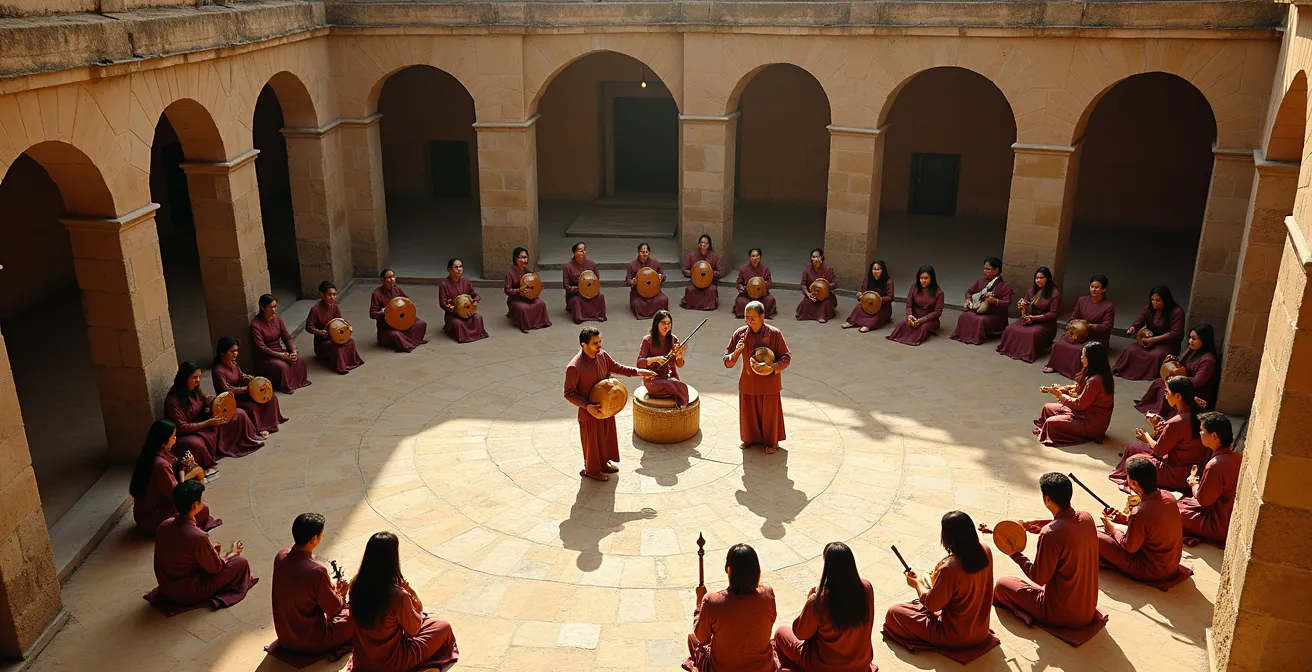
Beyond pure acoustics, prioritize sightlines that allow you to see the performers’ hands, their breathing, and their non-verbal cues. This inter-musician communication is a performance in itself. Finally, remember that in many traditions, the audience is part of the soundscape. Position yourself where you can observe their participation—the rhythmic clapping, the call-and-response vocals, the appreciative shouts. This is the living ‘cultural acoustic’ at work, and hearing it is essential to understanding the performance as a whole.
How to Use Social Media to Find Tonight’s Underground Events?
In the digital age, the path to underground culture often runs through social media, but it requires a more sophisticated approach than simply searching for generic event hashtags. Authentic local culture is rarely promoted through official venue accounts or paid ads. It lives on the personal feeds of the creators themselves and is often communicated through ephemeral, coded language.
The first step is to follow the artists directly. Identify the musicians, dancers, poets, and visual artists who are at the heart of the scene you want to explore. Their personal accounts are where you’ll find the most reliable information. Pay close attention to ephemeral content like Instagram Stories, Telegram channels, or WhatsApp statuses. These are the primary channels for last-minute announcements of pop-up shows, private gallery viewings, or impromptu jam sessions, events that may never be publicly listed.
Learn to decode the visual and textual clues. A geotag on a photo might reveal a new artist-run space. The architecture in the background of a video could point to a specific neighborhood. Analyzing who is tagged in posts helps you map the social nodes of the creative community. It’s also vital to learn the local vernacular and slang hashtags used by artists, which are often more effective than broad tags like #LiveMusic[City]. Building genuine engagement is the final key. By interacting authentically with an artist’s work—thoughtful comments, sharing their content—you may build enough trust to be added to a “Close Friends” list, granting you access to exclusive event details reserved for the inner circle.
Why Visiting at Noon Ruins Your Photos of Historic Facades?
While not a performance, understanding how to “see” a historic building is governed by the same principles of observation and context. Photographing a facade at noon, under the harsh, direct overhead sun, is the visual equivalent of listening to a performance with poor acoustics. The light is flat, erasing the very details that give the structure its character and story. Shadows are minimal and harsh, causing the building to appear stark, isolated, and without depth.
To truly capture the soul of a building, you must photograph it when the light tells a story. The morning golden hour, with its low-angled light, creates soft, long micro-shadows that reveal the texture, age, and craftsmanship of the stone or wood. Conversely, the evening golden hour bathes the facade in a warm, glorious light that emphasizes its presence and form. The “blue hour,” the period just after sunset, offers a unique opportunity to capture the building’s “social life.” As interior lights turn on, they create a beautiful balance with the fading ambient light, revealing the structure not as a static monument, but as an inhabited, living space.
The table below illustrates how different times of day affect the visual narrative of a facade. By choosing your time deliberately, you move from simply documenting a building to interpreting its character through light and shadow.
| Time of Day | Shadow Quality | Detail Visibility | Atmospheric Effect |
|---|---|---|---|
| Early Morning | Long, soft shadows | High texture detail | Warm, awakening mood |
| Noon | Minimal, harsh | Flat, low detail | Stark, isolated |
| Golden Hour | Dramatic, angled | Maximum depth | Glory, warmth |
| Blue Hour | Minimal exterior | Interior/exterior balance | Social, inhabited |
Key Takeaways
- Authenticity resides in the context—social, ritual, and economic—not just the location or the polish of the performance.
- Your role is that of an observer and patron, not a consumer. This requires pre-visit research, situational awareness, and respect for unwritten rules.
- Every choice you make, from where you sit to whether you pay, has an impact on the cultural ecosystem you are visiting.
How to Find the Underground Culture in a City of Tourist Traps?
Escaping the gravity of tourist traps requires a strategic shift in how you navigate a city. Instead of looking for destinations, you must learn to identify the systems and spaces that support a living, local culture. The rise of experiential travel is undeniable; spending on experiences was up 65% compared to 2019 as of early 2023, but this demand has also fueled the creation of more sophisticated tourist traps.
The key is to map the points of production, not consumption. Instead of looking for polished galleries, find the workshops, studios, and maker spaces where art is created. Follow the supply chain: where do artists buy their materials, rent rehearsal space, or get their instruments repaired? These are the veins of the city’s creative heart. Another powerful strategy is to identify the “Third Places”—the independent bookstores, local record shops, community gardens, or artist-run cafes where creatives congregate. These are the informal hubs where trust is built and information is exchanged.
Become a “temporary regular.” By visiting the same local coffee shop or bar repeatedly and respectfully, you move from being a transient tourist to a familiar face. This slow, patient approach can build the trust necessary to receive genuine invitations and recommendations. Seek out the “anti-guides”—the zines, student newspapers, and local blogs that actively critique the mainstream tourist narrative. These sources often champion the very culture you are seeking. By focusing on these networks of production and community, you can navigate around the tourist-facing facade and connect with the vibrant, authentic culture beating just beneath the surface.
Your next journey is an opportunity to practice this deeper form of observation. It’s a chance not just to see the world, but to listen to its diverse cultural acoustics. Apply these principles to move beyond the surface and engage with art in its most meaningful context.