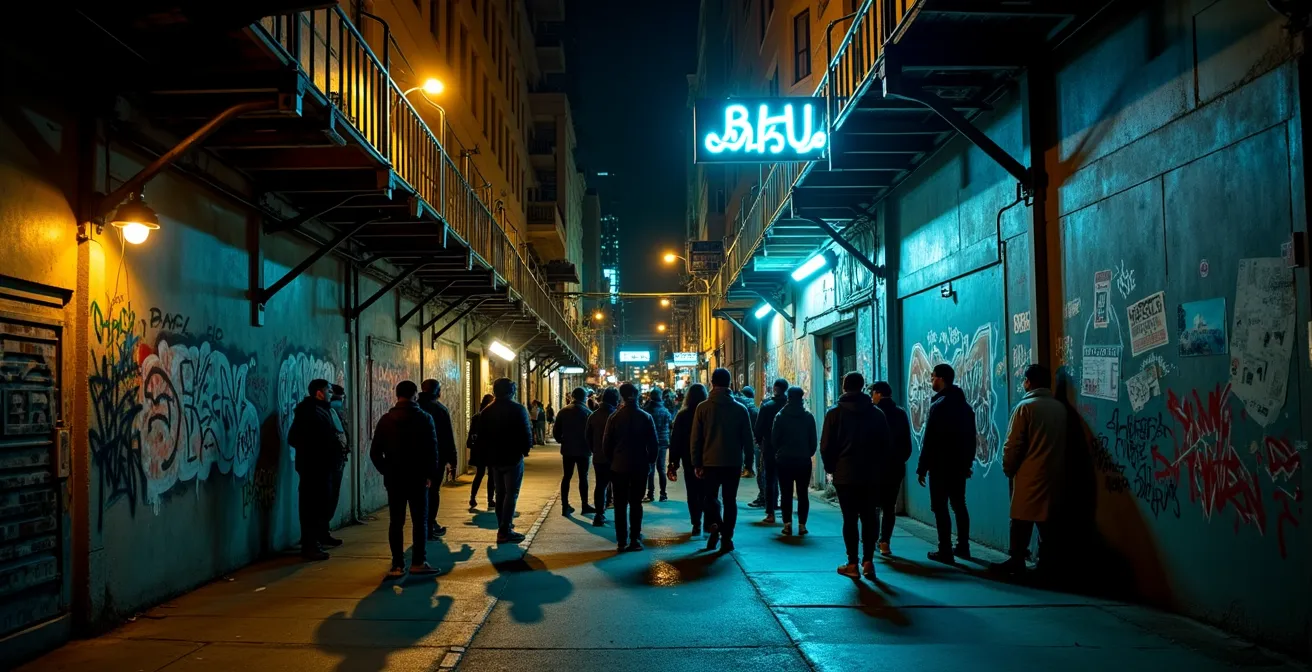
You’re in a new city, but all you see are selfie sticks and tourist traps. The real, modern pulse of the destination feels just out of reach.
- Authentic culture isn’t found by accident; it’s uncovered by acting like a ‘cultural detective’ and reading the city’s hidden signals.
- Social media, street art, and local community hubs are not just places—they are data points that reveal the architecture of an underground scene.
Recommendation: Stop wandering aimlessly. Start decoding. Use the digital and physical breadcrumbs left by local creators to find the experiences you’re actually looking for.
You’re standing in the middle of a beautiful, historic city square, but something feels off. It’s a perfect postcard, but it’s sterile. You’re surrounded by other travelers, souvenir shops, and restaurants with menus in five languages. You came here to connect with the city’s modern pulse, its living culture, but you’ve walked straight into a tourist theme park. This frustration is the modern traveler’s paradox: we have more access to the world than ever, yet finding genuine, unfiltered experiences feels harder than ever. We’re told to “get off the beaten path,” but what does that actually mean when every “hidden gem” is already a geotagged Instagram post?
The common advice is to talk to locals or look for street art, but these are just starting points, not a strategy. The truth is, finding a city’s underground is not about luck or aimless wandering. It’s a skill. It’s about shifting your mindset from a passive tourist to an active cultural detective. The real scenes—the pop-up galleries, the basement music shows, the artist-run cafes—operate on a different frequency. They leave clues, not billboards. Learning to spot these signals is the key to unlocking a city’s true identity, moving beyond the historical facade to its vibrant, contemporary heart.
This guide isn’t another list of “secret spots.” Instead, it’s a field manual for the modern urban explorer. We’ll break down the methodology of signal reading, from decoding the layers of a sticker-bombed lamppost to reverse-engineering a scene’s social network. It’s time to stop consuming a city and start engaging with it.
In this guide, you will discover the practical frameworks and insider techniques to navigate any city like a seasoned trend spotter. We’ll cover how to leverage digital tools, understand the nuances of local spaces, and engage with creative communities respectfully. Let’s get started.
Summary: Your Field Guide to Uncovering Urban Authenticity
- Why Street Art Tours Are Replacing Traditional Museum Visits for Gen Z?
- How to Use Social Media to Find Tonight’s Underground Events?
- Hipster District or Local Hood: Where to Spend Your Friday Night?
- The Safety Mistake Tourists Make When Chasing “Gritty” Authenticity
- How to Visit Artist Studios Without Being a Nuisance?
- The “Tourist Price” Scam: How to Pay What the Locals Pay?
- Which Translation App Works Best Without Data in Rural Areas?
- How to Plan the Perfect 48-Hour City Break Without Burnout?
Why Street Art Tours Are Replacing Traditional Museum Visits for Gen Z?
For a cultural detective, traditional museums present history as a finished story, sealed behind glass. Street art, however, is the city’s live, uncensored dialogue. For younger travelers, especially Gen Z, the appeal isn’t just aesthetic; it’s about engaging with a story that’s still being written. A mural or a simple sticker isn’t a static object but a signal—a comment on politics, a tribute to a local hero, or a marker of a subculture’s territory. This is why a walk through a vibrant alleyway can feel more relevant and immediate than a stroll through a quiet gallery.
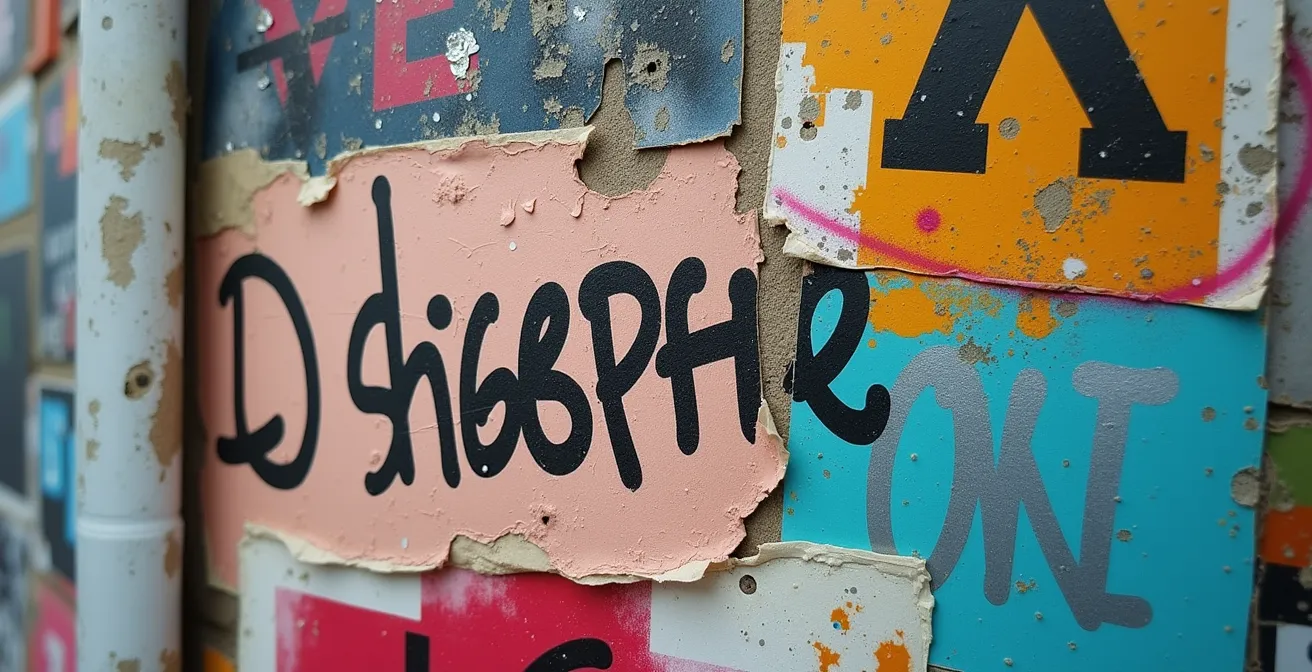
The image above is a perfect example of this urban archaeology. Each layer—peeling posters, fresh stickers, faded tags—is a record of a conversation happening over months or years. It’s a dynamic, collaborative canvas that reflects the city’s evolving identity. As the Buenos Aires scene shows, this art form has a fascinating life cycle. The city’s art evolution demonstrates this perfectly:
Buenos Aires exemplifies how street art has evolved from rebellion to celebrated expression. The city’s murals in Palermo reflect political, social, and personal narratives, constantly reinventing the urban landscape. What started as underground graffiti has transformed into respected urban art exhibitions at Centro Cultural Recoleta, showing street art’s journey from margins to mainstream cultural recognition.
– Wanderlust Spanish, Exploring the Underground Culture of Buenos Aires
This evolution from margin to mainstream is a key signal. It shows how culture is born, adopted, and sometimes co-opted. Understanding this authenticity gradient helps you read the streets with more nuance. You’re not just looking at pretty pictures; you’re tracing the footprint of a culture in real-time.
How to Use Social Media to Find Tonight’s Underground Events?
If street art is the city’s static archive, social media is its real-time nervous system. Finding an underground event tonight isn’t about searching #techno[cityname]. The real scene is often intentionally un-hashtagged to avoid crowds and authorities. The cultural detective’s job is to trace the scene’s architecture online. Every scene has key players: the DJs, the promoters, the graphic designers who make the flyers, and the venues. Your mission is to find one and let them lead you to the others.
Start with a known quantity. Find one local artist or DJ you like. Go to their profile. Who do they follow? Who are they tagged with in photos? Who comments on their posts? This isn’t stalking; it’s network analysis. You’ll quickly find that digital platforms have revolutionized underground music discovery, with artists no longer needing major labels and fans discovering new underground hip hop directly through Bandcamp, SoundCloud, and YouTube. These platforms are where the primary signals are broadcasted. Following an artist’s “supporters” on Bandcamp, for instance, can be more fruitful than any public search.
Different platforms are used for different signals. A visual-heavy platform like Instagram is great for pop-up art shows, while niche Reddit communities can lead to specific meetups. The key is to use the right tool for the job. This table breaks down the strategy:
| Platform | Best For | Discovery Method | Insider Tip |
|---|---|---|---|
| Visual events (art shows, pop-ups) | Follow event graphic designers | Check story highlights of underground venues | |
| Bandcamp | Live music performances | Discover local bands and their upcoming shows directly | Follow artist ‘supporters’ for scene connections |
| Niche community meetups | Join city-specific underground subs | Sort by ‘new’ on Friday afternoons | |
| Telegram/WhatsApp | Exclusive private events | Access through public gateway events first | Never directly ask for group invites |
The ultimate goal is to get into the “dark social” channels like private Telegram or WhatsApp groups, but these are invite-only. You earn access by showing up at the public-facing events you find through these methods, being respectful, and becoming a recognized face.
Hipster District or Local Hood: Where to Spend Your Friday Night?
You’ve found a few potential events online, but where should you physically go? Every city guide points to the “hipster district”—the one with the fixie bikes, artisanal coffee, and curated street art. While these areas can be fun, they are often the gentrified ghost of a formerly authentic scene. They represent the peak of the authenticity gradient, where underground has become over-the-counter. For a cultural detective, these districts are not the destination; they are a clue.
The real energy has often migrated. Apply the “Two-Stops-Further” rule. Look at the metro or bus map. Find the trendy neighborhood, then go two stops further out. This is often where the artists and musicians who were priced out of the main area have set up new studios and venues. It’s where the rents are cheaper, the spaces are rawer, and the culture is being born, not just packaged. This strategy allows you to balance well-known spots with truly local experiences, creating a much richer trip.
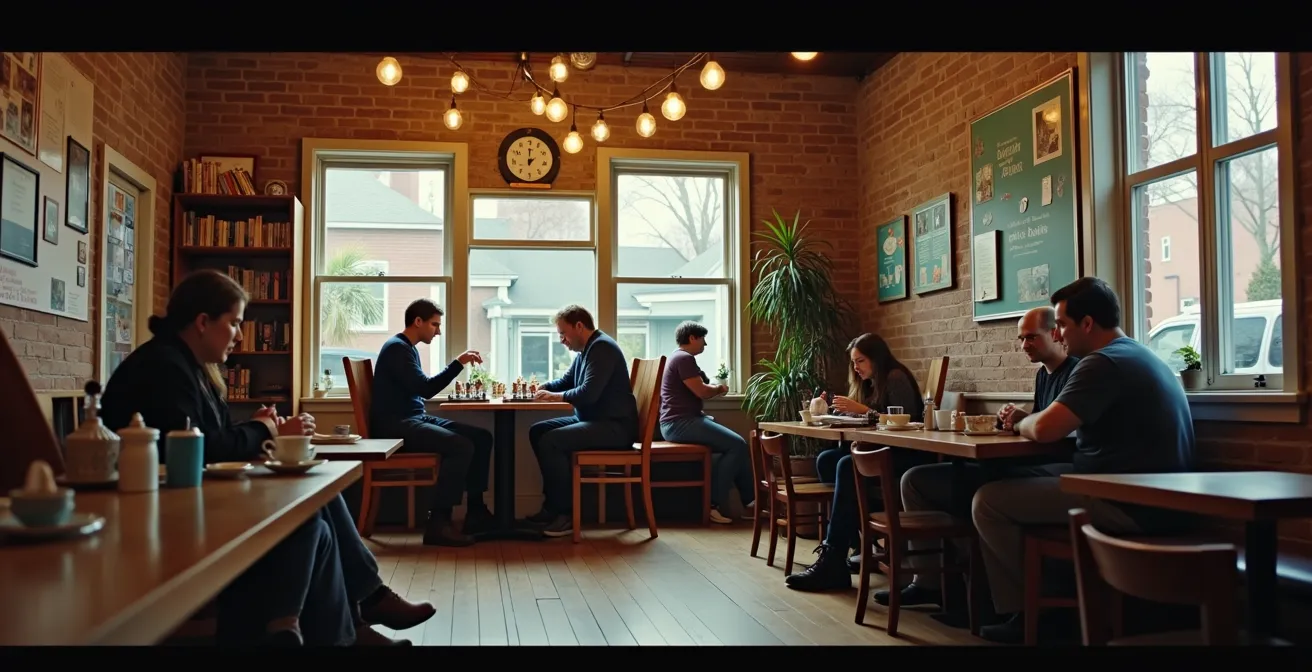
Your goal is to find the “third places”—the community hubs that aren’t home or work. These are the bookstores with evening poetry readings, the board game cafes, the community cinemas. They are magnets for local life, not tourist traffic. Ask the local student behind the counter at your hostel for their favorite spot, not the “best” spot. The difference in that question is everything. These places build community through regular events like quiz nights or open mics, and they offer a genuine window into the city’s social fabric.
The Safety Mistake Tourists Make When Chasing “Gritty” Authenticity
There’s a fine line between authentic and dangerous, and many travelers cross it without realizing. The biggest mistake is confusing “gritty” with “real.” Chasing an idealized version of edgy, underground culture can lead you into genuinely unsafe situations. An abandoned warehouse party might seem like the ultimate authentic experience, but it also comes with real risks, from structural instability to a lack of security. In fact, research shows that underground scenes carry inherent risks, as illegal raves could be raided by law enforcement agencies.
True savviness isn’t about being fearless; it’s about being smart. A cultural detective prioritizes “exit intelligence.” Before you go anywhere, you should know how you’re getting home. This means having a charged phone, a power bank, and knowing the time of the last train or bus. It also means having offline maps of the area saved on your phone. Relying on a ride-share app at 3 AM in a neighborhood with poor reception is a rookie mistake.
Most importantly, safety is about social awareness. Underground scenes often have unspoken rules and codes of conduct. They can be wary of outsiders who might attract unwanted attention. Pay attention to the vibe. If something feels off, it probably is. Listen to your gut and don’t let your quest for a cool story override your basic instincts. Remember these key protocols:
- Be Socially Aware: Understand the rules and dress code. Underground cultures can quickly exclude those who don’t fit in or who might “sell out” the scene.
- Respect the Vibe: Use common sense. Don’t start arguments or wear the wrong colors in the wrong neighborhood. Your personal safety is your own responsibility.
- Trust Your Instincts: If a situation or person makes you uncomfortable, leave immediately. No photo or story is worth your well-being.
Chasing authenticity requires vigilance. The goal is to be an explorer, not a target.
How to Visit Artist Studios Without Being a Nuisance?
Getting invited into an artist’s personal creative space is one of the most rewarding experiences you can have. It’s a direct connection to the source of the culture you’re exploring. However, an artist’s studio is a workplace, not a public gallery. Showing up unannounced or with the wrong expectations is the fastest way to get shut down. The key is a “warm introduction,” which you build over time through genuine and respectful engagement.
Case Study: Madrid’s Writers Store
A brilliant model for this connection is Writers Madrid, a graffiti supply store in Spain. As described by Weave News, the store not only serves as a vital hub for artists to get supplies but also documents the local culture on its YouTube channel. It has become a legitimate bridge, where the store facilitates genuine connections between curious visitors and local graffiti artists, who then introduce newcomers to their world. This shows the power of a legitimate “third space” in fostering respectful interaction.
You can’t just walk into this world; you need to be invited. This requires a patient, multi-step approach that demonstrates you’re a supporter, not just a consumer. Your initial contact should always be framed around an interest in purchasing their work, even if it’s just a small print. This shows you value their labor. The goal is to build a rapport that might lead to an invitation to a public open studio event, which is the most appropriate way to visit.
Your Action Plan: The Warm Introduction Protocol for Studio Visits
- Online Engagement: Begin by following the artist’s work on social media. Leave thoughtful, specific comments over several weeks.
- Authentic Sharing: Share their work on your own social media, but add meaningful context about why you appreciate it.
- Develop Rapport: Wait for a natural interaction to develop through this consistent, respectful engagement. Don’t force it.
- Frame as a Buyer: When you do make contact (via DM or email), frame it as an interest in purchasing their work. Mention specific pieces you like.
- Seek Public Events: Ask about upcoming open studio events or exhibitions rather than requesting a private visit. This is the most respectful entry point.
This process transforms you from a tourist into a potential patron, a crucial distinction in the creative world.
The “Tourist Price” Scam: How to Pay What the Locals Pay?
Part of being a savvy traveler is navigating the local economy without getting ripped off. The “tourist price” is a real phenomenon, but it’s important to distinguish between a legitimate markup and an outright scam. An espresso on the main square will always cost more than one in a residential neighborhood—that’s just real estate, or a “view tax.” A scam is when the price is fluid, changing based on who is asking.
The cultural detective learns to spot the signals of a tourist trap. Are the menus only in English? Is there a pushy host outside trying to lure you in? Is the place empty of anyone who looks like they live in the city? These are all red flags. Conversely, if a place is bustling with locals, it’s probably authentic and worth the price, even if it seems a little high.
This comparative guide can help you differentiate a legitimate premium from a tourist trap:
| Factor | Legitimate ‘View Tax’ | Tourist Price Scam |
|---|---|---|
| Price Display | Clearly marked, consistent prices | Menus only in English, not local language |
| Location | Any establishment close to major attractions costs more – this is expected | Fluctuating prices for same item based on customer |
| Service | Professional, consistent with all customers | Someone outside enticing you to come in |
| Local Presence | Mixed clientele including some locals | If bustling with locals, probably authentic and worth the cost |
One of the best techniques for calibrating your internal price meter is the Supermarket Benchmark. On your first day, go into a regular neighborhood grocery store and note the prices of universal items like a bottle of water, a local beer, or a popular snack. These items become your price anchors. If a streetside vendor is charging three times the supermarket price for a bottle of water, you know their pricing is aimed squarely at tourists. This simple intelligence-gathering mission can save you money and frustration for the rest of your trip.
Which Translation App Works Best Without Data in Rural Areas?
Your urban exploration might take you to the city’s fringes or on a spontaneous day trip where cell service is spotty or non-existent. In these moments, your ability to communicate can be the difference between a great adventure and a stressful ordeal. While learning basic phrases in the local language is always the best approach, a powerful offline translation app is an essential part of the cultural detective’s toolkit.
Not all apps are created equal when you’re offline. The key features to look for are the size and quality of the downloadable language packs, the accuracy of offline camera translation (for reading signs and menus), and the functionality of conversation mode without a data connection. Google Translate, Microsoft Translator, and iTranslate are the main contenders, each with distinct offline strengths.
Here’s a breakdown of how they compare for offline, rural travel:
| App Feature | Google Translate | Microsoft Translator | iTranslate |
|---|---|---|---|
| Offline Language Pack Size | 35-50MB per language | 40-60MB per language | 30-45MB per language |
| Offline Camera Translation | Available, high accuracy | Available, moderate accuracy | Limited availability |
| Offline Conversation Mode | Full duplex available | Turn-based only | Not available offline |
| Picture Dictionary Feature | Can save translated images | Screenshot function | Basic image save |
Beyond apps, a savvy traveler prepares a low-tech backup: the Universal Picture Dictionary. This is a dedicated album on your phone where you pre-save essential images. This can include screenshots of your hotel’s name and address in the local script, pictures of common food items you can or cannot eat (e.g., a “no nuts” symbol), and pictograms for basic needs like a bathroom or medical help. This visual aid transcends language barriers and can be a lifesaver when you’re truly off the grid.
Key takeaways
- Shift your mindset from a passive tourist to an active ‘cultural detective’ to find a city’s true identity.
- Use street art, social media networks, and community hubs as signals to decode the architecture of an underground scene.
- Balance exploration with awareness by applying safety protocols and respecting the unspoken rules of local subcultures.
How to Plan the Perfect 48-Hour City Break Without Burnout?
A 48-hour city break presents a unique challenge: the desire to see everything clashes with the reality of limited time and energy. The typical tourist response is to create a jam-packed itinerary, rushing from one “must-see” to the next, which inevitably leads to burnout. The cultural detective, however, approaches a short trip with a different philosophy: depth over breadth. The goal is not to see the most, but to experience the most meaningfully.
The key is the “One Anchor” model. For each full day, choose just one primary activity or location—your “anchor.” This could be exploring a specific neighborhood you’ve researched, visiting a particular artist’s open studio, or attending an event you found online. You commit to this one anchor, but you leave the time around it flexible for spontaneous discovery. This structure ensures you hit your high-priority target while allowing room for the magic of unplanned moments. As research shows, travelers benefit greatly from authentic experiences providing a deeper understanding of local culture, traditions, and lifestyle, and this model builds in the time for those connections to happen.
To manage your energy, think of your trip in zones. Your arrival afternoon is a low-energy zone, perfect for a casual wander through a neighborhood near your accommodation. The evening might be a rising-energy zone for scouting tomorrow’s anchor location. By matching activities to your natural energy levels, you avoid exhaustion. Consider this framework:
- Day 1 Afternoon (Low Energy): Wander the neighborhood around your hotel. Find a local cafe for people-watching.
- Day 1 Night (High Energy): Attend your discovered underground event or a local cultural performance.
- Day 2 Morning (Gentle Energy): Take public transportation somewhere with no goal other than observing everyday life.
- Day 2 Afternoon (Peak Energy): Execute your “anchor” activity, with plenty of buffer time.
- Day 2 Evening (Flexible Energy): Leave this time completely open for a spontaneous discovery based on something you learned during the day.
This approach transforms a frantic checklist into a focused, rewarding, and sustainable exploration.
Now that you have the framework, the next step is to apply it. Start planning your next 48-hour escape not as a list of sights, but as a detective case waiting to be solved. Choose your city, identify your first clue, and begin the hunt.