Choosing an ‘ethical’ safari isn’t about finding a green logo; it’s about conducting a forensic audit of an operator’s on-the-ground impact.
- True conservation is evidenced by habitat integrity, not just “guaranteed” sightings.
- Financial transparency and community equity are non-negotiable indicators of a legitimate eco-tour.
Recommendation: Start by demanding an operator’s annual conservation report; its absence or vagueness is the first and most significant red flag.
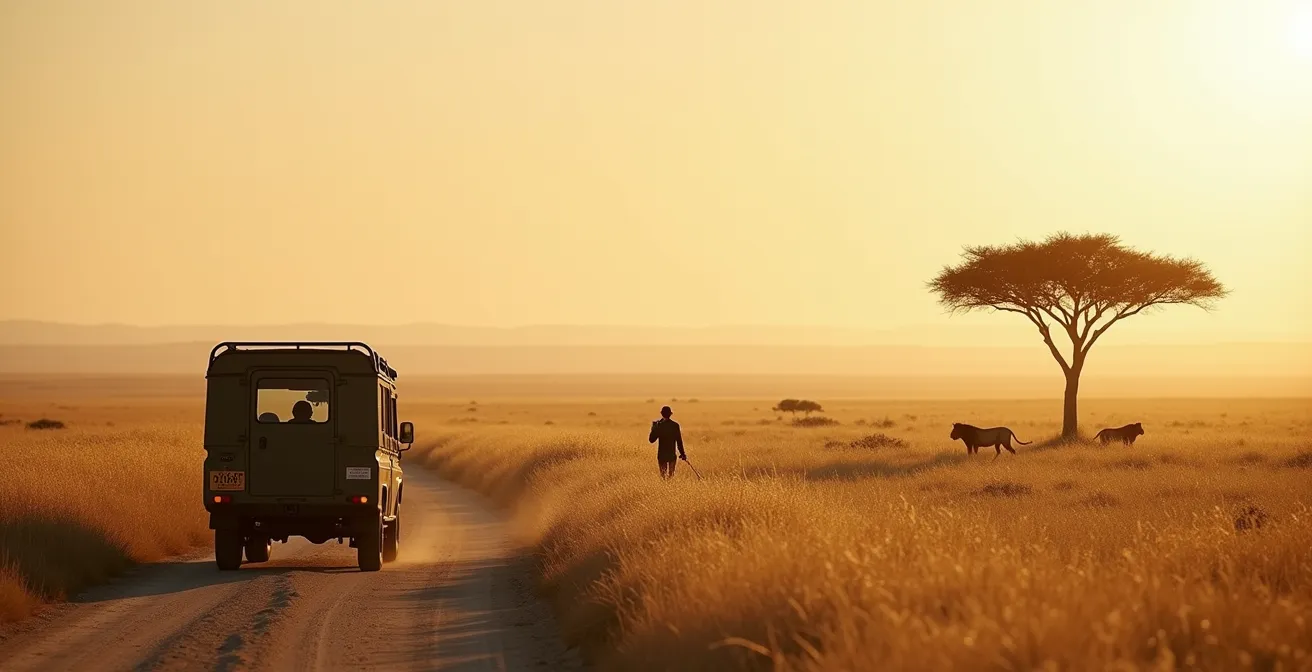
The vision of a safari is potent: vast savannahs, the silhouette of an acacia tree at sunset, the visceral thrill of witnessing a lioness lead her cubs. For nature lovers, this is more than a vacation; it’s a pilgrimage. Yet, beneath this romantic image lies a complex and often troubling reality. The desire to get the perfect photo or tick a “Big Five” checklist has created an industry where the welfare of the very animals we’ve traveled to see can become secondary to the tourist experience.
Common advice often revolves around looking for eco-certifications or choosing small-group tours. While not without merit, these are surface-level checks. They fail to address the core mechanisms of genuine conservation. Many operators have perfected the art of “greenwashing,” using the language of sustainability to mask practices that degrade ecosystems and exploit local communities. The critical question is not whether a company claims to be ethical, but whether their operations can withstand scientific and financial scrutiny.
But what if the key wasn’t simply to trust a label, but to adopt an investigative mindset? This guide proposes a new framework, one rooted in ecological forensics. It’s about learning to read the landscape, interpret animal behavior, and ask the difficult questions that reveal an operator’s true conservation ledger. As a conservation biologist, my goal is to equip you with the tools to look beyond the marketing brochure and assess the real impact radius of your presence.
This article will deconstruct the safari experience into its core components. We will analyze the hidden ecological costs of common practices, dissect the promises made by operators, and ultimately, provide a clear methodology for auditing any company before you book. This is your guide to ensuring your journey is a net positive for the wild places you long to see.
To navigate this complex landscape, this guide is structured to address the most critical questions and red flags. Explore the sections below to build your own framework for assessing a safari operator’s true commitment to conservation.
Summary: A Conservationist’s Framework for Choosing an Ethical Safari
- Why Off-Roading to See Lions Destroys the Grassland Ecosystem?
- Private Reserve or National Park: Which Has Better Crowds and Sightings?
- The “Guaranteed Sighting” Scam: Do They Bait the Leopards?
- Why Your Phone Camera Is Useless on Safari (And What to Rent)?
- Why the 5 AM Wake-Up Call Is Non-Negotiable for Predators?
- Why Chasing a Turtle Causes It to Drown from Stress?
- Why You Should Never Visit a Viewpoint at Noon?
- How to Audit an “Eco-Tour” Company Before Booking?
Why Off-Roading to See Lions Destroys the Grassland Ecosystem?
The request is almost irresistible: “The lions are just over that ridge! Let’s go off-road for a better view.” To the untrained eye, a brief detour across the grassland seems harmless. From a biologist’s perspective, it’s an act of profound ecological vandalism. The ground in these arid and semi-arid environments is not just dirt; it’s a living, breathing entity known as a biological soil crust, or biocrust. This intricate community of cyanobacteria, lichens, mosses, and microfungi forms a dark, crumbly layer that is the very foundation of the savanna ecosystem.
This living crust performs critical functions: it prevents wind and water erosion, fixes atmospheric nitrogen into the soil, and retains precious moisture. A single pass of a 4×4 vehicle crushes this delicate structure, breaking the filaments that bind the soil together. The damage is not temporary. In these fragile environments, research shows that biological soil crusts may require 50 to 250 years to recover fully, if they recover at all. The resulting tracks become channels for erosion, leading to nutrient loss and desertification. What was a momentary thrill for a tourist becomes a multi-generational scar on the landscape.

As the illustration above reveals, this is a complex, microscopic world. An ethical operator understands this. Their guides will refuse requests to go off-road, explaining that the long-term health of the habitat—and thus the future of all its wildlife—is more important than a single close-up photo. They prioritize the integrity of the ecosystem over the immediate gratification of a guest. When an operator permits or encourages off-roading, it is a definitive sign that their conservation claims are merely marketing and that they lack a fundamental understanding of the environment they profit from.
Private Reserve or National Park: Which Has Better Crowds and Sightings?
One of the first logistical decisions a safari-goer faces is the choice between a national park and a private game reserve. The distinction is far more than a name; it dictates the rules of engagement, crowd levels, and ultimately, the ethical quality of your wildlife encounters. National parks, managed by government bodies, are typically vast and open to the public, including self-drive tourists. This accessibility can lead to “traffic jams” around a sighting, with dozens of vehicles jockeying for position—a stressful situation for both animals and observers.
Private reserves, on the other hand, often operate on land adjacent to or within larger national parks. These are frequently managed by a collection of private lodges that have exclusive traversing rights. This model allows them to strictly control the number of vehicles at any given sighting, often limiting it to two or three at a time. This results in a more intimate and less intrusive experience. Furthermore, many private reserves are at the forefront of conservation. For example, private conservation areas in South Africa cover over 20 million hectares, an area larger than many of its national parks, and are crucial for anti-poaching and habitat restoration efforts.
However, “private” is not an automatic guarantee of “ethical.” The key is the conservation model. A reputable private reserve invests heavily in its own anti-poaching units, veterinary support, and ecological research. They often have stricter rules than national parks, such as no off-roading and enforced respectful distances. The higher cost of a stay in a private reserve directly funds this conservation infrastructure. When evaluating an operator, ask about their vehicle limits at sightings and the specific conservation work their fees support. A vague answer suggests the “private” label is more about exclusivity than ecology.
The “Guaranteed Sighting” Scam: Do They Bait the Leopards?
The promise of a “guaranteed sighting” of a leopard or lion is a powerful marketing tool and a massive ethical red flag. Wild animals are, by definition, wild. Their movements are unpredictable. Any operator that guarantees an encounter with a typically elusive predator is likely engaging in practices that compromise animal welfare. The most common and insidious of these is baiting: leaving a carcass to lure a predator to a specific spot at a scheduled time. This practice creates a dependency on human-provided food, altering natural hunting behaviors and creating conflict when the artificial food source is removed.
An even more sinister practice is the connection to the canned hunting industry. Some facilities that offer “lion walking” or cub-petting experiences present themselves as sanctuaries. However, as one industry watchdog notes, the reality is often dark. As 57hours.com explains in their guide on choosing an ethical safari:
Companies promoting these experiences only briefly touch on how many of these so-called sanctuaries are actually breeding facilities, and the cubs are sold to canned-lion hunting facilities once they reach maturity
– 57hours.com, How to Choose an Ethical African Safari Experience
This pipeline turns a seemingly innocent tourist activity into the first step of a life of exploitation. A truly ethical operator embraces the uncertainty of the wild. They train their guides to be expert trackers, capable of reading signs, sounds, and scents to locate animals naturally. They celebrate the chase—the process of tracking—as much as the sighting itself. The thrill lies in the authentic discovery, not in a staged performance. Any form of direct animal contact or guaranteed encounter should be viewed with extreme suspicion.
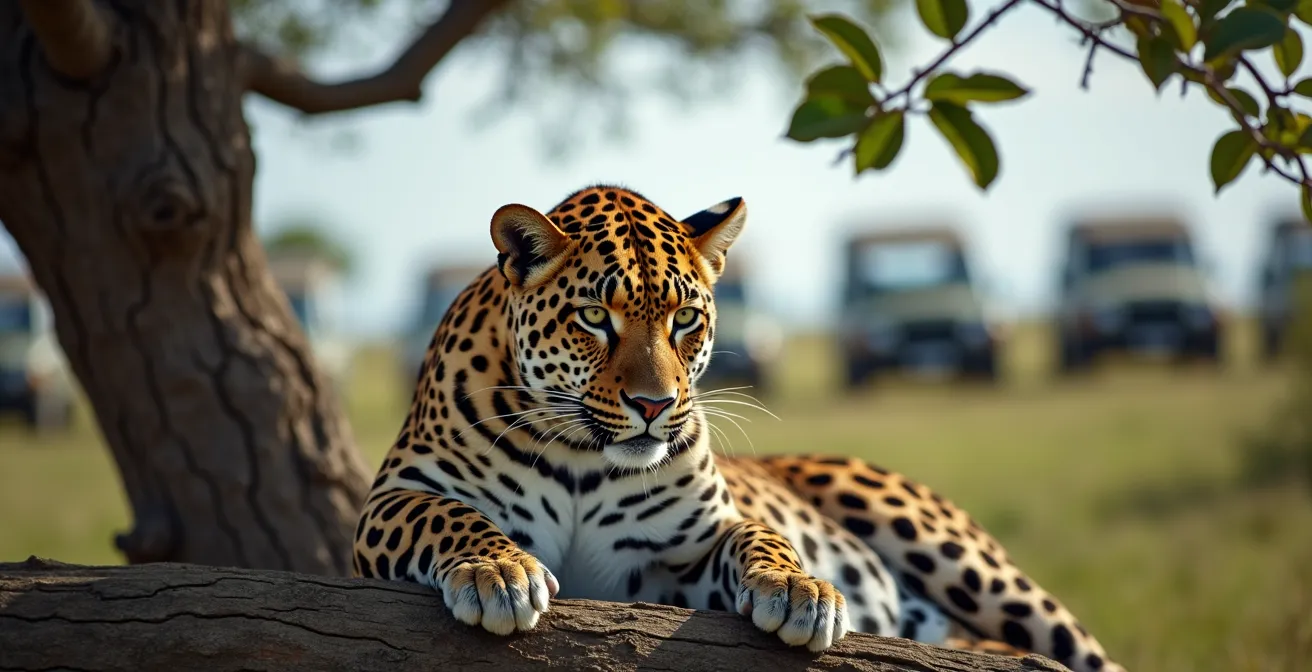
The image above illustrates the consequence of unethical pursuit: a stressed animal surrounded and cornered. True respect for wildlife means accepting that some days, the leopard remains unseen. The following are clear indicators of unethical practices to watch for:
- Operators promoting ‘guaranteed sightings’ or specific animal encounters.
- Guides who chase animals at high speed or allow vehicles to completely surround them.
- Any company offering lion walking, elephant riding, or direct physical contact with predators.
- A lack of transparent information about where tourist fees and conservation levies are allocated.
Why Your Phone Camera Is Useless on Safari (And What to Rent)?
In the age of the smartphone, we’re accustomed to having a high-quality camera in our pocket. On a safari, however, your phone is more of a liability than an asset. The fundamental principle of ethical wildlife viewing is maintaining a respectful distance. Predators and other sensitive species require a wide berth to avoid causing stress. The limited zoom on a phone camera forces a choice: either accept a tiny, pixelated speck in your photo or pressure your guide to get dangerously close. This pressure directly contributes to wildlife disturbance.
The pursuit of the “perfect shot” with inadequate equipment changes animal behavior, causing them to flee important breeding or feeding grounds. This obsession with a screen-based experience undermines the very purpose of being in the wild. A professional-grade camera with a telephoto lens (300mm or more) allows for stunning, detailed images from a distance that respects the animal’s space and safety. The solution is not to buy thousands of dollars of equipment, but to rent it. Many high-end lodges offer camera and lens rentals, a service that has a dual benefit: it equips you properly and the rental fees provide an additional revenue stream that supports the lodge’s conservation work.
The following table, based on principles from ethical safari guides, clearly breaks down the difference in impact.
| Aspect | Phone Camera | Professional Equipment (Rental) |
|---|---|---|
| Minimum Ethical Distance | Forces closer approach | 300-600mm allows respectful distance |
| Pressure on Guide | High – requests to get closer | Low – zoom compensates |
| Wildlife Disturbance | Increases stress behaviors | Minimizes impact |
| Conservation Support | None | Rental fees support lodges |
| Experience Quality | Screen-focused | Observation-focused with binoculars |
The best tool for a safari isn’t a camera at all, but a good pair of binoculars. They allow you to observe intricate behaviors and details without disturbance. The goal should be to witness, not just to capture. Prioritizing observation over photography, and using the right equipment when you do take photos, is a hallmark of a responsible and fulfilling safari experience.
Why the 5 AM Wake-Up Call Is Non-Negotiable for Predators?
The pre-dawn wake-up call is a safari ritual that can feel brutal, but it’s dictated entirely by the biology of the ecosystem. The hours surrounding sunrise and sunset, often called the “golden hours,” are periods of peak activity for most predators and many other animals. As a conservation biologist, I can attest that this is not a matter of tradition but of ecological science. The midday heat in the African savanna is oppressive, forcing most animals into deep shade to conserve energy and water. Attempting a game drive at noon is often a fruitless exercise in spotting sleeping lumps under bushes.
The cool morning air offers several distinct advantages for predators, and therefore, for wildlife watchers. As one expert in predator behavior explains, there are two key factors at play:
The dense, cool morning air carries scent more effectively, and the low-angle light provides critical camouflage (countershading) for predators stalking prey
– Conservation Biologist, Understanding Predator Behavior in African Ecosystems
This means lions, leopards, and wild dogs are most actively hunting, patrolling territories, and interacting in the early morning. Their scent trails are fresher and easier for skilled trackers to follow. Furthermore, the low, angled light creates long shadows and highlights textures, making animals easier to spot and photograph beautifully. The window for this peak activity is surprisingly short. Research and guide experience confirm that heat shimmer and wildlife inactivity make viewing difficult after 10 AM on most days.
Any operator that offers late morning starts or suggests skipping the early game drive is not prioritizing your wildlife viewing experience. They are likely catering to convenience rather than optimizing for authentic encounters. The 5 AM wake-up call is a sign of a serious, professional operation that understands the rhythms of the bush. It’s an invitation to sync your schedule with that of the wild, which is the most authentic experience one can have.
Why Chasing a Turtle Causes It to Drown from Stress?
The principles of ethical wildlife viewing are not confined to land. On coastal or marine-based tours, the same rules of respectful distance and non-pursuit apply with even greater urgency. A common and tragic mistake made by tour boats is chasing a sea turtle, dolphin, or whale for a closer look. What appears to be an exciting pursuit for tourists is a life-threatening event for the animal. When a marine animal like a sea turtle is pursued, its body floods with stress hormones, triggering a flight response.
This frantic escape burns through its oxygen reserves at an alarming rate. Sea turtles are air-breathing reptiles; they can hold their breath for long periods when resting, but a high-speed chase forces them into an anaerobic state. They become exhausted and, in a desperate need for oxygen they cannot reach, can effectively drown from the physiological stress and lactic acid buildup. The pursuit itself can be fatal, even if the boat never makes contact. An ethical marine tour operator knows this and will position the boat to allow the animal to approach on its own terms, or will observe from a distance, shutting off the engine to minimize noise and stress.
This principle extends to a broader conservation context. When local communities perceive wildlife as a nuisance disturbed by tourists, it erodes their incentive to protect it. As a case study on responsible tourism highlights, without receiving tangible benefits from living alongside wildlife, communities may turn to poaching or turn a blind eye to illegal activities. The short-term thrill of a tourist chase can have long-term, devastating consequences for conservation efforts. To prevent this, strict guidelines must be followed:
- Maintain a minimum distance of 100 meters from marine megafauna.
- Never pursue, encircle, or block an animal’s path.
- Limit observation time to a maximum of 30 minutes.
- If an animal shows signs of stress (e.g., rapid diving, tail slapping, erratic swimming), retreat immediately.
Your guide’s behavior is the ultimate indicator. A guide who slows down, cuts the engine, and educates guests on the animal’s behavior is a true conservationist. A guide who gives chase is a threat to the wildlife you’ve come to see.
Why You Should Never Visit a Viewpoint at Noon?
Many safari itineraries include a stop at a scenic viewpoint for a mid-day break or lunch. While the panoramic view might be appealing, from an ecological and observational standpoint, noon is the worst possible time for any wildlife-related activity. The primary reason is the intense African sun. Animals, being far more sensible than tourists, are inactive and seeking refuge in the deepest, coolest shade they can find. This makes them incredibly difficult to spot.
Beyond the simple lack of animal activity, the viewing conditions themselves are severely compromised. The sun heats the ground, and this heat radiates upwards, creating a phenomenon known as heat haze or atmospheric distortion. This shimmering effect makes it nearly impossible to get a clear view of anything in the distance. Binoculars and telephoto lenses become practically useless, as the image wavers and blurs. Professional guides know this period as the “dead hours” for this very reason. The combination of minimal wildlife activity and terrible visibility makes it the least productive time of day.
The temperature difference is not trivial; data from environmental studies shows that at midday, midday soil temperatures can be 12°C warmer than the air temperature, creating the intense thermal currents that cause the haze. An operator that schedules its primary game viewing activities or long drives during this period (roughly 11 AM to 3 PM) is demonstrating a fundamental lack of bush knowledge. A well-structured safari itinerary will feature a long break at the lodge during these hours, allowing guests to rest, swim, and avoid the hottest part of the day, just as the animals do. The schedule should be built around the animal’s activity patterns, not a conventional human timetable of breakfast, lunch, and dinner. A siesta is not laziness; it’s a sound ecological strategy.
Key takeaways
- An ethical safari is defined by non-interference: maintaining distance, respecting habitats, and never baiting or chasing wildlife.
- Financial transparency is paramount. A reputable operator can clearly articulate how your fees fund specific conservation and community projects.
- The best safari experience syncs with the ecosystem’s rhythm—early mornings and late afternoons—not a convenient human schedule.
How to Audit an “Eco-Tour” Company Before Booking?
The term “eco-tour” has been diluted by marketing, making it essential to develop a forensic approach to vetting operators. Your audit should focus on verifiable evidence, not just promises. The single most important document to request is the company’s annual sustainability or conservation report. As one conservation assessment expert puts it, “A truly committed operator will have a publicly available annual sustainability or conservation report. No report, or a report that’s just marketing fluff, is a major red flag.” This document should provide concrete metrics on conservation activities, community projects, and fund allocation.
Your investigation must also assess the operator’s role in the complex conservation economy. This includes practices that might seem counterintuitive to the average tourist, such as trophy hunting. While emotionally charged, some conservation models argue that strictly regulated hunting can provide critical funding for protecting vast wilderness areas. For instance, in some regions, trophy hunting contributes $341 million and 17,000 jobs annually, creating an economic incentive for communities to protect wildlife rather than see it as a liability. An ethical operator, whether involved in hunting or purely photographic safaris, should be able to transparently articulate their economic model and justify how it results in a net positive for biodiversity. Vague answers about “supporting conservation” are insufficient.
Ultimately, your audit is a series of pointed questions that cut through greenwashing. It’s about demanding proof of impact. A legitimate operator will welcome this scrutiny and be proud to share the details of their work. An operator who is evasive, defensive, or unable to provide specifics is signaling that their conservation commitment is likely only skin deep. Use the following checklist as your guide to conduct this critical pre-booking investigation.
Your Pre-Booking Audit Checklist: Essential Questions for Safari Operators
- Request their annual sustainability or conservation report—is it detailed with metrics or just marketing fluff?
- Ask for the exact percentage of fees going to conservation levies and inquire how these funds are independently managed.
- Verify if they contribute sighting data to recognized scientific databases like BirdLasser or regional carnivore programs.
- Request details on local employment percentages at senior management levels, not just entry-level positions, to assess true community equity.
- Ask if they host, facilitate, or use the findings from independent scientific researchers on their property.
Your decision to book is your vote for a particular conservation model. By conducting this audit, you move from being a passive tourist to an active stakeholder in the protection of the world’s most incredible ecosystems.
Your next step is to use this framework not as a simple checklist, but as a tool for inquiry. Begin your audit today by asking these tough questions, and travel with the confidence that your presence is a genuine contribution to conservation.