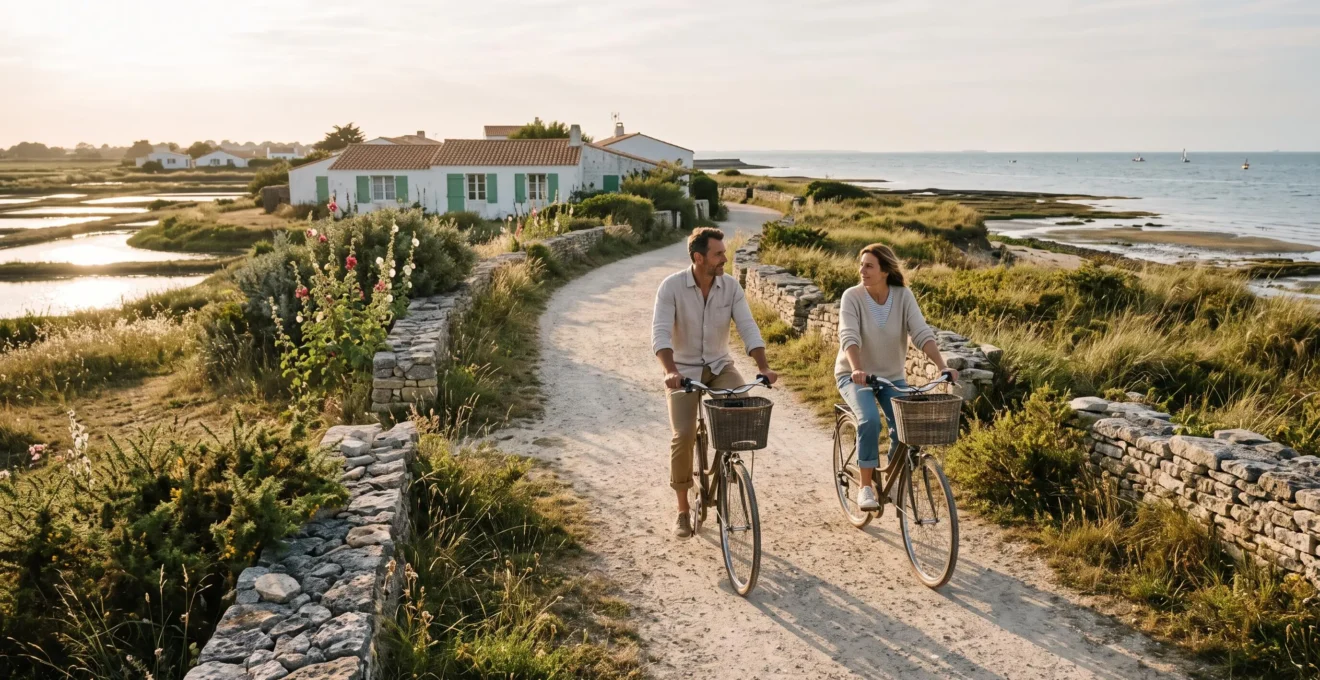
If you are weighing the French Atlantic coast for a premium seaside break, Île de Ré stands out for a particular kind of elegance: understated, local, and quietly well-run—provided you choose the right village and the right rhythm. This luxury travel guide Île de Ré is designed to turn a vague idea into a clear plan: where to base yourself, what to prioritise, and how to book smoothly when demand peaks.
The island’s most convincing “luxury” rarely comes from spectacle. It comes from privacy in a well-located villa, long bike rides between salt marshes and vineyards, and a port-side dinner you do not have to overthink—because your itinerary already matches your traveller profile and the season.
How to plan a refined Île de Ré stay without over-planning
- Base yourself in Saint-Martin-de-Ré in spring or September for a polished port atmosphere with easy access to the island.
- Prioritise Ars-en-Ré in late spring or early autumn for salt marsh landscapes and an authentic village pace.
- Book a villa early for July–August; for a calmer premium feel, travel in June or September.
- Use the bike network as your main mode of transport to connect beaches, markets and marshes with minimal friction.
Why Île de Ré Appeals to Luxury Travellers
Direct answer: Yes—Île de Ré can feel genuinely luxurious, but it is a quiet luxury: preserved villages, high-quality hospitality, and nature-forward experiences that reward good planning more than flashy spending.
For a high-end traveller, the island’s appeal is its restraint. In Saint-Martin-de-Ré (ideal in May–June and September), you can build a refined stay around the harbour life, boutiques, and a pace that stays elegant even when the island is busy.
Credibility matters when you are assessing whether a destination can truly deliver a premium standard. According to statistiques Insee hôtellerie île de Ré, half of the island’s hotel stock is classified 3–4 stars—an indicator (not a guarantee) of a more affluent hospitality profile than on parts of the regional coastline.
Île de Ré also works well for shorter, carefully curated breaks. The local destination office explicitly recommends a minimum stay length to enjoy the island without rushing: “To get the most out of the island, plan a minimum of 4 to 5 days,” states the Office de Tourisme de l’Île de Ré.
What this means in practice for a luxury traveller: in June or September, you can secure privacy, tables and transport with less friction than in peak summer—while still enjoying long evenings and Atlantic light.
Which Villages and Landscapes Define the Island’s Character?
If your main hesitation is “will it feel premium enough?”, start by choosing villages that naturally support your style of luxury—port sophistication, marshland quiet, or forest-and-beach seclusion. On Île de Ré, location is not just a backdrop: it dictates your daily rhythm, dining options, and how often you will need a car.
Saint-Martin-de-Ré: polished port life with an easy base
Best for: travellers who want a lively, walkable base with harbour dinners and an “everything within reach” feeling. Ideal season: June and September for comfort and atmosphere without the densest crowds.
Saint-Martin-de-Ré is the island’s natural starting point if you like to step out for coffee, browse shops, and return to a well-appointed home base. It is also a practical hub for day trips, which helps if your goal is a premium experience with minimal logistics.
Ars-en-Ré: salt marshes, village authenticity, and a slower tempo
Best for: travellers who want the island’s most emblematic “quiet luxury”: marshland horizons, soft light, and a village feel that remains grounded. Ideal season: late spring and early autumn, when landscapes and cycling feel effortless.
Ars-en-Ré carries recognisable official distinctions. The commune states that classement officiel Ars-en-Ré station tourisme includes its recognition among “Les Plus Beaux Villages de France,” and notes its official “station de tourisme” status (dated 14 November 2018). These labels do not replace personal taste, but they help reassure travellers looking for places with a strong, preserved identity.
La Flotte and Les Portes-en-Ré: for discreet coastal escapes
Best for: travellers who value calm mornings, access to nature, and privacy-first days—often couples or families seeking an elegant villa routine. Ideal season: May–June and September for serenity and space.
Use these villages as your anchor if you picture a stay structured around beach time, pine-shaded walks, and low-key dining rather than constant movement. The trade-off is that you will plan a little more—especially for dinner reservations—so your evenings remain as seamless as your mornings.
Planning shortcut: If you can only pick two atmospheres, pair Saint-Martin-de-Ré (port energy) with Ars-en-Ré (marshland calm) in June or September.
A refined one-day loop (hypothetical): start in Saint-Martin-de-Ré for a harbour coffee in the morning (best outside peak weekends), cycle towards the salt marshes by midday, then slow down in Ars-en-Ré for a sunset stroll before returning.
Curated Experiences: Gastronomy, Cycling and Atlantic Views
The most premium moments on Île de Ré are often the simplest—if you time them well. Think early market shopping, a long cycle between vineyards and marshes, and an unhurried seafood table where the setting feels local rather than staged.
What to prioritise for gastronomy without chasing hype?
Answer: build your meals around what the island produces and serves naturally—seafood, oysters, and market produce—then choose restaurants for setting and consistency, not for spectacle. Best villages: ports such as Saint-Martin-de-Ré and La Flotte. Ideal season: June and September, when it is easier to secure tables and enjoy terraces.
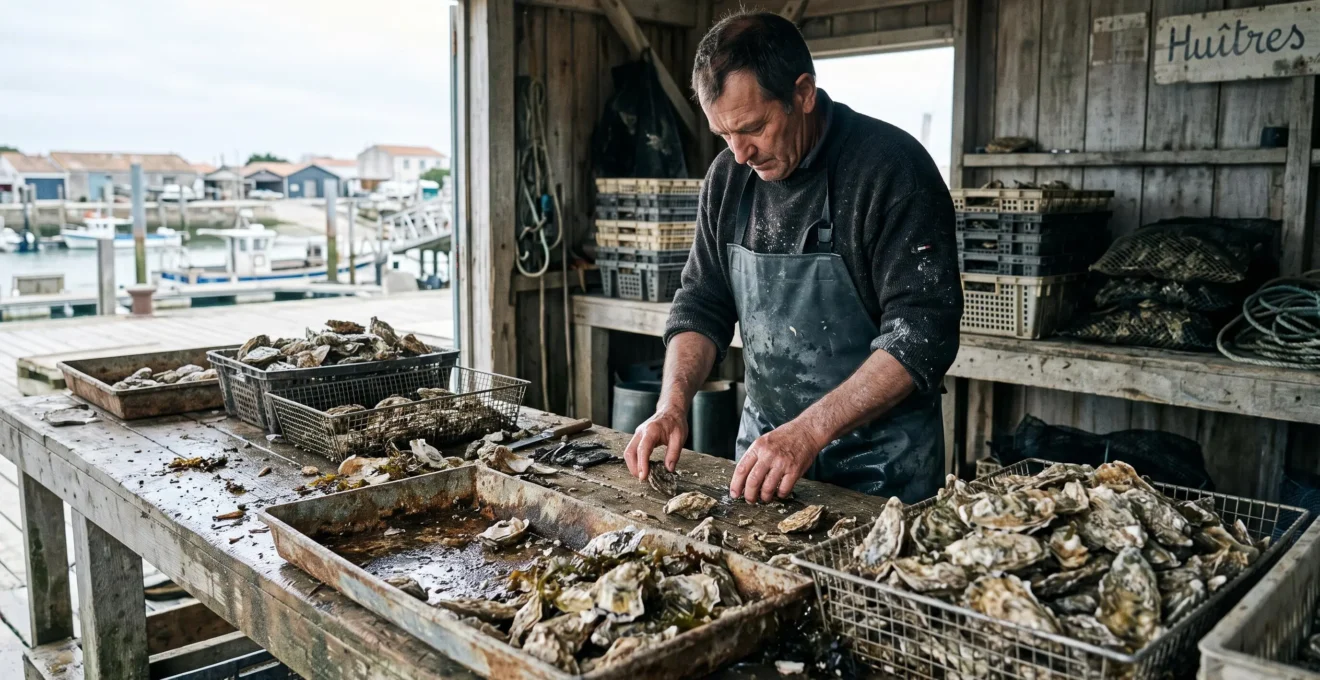
For a high-end traveller, the luxury is knowing where to focus: a market visit in the morning, a light lunch near the harbour, and a more formal dinner when the light drops. If oysters are on your list, make it a daytime ritual—less rushed, more connected to place.
Why does cycling feel like a premium experience on Île de Ré?
Answer: because it is the smoothest way to connect beaches, villages and marshes without parking stress—while staying immersed in the landscape. Best areas: routes linking Saint-Martin-de-Ré toward the central and western villages. Ideal season: spring and early autumn for comfortable temperatures and softer light.
The Office de Tourisme de l’Île de Ré highlights practical stay-planning and village-to-village variety on its official recommandations officielles séjour île de Ré page—useful context when you design days around short, beautiful distances rather than long drives.
Where to find the most memorable Atlantic views?
Answer: plan one “coastline” moment per day—either a beach walk, a sunset stop, or a viewpoint tied to your base village—so it feels intentional rather than squeezed in. Best fit: travellers who value scenery and photography as part of the experience. Ideal season: June and September for atmosphere with fewer bottlenecks.
A practical approach is to protect your best light: mornings for markets and cycling, late afternoons for the ocean. This rhythm also makes dinners feel earned and unhurried—exactly the kind of refinement the island does best.
Cas pratique
Hypothetical itinerary for a couple seeking “quiet luxury” in September: base 2 nights in Saint-Martin-de-Ré for port life and easy reservations, then 2 nights closer to Ars-en-Ré to slow down near the salt marshes. Each day includes one signature ride, one market stop, and one coastal sunset, keeping the schedule light while still feeling curated.
Where to Stay: Choosing a Luxury Villa on Île de Ré
Choosing a villa is less about chasing a generic “luxury villa rental Île de Ré” label and more about matching your address to your travel style. On an island where villages have distinct atmospheres, the wrong location can quietly dilute the experience—especially in high season.
How do I choose the right luxury villa for my stay on Île de Ré?
Answer: decide your non-negotiables first (privacy, walkability, sea access, or marsh views), then pick a village that naturally supports them, and only then compare villas. Ideal season to book early: July–August, when anticipation matters most for availability.
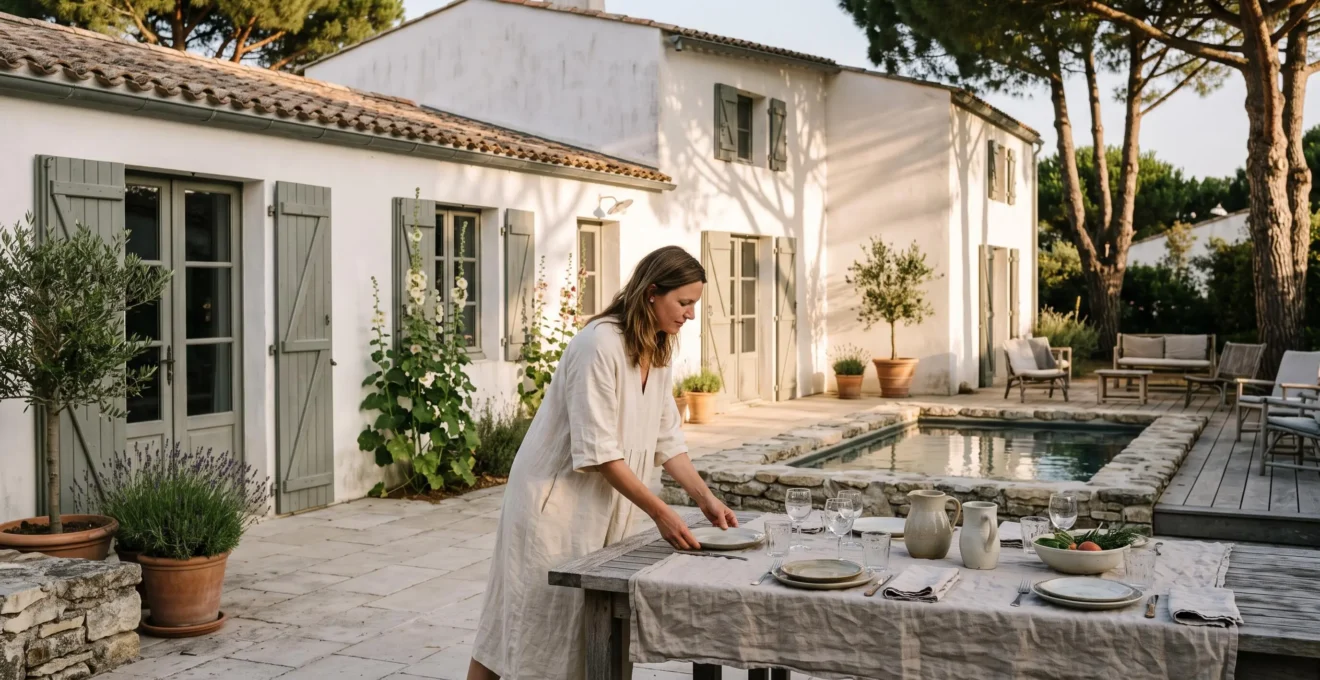
For a premium stay, focus on criteria that protect your time and comfort. A beautiful property loses value if you spend each day driving, or if basic errands require planning. Prioritise what makes your days flow: outdoor space, proximity to the right village core, and the right balance between seclusion and access.
| Decision factor | Family focused on beaches | Couple seeking village life |
|---|---|---|
| Best-fitting village style | Quieter, nature-led areas with easy coastal access | Port or village centre with walkable evenings |
| Ideal season | June or early July for smoother logistics | May–June or September for atmosphere and availability |
| Villa priorities | Outdoor space and practical daily routine | Walkability, dining access, and an elegant setting |
| Trade-off to accept | More planning for dinners if you stay remote | Less absolute quiet in livelier hubs |
Peak-season reality check: in July–August, the most comfortable villas are often the ones that were reserved earliest. If privacy and precise location are essential, treat booking as part of the luxury experience—not a last-minute task.
If you want a practical next step to explore the topic further, this internal resource can help you frame expectations about what to look for: villa guarantees.
Planning Your Trip: Practical Tips for a Seamless Stay
Luxury on Île de Ré often comes down to timing: arriving when the island feels spacious, moving primarily by bike, and staying long enough to stop rushing. If you plan well, the island rewards you with an effortless rhythm—markets, coast, marshes, and long dinners without logistical noise.
When is the best time to visit Île de Ré for a premium experience?
Answer: for many luxury travellers, June and September offer the best balance of pleasant weather and smoother access to restaurants, beaches, and villas. July–August can still be excellent, but it typically requires earlier booking and more patience with traffic and parking in popular areas.
How long should I stay to avoid a rushed itinerary?
Answer: plan at least 4 to 5 days if you want to enjoy the island at a refined pace, without compressing villages into a checklist. This aligns with the destination’s own guidance from the Office de Tourisme de l’Île de Ré, and it matches how the island is best experienced: slow days, not fast hops.
How do I get to Île de Ré and move around smoothly?
Answer: access is typically organised via La Rochelle and then onward to the island; once there, the bike is the most natural mode for day-to-day movement. Best base village for minimal logistics: Saint-Martin-de-Ré in June or September, when moving between villages tends to feel simpler.
In high season, build your days to reduce car dependency: keep one “driving day” (if needed) and make the rest bike-first. It is the simplest way to preserve the premium feeling—less time searching for parking, more time in the landscape.
- Choose your base village first
Pick Saint-Martin-de-Ré for port-side energy (ideal in June/September), or lean toward Ars-en-Ré for marshland calm (best in late spring/early autumn).
- Lock in the villa early if travelling in July–August
Prioritise location and daily flow over “extra features” you may not use; this is what protects your time in peak season.
- Design days around one signature experience
Market + ride + coastal sunset is a reliable trio; keep dinners close to your base on busier nights.
- Leave space for spontaneity
Plan fewer moves per day; the island’s luxury is often found in unhurried moments between stops.
Is Île de Ré good for a luxury holiday?
Yes—if your idea of luxury is privacy, a refined setting, and high-quality local experiences rather than ostentation. The most consistent results come from choosing the right village for your style and travelling in June or September for a smoother pace.
Which villages should I visit on Île de Ré during a luxury stay?
For port-side elegance and convenience, prioritise Saint-Martin-de-Ré (ideal in June/September). For salt marsh landscapes and a slower, authentic atmosphere, add Ars-en-Ré (late spring/early autumn). Consider quieter coastal villages if privacy is your main priority.
How do I choose and book a luxury villa on Île de Ré?
Start with your non-negotiables (walkability vs seclusion, beach access, outdoor space), then choose the village that supports that rhythm. If you are travelling in July–August, treat early booking as essential—especially if you want a precise location and strong privacy.
If you are ready to move from planning to action, keep it simple: pick your dates, confirm your base village, then secure your accommodation while the best options are still available. For a last step, you can book a villa.