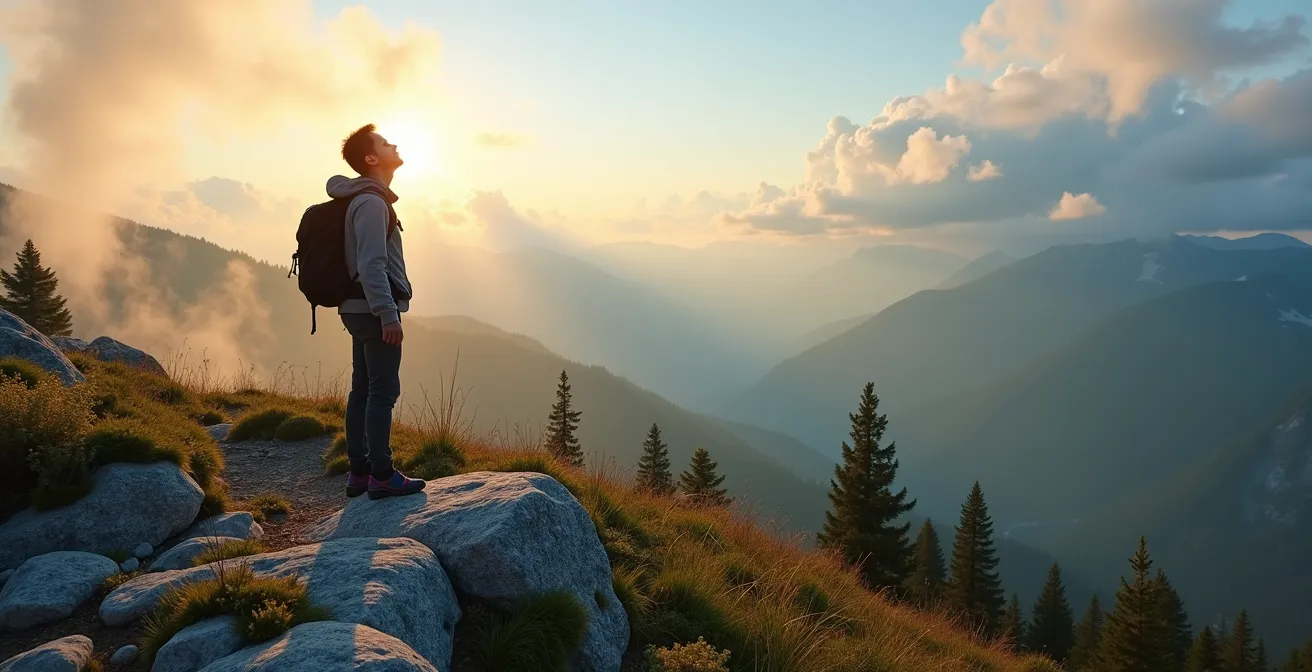
Chronic fatigue isn’t just about feeling tired; it’s a systemic imbalance. The solution isn’t simply rest, but a holistic recalibration of the body’s core functions. This guide explains how the unique mountain environment acts as a natural therapeutic agent. By leveraging mild altitude, cool air, and forest canopies, you can systematically reset your respiratory, immune, and circadian systems to restore energy from a cellular level up.
If you’re grappling with chronic fatigue, you’ve likely heard the common advice: get more rest, reduce stress, or simply take a vacation. Many seek refuge in nature, often feeling an intuitive pull towards the mountains. But this pull is more than a desire for pretty views. While the notion of “fresh mountain air” is often dismissed as a romantic cliché, a deeper look reveals a powerful, science-backed therapeutic process at play. The fatigue you feel isn’t just in your mind; it’s a deep-seated physiological state that conventional rest often fails to address.
The problem is that chronic fatigue represents a breakdown in your body’s fundamental systems—respiratory efficiency, immune response, and hormonal balance. Simply removing work stress for a week doesn’t fix these underlying dysfunctions. The true key to recovery lies not just in resting, but in actively recalibrating these systems. This is where the mountain environment transcends being a simple holiday destination and becomes a clinical tool.
This article will deconstruct the mechanisms behind this natural cure. We will explore how the very composition of mountain air, characterized by a lower oxygen partial pressure, acts as a form of “hormetic stress”—a beneficial stressor that stimulates your body to become stronger and more efficient. It’s a process of healing not through passive rest, but through active, physiological adaptation. We’ll delve into the science of how your body responds, from producing more oxygen-carrying red blood cells to resetting your internal clock for deeper, more restorative sleep.
To fully understand how this natural therapy works, this guide is structured to walk you through each key physiological benefit. You will discover the practical steps you can take to harness these powerful environmental factors for your own health and recovery.
Summary: How Mountain Air Reverses Chronic Fatigue
- Why Your Lungs Work More Efficiently Above 1,000 Meters?
- How to Practice “Breathwork” While Hiking for Maximum Benefit?
- Mountain or Beach: Which Climate Heals Burnout Faster?
- The Sunburn Risk in Cool Mountain Air That Most People Ignore
- How to Leverage Cool Mountain Nights to Fix Your Sleep Cycle?
- How Long Must You Stay Under the Canopy to Lower Cortisol?
- Pillow Menu: Genuine Comfort Feature or Just a Gimmick?
- Why Does the Ocean Breeze Improve Your Sleep Quality Instantly?
Why Your Lungs Work More Efficiently Above 1,000 Meters?
The cornerstone of mountain air’s therapeutic effect is a phenomenon known as mild hypoxia. At altitudes above 1,000 meters (about 3,300 feet), the air is “thinner,” meaning there is a lower partial pressure of oxygen. In response to this gentle challenge, your body doesn’t weaken; it adapts and becomes stronger. This isn’t dangerous oxygen deprivation but a controlled stimulus that triggers a cascade of powerful physiological upgrades.
The primary adaptation is in your blood. Your kidneys release more of a hormone called erythropoietin (EPO), which signals your bone marrow to produce more red blood cells. Think of this as upgrading your body’s oxygen delivery fleet. More red blood cells mean a greater capacity to transport oxygen from your lungs to your muscles and organs. This process, known as erythropoiesis, is why elite athletes train at altitude. For someone with chronic fatigue, it means your body becomes vastly more efficient at using the oxygen it gets, fighting the cellular-level exhaustion that defines the condition.
This concept of using hypoxia as a tool is gaining significant traction in medicine. For instance, a 2024 Harvard study explored how modulating the body’s oxygen-sensing pathways can have therapeutic effects, demonstrating that controlled hypoxia can be a powerful medical instrument. A mountain environment provides this stimulus naturally, encouraging your respiratory and circulatory systems to recalibrate for peak performance.
How to Practice “Breathwork” While Hiking for Maximum Benefit?
While your body automatically adapts to altitude, you can significantly enhance the benefits by practicing conscious breathwork during mountain activities like hiking. This transforms a simple walk into a potent therapeutic session, allowing you to actively participate in your body’s recalibration. The goal is to sync your breathing with your movement, maximizing oxygen intake and promoting lymphatic drainage.
Focusing on your breath also serves as a form of biofeedback. It helps you monitor your body’s adaptation to the altitude, preventing overexertion. If your breathing becomes shallow and rapid, it’s a signal to slow down. If you can maintain deep, rhythmic breaths, you are in the optimal zone for aerobic conditioning and healing. This practice is especially powerful near waterfalls or on exposed ridges, where the air is rich in negative ions, which are thought to boost mood and alertness.
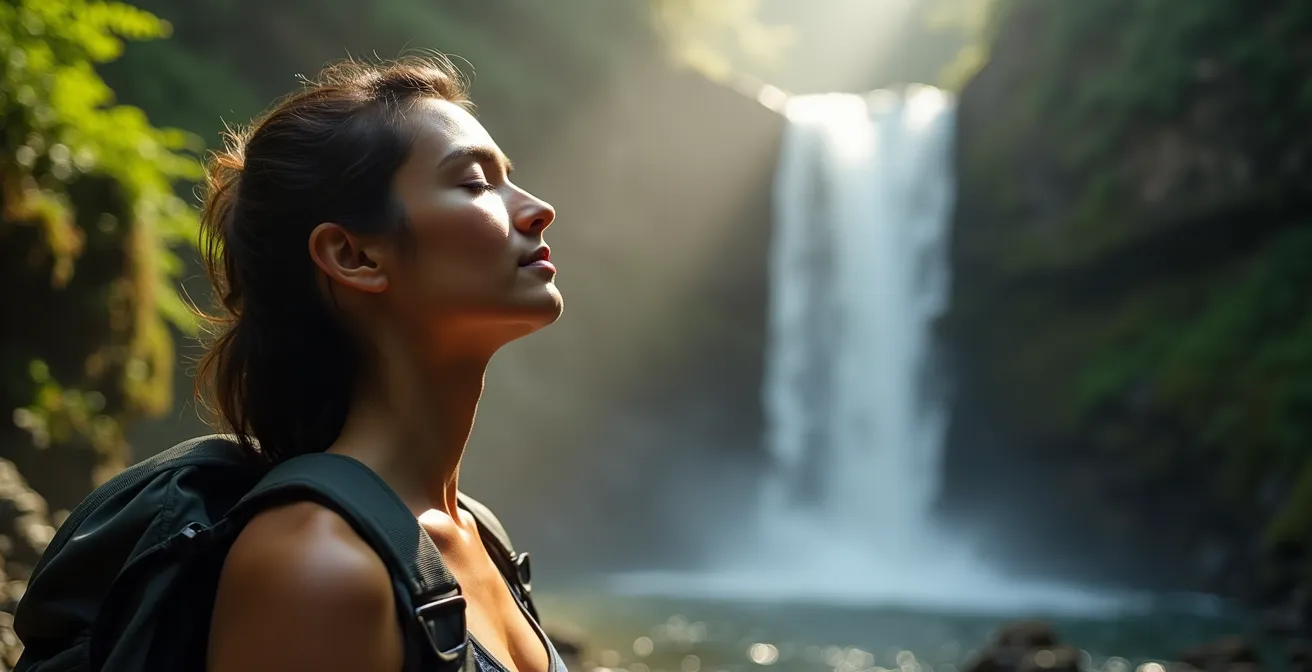
By consciously controlling your respiration, you are not just walking; you are performing a moving meditation that amplifies the healing properties of the mountain air. This synergy between environment and intention is a core principle of naturopathic healing.
Your Action Plan: Altitude-Specific Breathing Techniques
- Synchronize Movement and Breath: Practice deep diaphragmatic breathing while you hike. Inhale deeply through your nose as you take 3-4 steps, and exhale fully through your mouth over the next 3-4 steps. This creates a powerful lymphatic pump effect.
- Incorporate Box Breathing: During rest breaks, practice box breathing to calm the nervous system. Inhale for a count of four, hold your breath for four, exhale for a count of six, and hold the exhale for two.
- Seek Out Negative Ions: Make a point to pause and practice deep breathing near waterfalls, rushing rivers, or pine-dense forests, where negative ion concentrations are highest.
- Use Breath as Biofeedback: Pay close attention to your breathing rate and depth. Use it as a real-time gauge to moderate your hiking pace and respect your body’s acclimatization process.
- Understand the Internal Change: Remember that your body is producing more red blood cells to transport oxygen more efficiently. Your breathwork supports this internal process, making every breath more effective.
Mountain or Beach: Which Climate Heals Burnout Faster?
When recovering from burnout, many people instinctively choose between the mountains and the beach. Both offer a break from routine, but from a naturopathic perspective, they provide distinctly different therapeutic benefits. While the ocean air has its merits, the mountain environment is often superior for addressing the deep-seated physiological imbalances of chronic fatigue and burnout.
The primary advantage of the mountains lies in its air quality and the physical challenge it presents. Mountain air is typically cool, dry, and low in pollutants and allergens. This anti-inflammatory environment can be incredibly soothing for the respiratory system, reducing the low-grade inflammation that often accompanies chronic stress. Furthermore, the physical challenge of navigating varied terrain and altitude acts as a form of hormetic stress, forcing muscles to work harder and adapt, which builds both physical and mental resilience. This contrasts with the gentler, low-impact nature of a beach environment.
This table outlines the key differences in how each environment supports recovery, based on an analysis of their respective health benefits.
| Factor | Mountain Environment | Beach Environment |
|---|---|---|
| Recovery Type | Clean, less polluted air for better respiratory health | Ocean air filled with negative ions increases serotonin, leaving you refreshed |
| Physical Challenge | Mentally challenging altitude training develops toughness, forces muscles to work harder and adapt | Gentle, low-impact movement in sand |
| Air Quality | Dry, cool, anti-inflammatory | Humid air beneficial for respiratory system, keeps airways moist, improves lung function |
| Skin Effects | Requires extra hydration due to dry air | Prevents skin drying, reduces fine lines and wrinkles |
Moreover, the unique metabolic effects of altitude contribute significantly to recovery. As the Health Fitness Revolution research team notes, the environment itself can spur physiological changes. They highlight a fascinating connection between altitude and metabolism:
Even visiting mountains for less than one week can spike weight loss. High altitude decreases appetite, making us feel more full. Colorado holds the nation’s lowest obesity rate at 19.8%, attributed to altitude that promotes weight loss.
– Health Fitness Revolution Research Team, Top 10 Health Benefits of Vacationing in the Mountains
The Sunburn Risk in Cool Mountain Air That Most People Ignore
One of the great paradoxes of the mountain environment is the sun. The cool, crisp air can be deceptive, leading many to underestimate the intensity of solar radiation. At higher altitudes, the thinner atmosphere filters out less UV radiation, making the sun’s rays significantly more powerful. This effect is present even on cloudy or overcast days, creating a hidden risk for severe sunburn if you are not prepared.
The dry mountain air exacerbates this issue by causing your body to lose fluids more quickly through respiration and perspiration, leading to dehydration that can make your skin more vulnerable. Therefore, diligent sun protection with a high SPF sunscreen is not just advisable; it’s a medical necessity. However, this intense sunlight also offers a profound benefit: enhanced Vitamin D synthesis. Vitamin D is a crucial hormone for immune function and mood regulation, and its deficiency is often linked to fatigue and depression.
The key is a balanced approach. Experts recommend a “15-minute therapeutic window,” which involves brief, unprotected sun exposure during non-peak hours (early morning or late afternoon) to stimulate Vitamin D production. After this short window, it is critical to apply a high-SPF sunscreen to all exposed skin. This strategy allows you to harness the sun’s benefits while mitigating its risks, a core principle of holistic health management. Indeed, mountain safety experts warn that UV radiation is more intense and requires constant vigilance.
How to Leverage Cool Mountain Nights to Fix Your Sleep Cycle?
One of the most immediate and profound benefits of a mountain retreat is the dramatic improvement in sleep quality. This isn’t just because it’s quieter than the city. It’s a direct result of powerful environmental cues that help to perform a hard reset on your body’s circadian rhythm—the internal 24-hour clock that governs your sleep-wake cycle and is often severely dysregulated in cases of chronic fatigue.
The first factor is temperature. The human body is programmed to initiate sleep as its core temperature drops. The cool, crisp air of mountain nights facilitates this natural process, promoting a quicker transition into deep, restorative sleep. This cool, pure air also tends to be less allergenic and inflammatory, reducing nocturnal congestion and allowing for clearer, deeper breathing throughout the night.

The second factor is the light-dark cycle. Mountain environments typically have more distinct daylight hours and a profound, near-total darkness at night, free from the light pollution of urban areas. As mountain living research shows, this natural rhythm of bright days and dark nights helps to reset your body clock, optimizing the production of melatonin (the sleep hormone) and cortisol (the stress/wakefulness hormone). This powerful combination of cool temperatures and natural light cycles is essential for breaking the pattern of restless, unrefreshing sleep that plagues so many with burnout.
How Long Must You Stay Under the Canopy to Lower Cortisol?
While the air at altitude provides a systemic reset, the specific environment of a mountain forest offers another layer of healing. The practice of “forest bathing” or Shinrin-yoku is not just a walk in the woods; it is a scientifically validated therapy for reducing stress and boosting the immune system. The key lies in inhaling airborne compounds called phytoncides, which are aromatic essential oils released by trees like pines, cedars, and cypresses to protect themselves from pests and decay.
When we breathe in these compounds, they have a direct and measurable effect on our physiology. Research shows they can significantly lower the concentration of stress hormones like cortisol in the bloodstream, reduce blood pressure, and calm the nervous system. The impact on the immune system is particularly striking. Studies have found that time spent in a forest dramatically increases the activity of Natural Killer (NK) cells, a type of white blood cell that plays a vital role in fighting off virally infected cells and tumors.
The duration needed to achieve these effects is surprisingly short. Research indicates that significant benefits can be seen after just an hour, with more profound effects after longer immersion. According to a review by Paterson Wellness Research Team, participants who spent two nights in a forest had a 50% increase in NK cell activity that lasted for up to a week. Even a single hour outdoors can lower cortisol and blood pressure, with effects lasting for days. This makes forest bathing an incredibly efficient therapy for rebuilding a depleted immune system.
Pillow Menu: Genuine Comfort Feature or Just a Gimmick?
In the quest for recovery, it’s easy to focus on macro-factors like air quality and altitude while dismissing micro-details as trivial. A prime example is the “pillow menu” offered by many high-end wellness hotels. Is this a genuine comfort feature or just a marketing gimmick? From a holistic perspective, it represents a crucial principle: radical support for the body’s rest state.
Chronic fatigue and burnout place the nervous system in a constant state of hyper-vigilance. Deep recovery is only possible when the body feels completely safe and supported, allowing the parasympathetic “rest and digest” system to take over. Anything that causes even minor physical discomfort—a pillow that’s too firm, a room that’s too warm, a mattress that’s too soft—can prevent the body from fully letting go. A pillow menu, therefore, is not about luxury; it’s about removing a potential obstacle to deep, restorative sleep.
Choosing the right pillow ensures optimal spinal alignment, reduces neck tension, and facilitates clear airways, all of which are essential for quality sleep. This meticulous attention to detail is part of a larger philosophy of creating an environment where the body’s energy can be directed entirely toward healing, rather than toward managing minor discomforts. As one observer noted about the holistic recovery experience in the mountains:
A holiday in the mountains makes you healthy and happy. A stay in Alta Badia ensures that body and mind are completely ‘reset’. Everything adjusts to the natural rhythms again.
Key Takeaways
- Mountain air triggers a beneficial adaptation (erythropoiesis) where your body produces more red blood cells, improving oxygen efficiency.
- The cool, dark nights of mountain environments help perform a “hard reset” on your circadian rhythm, which is crucial for deep, restorative sleep.
- Forest bathing lowers the stress hormone cortisol and boosts immune-critical Natural Killer (NK) cells, with benefits lasting for up to a week after exposure.
Why Does the Ocean Breeze Improve Your Sleep Quality Instantly?
The soothing sound of ocean waves is often cited as a natural sleep aid. The ocean breeze contributes to this by providing a steady stream of “pink noise,” which can mask disruptive background sounds. The humid air also helps keep airways moist, which can be beneficial for some. However, when comparing sleep environments for deep, systemic recovery from fatigue, the mountains offer a different, and often more powerful, set of advantages.
While the ocean’s negative ions, generated by crashing waves, are known to boost serotonin and promote a sense of well-being, mountain environments generate these same beneficial ions from waterfalls and pine forests. The key difference lies in the air’s temperature and humidity. The cool, dry air of the mountains acts as a natural anti-inflammatory, reducing nocturnal congestion and promoting clearer breathing. This is often more conducive to uninterrupted sleep than the humid air of the coast.
Ultimately, the psychological effects also differ. The vast, open horizon of the ocean can induce a sense of calm openness, whereas the enclosed, protected feeling of a mountain valley can create a feeling of a safe sanctuary, which may be more beneficial for a hyper-vigilant nervous system trying to enter a state of deep rest. The following table contrasts the sleep-promoting factors of each climate.
| Sleep Factor | Ocean Environment | Mountain Environment |
|---|---|---|
| Sound Environment | Consistent pink noise from waves masks external sounds | Profound silence with cooler temps, natural rhythm helps body clock |
| Air Quality Impact | Humid air keeps airways moist, improves lung function during sleep | Cool, dry air reduces nocturnal congestion and inflammation |
| Negative Ions Source | Crashing waves generate negative ions | Waterfalls, pines, and altitude produce negative ions |
| Psychological Effect | Vast horizon induces calm openness | Enclosed valleys create protected sanctuary feeling |
To begin your own healing journey from chronic fatigue, the next logical step is to consciously integrate these natural principles into your life. Consider planning a retreat to an environment that offers these therapeutic benefits, and start today by embracing the simple, powerful practice of conscious breathing, no matter where you are.
Frequently Asked Questions about Mountain Air and Health
Why is UV exposure more dangerous in mountains?
UV radiation is more intense in mountains because the thinner atmosphere provides less filtration, even on cloudy days. Additionally, the dry mountain air can lead to dehydration, making your skin more susceptible to damage. It’s crucial to use a high SPF sun cream.
How does altitude affect vitamin D production?
The more intense sunlight found in mountain regions significantly boosts your body’s production of Vitamin D. This is particularly beneficial during the darker winter months, as Vitamin D is essential for lifting mood and strengthening the immune system.
What is the recommended sun exposure approach?
A balanced approach is best. Follow the “15-minute therapeutic window” by allowing brief, unprotected sun exposure outside of peak hours (early morning or late afternoon) to stimulate Vitamin D synthesis. After this short period, apply high SPF protection to all exposed skin to prevent sun damage.