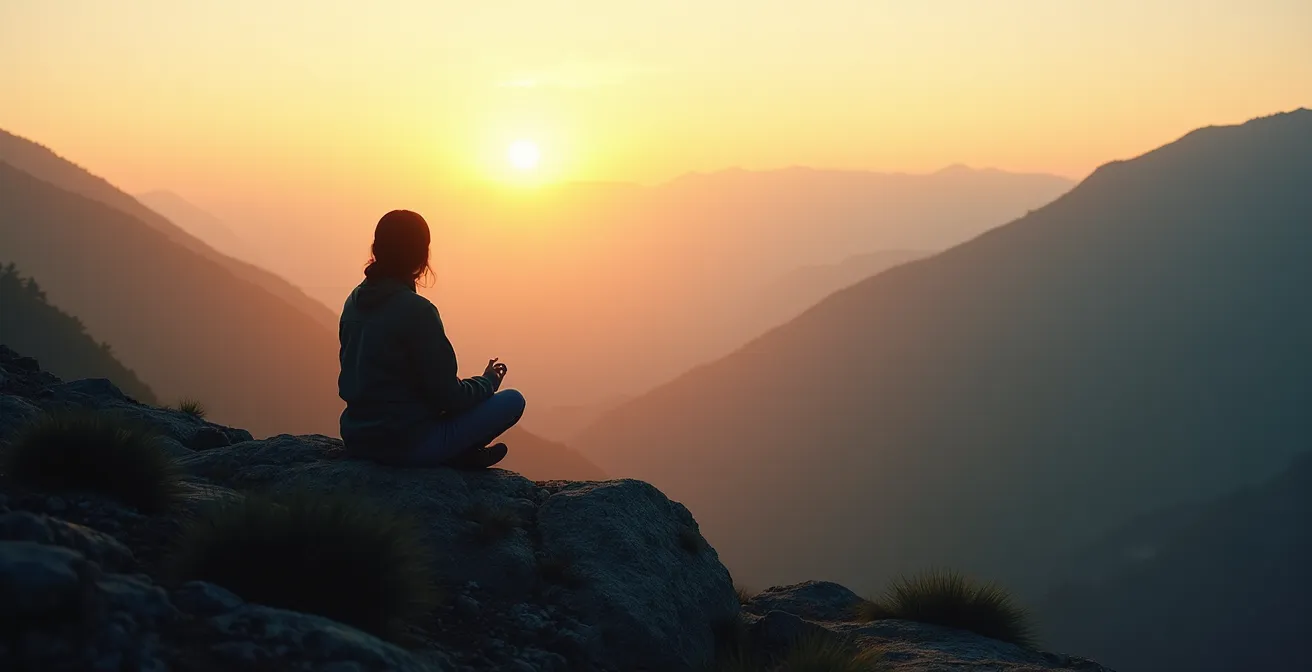
Contrary to popular belief, a true mental reset isn’t found by simply escaping work; it’s achieved by intentionally engineering a journey that systematically recalibrates your brain.
- Three days of immersion in nature can boost creative problem-solving by nearly 50%, a phenomenon known as the “Three-Day Effect.”
- The environment you choose—from a forest releasing therapeutic chemicals to the ion-rich mountain air—directly impacts your physiological and mental state.
Recommendation: Instead of planning a distraction, design a structured “re-entry protocol” for your return to ensure the benefits of your journey last.
The feeling is familiar to many professionals: a constant low-hum of exhaustion, a screen-blurred mind, and the creeping sensation that you’re operating on fumes. The conventional wisdom is to book a vacation, disconnect, and “recharge.” But often, we return to the same overwhelming inbox, and the calm evaporates within hours. We treat the symptoms—fatigue and stress—with a temporary distraction, rather than addressing the root cause: a dysregulated nervous system and a mind that has forgotten how to be silent.
This isn’t about simply going somewhere quiet. It’s about understanding that a genuine reset is a physiological process. The idea that you can just switch off is a myth. True disconnection requires a deliberate methodology, a kind of personal protocol for cognitive decoupling. This guide reframes the concept of a solo trip from a mere escape into an intentional, structured experience for deep contemplation. It’s about using solitude and nature not as a backdrop, but as active tools to rewire your brain, find clarity, and build a more resilient foundation for your return.
We will explore the science behind why your brain needs a specific duration of silence to reset, practical strategies for going offline without anxiety, and how to choose the right environment for your specific needs. We will then cover the most critical, yet often ignored, phase: how to prevent the post-trip “re-entry blues” and integrate your newfound clarity back into your daily life. This is your manual for engineering a journey that truly transforms, rather than just temporarily placates.
This guide offers a structured path to a profound solo journey. Explore the sections below to understand each step of this transformative process, from the neurological foundations of a reset to the practicalities of maintaining your inner peace upon return.
Summary: How to Engineer a Solo Trip for a True Mental Reset
- Why Your Brain Needs 3 Days of Silence to Reset Completely?
- How to Go Offline for a Week Without Panicking About Work?
- Guided Retreat or Solo Cabin: Which Is Better for Mental Clarity?
- The “Re-entry Blues”: How to Prevent the Crash After a Spiritual Trip?
- How to Set Up Your Daily Routine to Trigger Deep Reflection?
- How Trees Release Chemicals That Boost Your Killer T-Cells?
- Why Google Maps Offline Fails You When You Need It Most?
- Why Is Mountain Air Considered a Cure for Chronic Fatigue?
Why Your Brain Needs 3 Days of Silence to Reset Completely?
The desire to “get away from it all” is more than a fleeting impulse; it’s a deep-seated neurological need. Your brain, particularly the prefrontal cortex responsible for executive functions like planning and decision-making, is constantly overstimulated in modern life. It never gets a chance to quiet down, leading to mental fatigue and diminished creativity. The solution isn’t just a day off, but a sustained period of disconnection, often referred to as the “Three-Day Effect.” This is the minimum time required for the cognitive noise to subside and for your brain to shift into a more restorative, reflective state.
During the first 24 hours of silence and nature immersion, your mind is still processing the residual stress of your work life. It’s a period of unwinding, where you may feel restless or even bored. By day two, the chatter begins to fade. Your attention shifts from internal anxieties to external sensory input—the sound of wind, the texture of bark, the changing light. It is on the third day that the magic happens. Your brain’s default mode network, associated with creativity and self-reflection, becomes more active. This neurological reset is not just a feeling; it’s measurable. In fact, pioneering research by David Strayer found a 50% improvement in creative problem-solving after just a few days of immersion in nature, disconnected from technology.
Think of it as a cognitive deep clean. By removing the constant influx of emails, notifications, and deadlines, you allow your brain to recalibrate. It stops reacting and starts reflecting. This three-day period provides the necessary space for buried insights to surface and for you to reconnect with a more authentic, less frantic version of yourself. It’s not about doing nothing; it’s about creating the conditions for your brain to do its most important, restorative work.
How to Go Offline for a Week Without Panicking About Work?
The idea of disconnecting for a week can induce more anxiety than the burnout it’s meant to cure. The fear of missing a critical email or a project derailing is real. The key to going offline without panicking is to replace reactive anxiety with proactive structure. It’s not about abandoning your responsibilities; it’s about creating a container for them so your mind can be truly free. This involves setting clear boundaries, communicating them effectively, and, most importantly, shifting your reliance from digital immediacy to analog intention.
Before you leave, prepare your digital environment. Set up a clear out-of-office auto-reply that states you will not have access to email and directs inquiries to a designated colleague. Archive your inbox so you don’t return to a wall of unread messages. The most powerful step, however, is a psychological one: learning to trust in analog tools again. This act of cognitive decoupling from your devices is a practice in mindfulness itself. Instead of relying on a smartphone for everything, carry a simple notebook for thoughts, a watch for time, and a physical map for navigation.

This deliberate shift to analog is not about Luddism; it’s about reclaiming your attention. When you navigate with a map and compass, you are forced to engage with your environment in a deeply present way. You must observe landmarks, estimate distances, and orient yourself within the landscape. This process occupies the “planning” part of your brain in a healthy, immediate way, leaving no room for abstract work worries to fester. It transforms navigation from a passive, screen-based task into an active, contemplative practice that grounds you in the here and now.
Guided Retreat or Solo Cabin: Which Is Better for Mental Clarity?
Once you’ve committed to a solo journey, the next question is structure. Should you surrender to the schedule of a guided retreat or embrace the total freedom of a solo cabin in the woods? There is no single right answer; the optimal choice depends entirely on your intention and what your mind needs most right now. Both paths lead to clarity, but they take very different routes. A guided retreat offers a framework for healing, while a solo cabin provides a blank canvas for self-discovery.
A guided retreat is ideal if you are grappling with a specific, known issue like grief, a career transition, or severe burnout. The pre-planned schedule of meditation, workshops, and communal meals removes the burden of decision-making, allowing you to focus entirely on your inner work. Accountability is external, provided by facilitators and the group. As the Mighty Travels Research Team notes in their “Finding Your Zen” study, this can be a significant advantage. They state:
For the solo traveler, spiritual retreats provide a ready-made community. You can connect with like-minded people without the pressure of forming new relationships. Sharing the journey can enhance motivation and accountability.
– Mighty Travels Research Team, Finding Your Zen: Solo Spiritual Retreats Study
In contrast, a solo cabin offers complete autonomy and is better suited for exploring unknown feelings or simply improving your capacity for self-reflection. Here, the structure is entirely self-imposed. This path requires a higher degree of self-discipline but offers the profound reward of true independence and solitude. You are free to follow your own rhythm, whether that means meditating for hours, hiking all day, or simply sitting with your thoughts without an agenda. The following comparison, based on data from a recent comparative analysis, can help you decide.
| Aspect | Guided Retreat | Solo Cabin |
|---|---|---|
| Best For | Solving specific, known problems (grief, burnout) | Exploring unknown feelings, improving self-reflection |
| Structure Level | High – scheduled activities, group sessions | Low – complete freedom, self-directed |
| Accountability | External – facilitators and group | Internal – self-discipline required |
| Social Aspect | Ready-made community without pressure | Complete solitude and independence |
| Cost Range | Higher – includes guidance and programs | Lower – accommodation only |
The “Re-entry Blues”: How to Prevent the Crash After a Spiritual Trip?
The serene, clear-headed person you became on retreat can feel like a distant memory just 48 hours after returning to your normal life. This jarring transition, often called the “re-entry blues,” happens when the peace of your contemplative space collides with the frantic pace of your daily routine. The benefits of your trip aren’t lost; they are simply overwhelmed. Preventing this crash requires as much intention as the trip itself. The key is to create a “buffer zone”—a structured protocol for your first 72 hours back—to gently integrate the stillness you cultivated.
This is not about clinging to the vacation high, but about weaving the threads of your newfound awareness into the fabric of your life. It’s about recognizing the contrast and using it as a tool. One traveler, Maddie, shared a powerful experience that illustrates this point. After a difficult breakup, she found herself on a solo trip in Asia, an experience documented by Euronews Travel in a piece on self-care journeys. She recounts:
‘I was once crying in a bunk bed over my ex, thinking I made the biggest mistake. Two days later, I was riding through rice fields in Vietnam, full of peace and joy. That contrast reminded me that pain isn’t permanent, and healing sneaks up on you in motion.’
– Maddie, as told to Euronews Travel
Maddie’s story shows that holding the memory of peace while navigating difficulty is the essence of integration. To do this systematically, you need a practical plan. Don’t dive straight into your 2,000 unread emails. Instead, implement a clear, step-by-step process to ease your nervous system back into a high-stimulus environment. The following checklist provides a concrete framework for this crucial period.
Your 72-Hour Re-entry Protocol: A Checklist for Integration
- Day 1: Scheduled Silence. Intentionally schedule and protect at least two hours of accumulated quiet time. This could be two one-hour blocks or several shorter periods without screens or conversation.
- Day 2: Sensory Anchoring. To stay present, practice focusing on one sense per hour. For one hour, notice only sounds; the next, only physical sensations. This grounds you in the present moment and prevents your mind from being hijacked by your to-do list.
- Day 3: Mindful Beginnings. Start your day without screens. Before checking your phone, take a five-minute walk without earbuds or simply sit in silence. Re-establish direct contact with your physical reality first.
- Anchor Habit Installation. Choose one small, simple practice from your trip (e.g., five minutes of silence before your morning coffee) and commit to it. This habit becomes a touchstone, connecting you back to your centered state.
- Task Buffering. Instead of jumping from one meeting to the next, create 10-minute buffer zones between tasks. Use this time to breathe, stretch, and consciously transition, rather than letting your day become a reactive blur.
How to Set Up Your Daily Routine to Trigger Deep Reflection?
During your solo retreat, freedom from your normal schedule can be both a blessing and a curse. Without a deliberate structure, the days can drift by without leading to the deep reflection you seek. The goal is not to replicate your rigid work calendar but to create a gentle, supportive rhythm that encourages introspection. This routine should be built around one core principle: creating and protecting silence. It is within these pockets of quiet that your mind can finally begin to speak to you.
The foundation of this routine is a mindful morning. Before the analytical mind fully wakes up and starts planning, there is a window of softer, more creative consciousness. This is the ideal time for your primary reflection practice. Instead of reaching for your phone, begin your day with an activity that grounds you in your body and your environment. This could be meditation, journaling, or simply watching the sunrise with a cup of tea. The specific activity matters less than the intention: to start your day from a place of quiet observation rather than frantic action. This is not just a spiritual practice; it’s a neurological one. Researchers have found that as little as two hours of daily quiet time can stimulate neurogenesis—the creation of new brain cells—in the hippocampus, a region vital for memory and emotion.

Structure the rest of your day with an anchor point in the middle, such as a long walk or hike in nature, which serves as a form of moving meditation. Allow the evening to be a time for gentle winding down. Avoid stimulating activities and screens. Perhaps read a book of philosophy or poetry, or simply sit and listen to the sounds of the night. This daily rhythm of intentional silence in the morning, mindful movement in the afternoon, and quiet closing in the evening creates a predictable container. Within this safe and structured space, your mind feels secure enough to let go of its defenses and allow deeper thoughts and feelings to emerge.
How Trees Release Chemicals That Boost Your Killer T-Cells?
When you walk through a dense forest, you are doing more than just exercising; you are participating in a form of natural aromatherapy with profound physiological benefits. This practice, known in Japan as Shinrin-yoku or “forest bathing,” is centered on the fact that trees release airborne chemicals called phytoncides. These are volatile organic compounds that protect trees from pests and disease. When we inhale them, they have a remarkable effect on our bodies, directly impacting our immune system.
The mechanism is surprisingly direct. Inhaling phytoncides, particularly from evergreen trees like pines and cedars, has been shown to increase the number and activity of a crucial type of white blood cell: the Natural Killer (NK) cell. These cells are a cornerstone of your innate immune system, responsible for seeking out and destroying virus-infected cells and early-stage tumor cells. A walk in the woods is, quite literally, a way to boost your body’s first line of defense against illness.
This is a perfect example of “environmental priming”—choosing your contemplative space not just for its beauty, but for its tangible health benefits. A forest environment doesn’t just calm your mind; it actively strengthens your body. Imagine the crisp scent of pine on a cool morning. That scent is not just a pleasant sensation; it’s a signal that you are breathing in a complex cocktail of compounds that are actively working to enhance your immune function. This understanding transforms a simple nature walk from a leisure activity into a deliberate act of self-care and physiological optimization, making the forest an ideal setting for a restorative solo journey.
Why Google Maps Offline Fails You When You Need It Most?
In our quest for efficiency, we have outsourced one of our most fundamental human skills: navigation. We place blind faith in digital tools like Google Maps, assuming they are infallible. However, for the contemplative traveler, this reliance is a double-edged sword. First, its offline capabilities are notoriously unreliable. A drained battery, a software glitch, or a map area that didn’t fully download can leave you stranded precisely when you need guidance most. But more importantly, the seamless convenience of GPS robs you of a powerful opportunity for mindfulness and deep engagement with your surroundings.
Passive navigation, where you simply follow a blue dot on a screen, disengages your brain. You don’t learn the route; you merely execute instructions. This cognitive passivity is the opposite of the focused presence you seek on a contemplative journey. Active, analog navigation—using a paper map and a compass—forces you into a state of heightened awareness. You must observe the terrain, identify landmarks, and constantly update your mental model of where you are. This process is a form of applied mindfulness. It anchors you firmly in the present moment and the physical world.
This act of taking charge of your own path builds not only a mental map of the area but also a profound sense of self-reliance and accomplishment. It reinforces the core lesson of a solo trip: you are capable. As the editorial team at Solo Traveler World puts it, there’s a cognitive benefit to this effort. In an article about mindful travel, they state that when navigating alone, you remember the places you visit more clearly. They add:
Traveling solo, it’s all up to me. I plan and navigate everything myself. As a result, I remember more clearly the places I visit and the routes I take.
– Solo Traveler World Editorial Team, Solo Travel Equals Mindful Travel
Ditching the digital crutch is not about making your journey harder; it’s about making it richer. It’s a deliberate choice to trade convenience for consciousness, a fundamental step in transforming a simple trip into a journey of deep reflection.
Key Takeaways
- A true mental reset requires at least three days of disconnected nature immersion to quiet the brain’s prefrontal cortex.
- Choose your environment strategically: a guided retreat for structured problem-solving, a solo cabin for open-ended self-exploration.
- The most critical phase is re-entry; use a 72-hour protocol to integrate calm and prevent a post-trip “crash.”
Why Is Mountain Air Considered a Cure for Chronic Fatigue?
For centuries, mountain climates have been prescribed as a restorative cure for ailments ranging from lung conditions to chronic fatigue. While fresh, unpolluted air is an obvious factor, there is a deeper, more scientific reason for the profoundly revitalizing effect of high-altitude environments. The air in mountains, especially near waterfalls or after a thunderstorm, is rich in negative ions—oxygen atoms with an extra electron. While they sound negative, their effect on the human body is overwhelmingly positive.
These invisible particles are believed to increase the flow of oxygen to the brain, resulting in higher alertness, decreased drowsiness, and more mental energy. They may also boost levels of serotonin, the “feel-good” neurotransmitter, helping to alleviate depression and stress. This biochemical boost provides a direct physiological antidote to the lethargy and mental fog of burnout. Your body is not just relaxing; it is being actively energized at a cellular level. This is why a simple walk in the mountains can feel so much more invigorating than one at sea level.
Furthermore, the novel sensory input of a mountain environment triggers a state of enhanced brain plasticity. The crisp air, the vast vistas, the unique sounds—all of these signals stimulate your brain in new ways, breaking it out of its tired, habitual patterns. This is the essence of what a reset journey is about. As one solo traveler eloquently described her experience in the mountains, it’s a dual process of discovery and renewal. In an article featured on Euronews Travel, she explains that solo travel is:
‘like a mirror and a reset button all at once. It pulls you out of your comfort zone, and helps you get really clear on who you are and what you actually want.’
– Solo Traveler, as told to Euronews Travel
This clarity is the ultimate goal. By intentionally choosing an environment that supports you both mentally and physiologically, you create the optimal conditions for this profound reset to occur, returning not just rested, but truly renewed.
Your journey towards deep contemplation begins not with a plane ticket, but with the intention to create a structured, healing experience. By applying these principles, you can transform a simple solo trip into a powerful mechanism for lasting change. The next logical step is to start designing the architecture of your own personal reset.