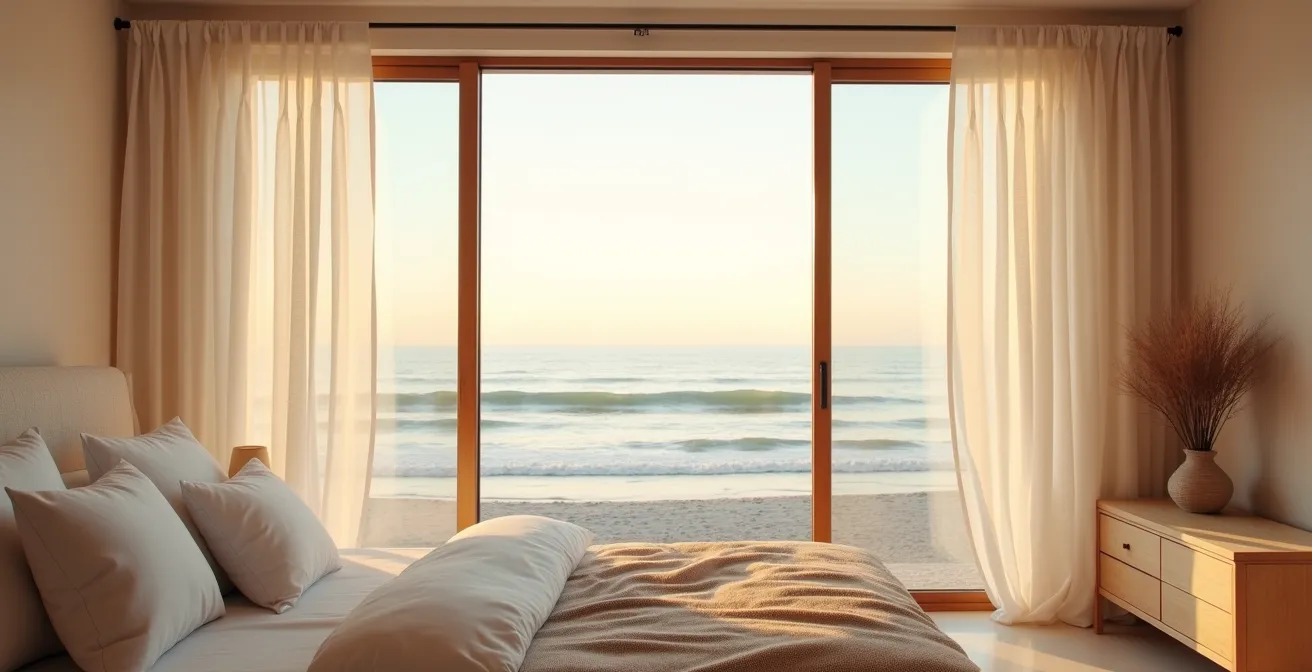
The restorative power of sea air is not just a feeling; it’s a measurable biochemical process that directly enhances sleep quality by reducing stress hormones.
- Negative ions in coastal air are scientifically shown to lower cortisol levels, calming the nervous system within minutes of exposure.
- Aerosolized salt particles act as a natural respiratory therapy, clearing airways for deeper, less interrupted breathing throughout the night.
Recommendation: To maximize benefits, strategically choose a destination based on air quality and configure your room’s ventilation to harness this natural therapeutic effect.
For stressed urbanites battling insomnia or respiratory discomfort, the promise of a good night’s sleep often feels like a distant dream. Many seek refuge by the coast, intuitively drawn to the soothing sound of waves. The common wisdom suggests that relaxation is simply a byproduct of being on vacation, away from the daily grind. We are told that the rhythmic crash and retreat of the tide calms the mind, and while this is true, it is a dramatically incomplete picture. This belief overlooks the profound, active, and scientifically validated therapeutic properties of the very air you breathe.
The truth is, the ocean breeze is far more than a pleasant sensory experience. It functions as a powerful, natural agent of wellness, initiating a cascade of positive physiological changes. The air is a complex cocktail of moisture, aerosolized salt, and, most importantly, a high concentration of negative ions. While conventional advice focuses on the psychological effects of a beach setting, the real key to unlocking deep, restorative sleep lies in understanding and harnessing the direct biochemical impact of this unique coastal atmosphere on your body.
This guide moves beyond the platitudes. We will deconstruct the science behind why sea air is a potent sleep aid. We will explore how to select the ideal coastal environment for your health needs, protect your belongings from its corrosive effects, and configure your surroundings to transform a simple seaside stay into a targeted wellness retreat. It’s time to stop attributing the benefits to mere relaxation and start leveraging the quantifiable power of the ocean.
To help you navigate this topic, this article is structured to provide a comprehensive understanding, from the underlying science to practical, actionable advice. Below is a summary of the key areas we will explore.
Summary: Unlocking the Secrets of Coastal Air for Better Sleep
- Why Sea Air Reduces Stress Hormones Within 30 Minutes?
- How to Choose a Destination Based on Air Quality and Salinity?
- Tropical Humidity or Mediterranean Dryness: Which Is Better for Your Skin?
- The Salt Air Mistake That Destroys Your Laptop in One Week
- How to Configure Your Seaside Room Windows for Maximum Sleep Benefits?
- Pillow Menu: Genuine Comfort Feature or Just a Gimmick?
- Train vs. Plane: At What Distance Does the Train Become Cleaner?
- How to Use Solo Travel for Deep Contemplation and Reset?
Why Sea Air Reduces Stress Hormones Within 30 Minutes?
The immediate sense of calm you feel at the coast is not an illusion; it is a direct neurochemical reaction. The primary mechanism behind this rapid stress reduction is the high concentration of negative ions in the air. Unlike polluted urban environments filled with positive ions, the air at the ocean’s edge is charged differently. The constant motion of waves breaking and releasing spray creates a micro-environment rich in these beneficial particles. In fact, research shows that ocean beaches contain approximately 4,000 negative ions per cubic centimeter, a stark contrast to the less than 100 found in a typical indoor office.
When inhaled, these negative ions are absorbed into the bloodstream, where they are believed to stimulate the production of serotonin, a neurotransmitter that promotes feelings of well-being and happiness. More critically for sleep, they help regulate cortisol, the body’s primary stress hormone. By lowering circulating cortisol levels, the nervous system shifts from a “fight-or-flight” state to a “rest-and-digest” state, making it significantly easier to unwind and prepare for sleep. This effect is compounded by the natural sounds of the environment. A 2021 study on natural soundscapes found that ocean sounds had the largest positive impact on health, measurably lowering stress markers and improving mood.
Furthermore, the saline air itself contributes to this state of calm through what is known as aerosolized halotherapy. As the Travoh Health Research Team explains in their article, “The Health Benefits of Sleeping At The Beach”:
Breathing in the salt-laden air can clear the respiratory system and aid in overall lung function. The antibacterial and anti-inflammatory properties of salt air can benefit those with asthma, bronchitis, or other respiratory ailments, potentially leading to more profound and restful sleep.
– Travoh Health Research Team, The Health Benefits of Sleeping At The Beach
This improved respiratory function means more efficient oxygen uptake, which further signals the body to relax. The combination of biochemical regulation from negative ions and enhanced breathing from salt air creates a powerful, synergistic effect that can lower stress within the first half-hour of arrival.
How to Choose a Destination Based on Air Quality and Salinity?
Not all coastal air is created equal. For the discerning traveler seeking maximum health benefits, selecting a destination should go beyond scenic views and involve an assessment of its environmental properties. The key factors to consider are negative ion concentration and the characteristics of the local aerosolized salt. Ion concentration is highest where water is most agitated. While a calm bay is relaxing, a coastline with consistent, breaking waves will generate a more therapeutically potent atmosphere.
To put this in perspective, different natural environments produce vastly different levels of negative ions. This data provides a clear hierarchy for choosing a location based on its potential for natural air therapy, as shown in a comparative analysis of ion concentrations.
| Location Type | Negative Ion Concentration (per cm³) | Health Impact Level |
|---|---|---|
| Waterfalls | 100,000 | Maximum therapeutic benefit |
| Ocean beaches | 4,000 | High therapeutic benefit |
| Mountain forests | 3,000 | Moderate therapeutic benefit |
| Indoor spaces | 100 or less | Minimal benefit |
This table clearly shows that while waterfalls are the gold standard, ocean beaches offer a remarkably high therapeutic benefit. When choosing, look for destinations known for their powerful surf, such as coastlines facing the open ocean rather than sheltered seas. Beyond ion counts, consider the nature of the sea itself. Colder waters, like those of the North Atlantic, tend to produce a finer, more mineral-rich salt spray compared to warmer tropical seas. This can be particularly beneficial for respiratory conditions, as the smaller particles can travel deeper into the lungs.
Visually, this process of aerosolization is a fascinating micro-event, where each droplet becomes a vessel for salt and minerals.

As seen here, the formation of salt crystals from sea spray is a complex physical process. When selecting a destination, you are essentially choosing the specific character of these aerosolized minerals. A location’s geology, water temperature, and wave action all define the unique signature of its air. Therefore, researching factors like prevailing winds (onshore winds are essential) and local geography (cliffs and coves can concentrate the spray) can transform your trip from a simple holiday into a targeted health intervention.
Tropical Humidity or Mediterranean Dryness: Which Is Better for Your Skin?
The choice between a humid tropical climate and a dry Mediterranean one has significant implications for skin health, especially when combined with coastal air. Neither is universally “better”; instead, each offers distinct benefits and requires a different skincare approach. The key is to adapt your routine to the environment to leverage its advantages while mitigating its challenges.
In a tropical, high-humidity environment, the air is saturated with moisture. This is excellent for keeping the skin naturally hydrated, preventing the trans-epidermal water loss that often leads to dryness and fine lines. The constant moisture can give the skin a plump, dewy appearance. However, the combination of humidity, salt, and sweat can also lead to clogged pores and breakouts for those with oily or acne-prone skin. The goal here is to lock in the beneficial moisture without adding heavy, occlusive products.
Conversely, a dry, Mediterranean climate offers different advantages. The lower humidity means less risk of pore congestion. The salt in the air acts as a gentle, natural exfoliant, sloughing away dead skin cells and promoting a smoother texture. However, this same process can be stripping for dry or sensitive skin types, potentially compromising the skin’s natural barrier. Here, the focus must be on replenishing lost lipids and reinforcing the skin’s protective layer. Adopting a climate-adaptive skincare protocol is therefore essential to maintain skin balance.
To manage these variables, a targeted approach is necessary. Here is a practical skincare protocol for coastal environments:
- For tropical humidity: Apply non-comedogenic humectants (like hyaluronic acid) before beach exposure to attract and lock in beneficial moisture without clogging pores.
- For Mediterranean dryness: Use ceramide-rich moisturizers after sun and sea exposure to actively repair and support the salt-exfoliated skin barrier.
- Universal rule: Apply a mineral-based sunscreen 30 minutes before ocean exposure. This protects from UV damage while still allowing for the absorption of beneficial negative ions.
- Evening routine: Always rinse with fresh water to remove salt residue, then apply antioxidant serums (like Vitamin C) to neutralize oxidative stress.
- Night care: Use overnight masks containing hydrating ingredients to restore the skin’s moisture balance, regardless of the climate type.
The Salt Air Mistake That Destroys Your Laptop in One Week
While the ocean breeze is a balm for the soul, it is a poison for electronics. The fine, aerosolized salt that works wonders on your respiratory system is incredibly corrosive to the delicate metallic components inside laptops, cameras, and smartphones. Many travelers, especially digital nomads, make the fatal mistake of treating a seaside balcony like a regular office, exposing their expensive equipment to this invisible threat. The damage is not immediate but insidious, leading to catastrophic failure often just days or weeks later.
The corrosive process is shockingly rapid and relentless. Salt residue attracts moisture from the air, creating a highly conductive electrolyte film on circuit boards. This can cause short circuits, component failure, and permanent damage, even when a device is powered off.
Case Study: The Alarming Speed of Salt Corrosion
In a controlled test, electronics manufacturer MaxBotix demonstrated the aggressive nature of salt exposure. Their findings were stark: they concluded that just one second of direct salt water exposure can initiate the same long-term corrosive effects as an entire day of ambient salt air exposure. The salt residue remains active, continuing to eat away at susceptible surfaces for weeks or even years until the material is consumed or the salt is neutralized. This highlights that even brief, seemingly harmless exposure can trigger irreversible damage.
Protecting your technology is not optional; it is a critical part of any coastal stay. Simple awareness is the first step, but a proactive protection strategy is essential for anyone bringing valuable electronics to the shore. A few disciplined habits can mean the difference between a productive workcation and a very expensive paperweight.
Action Plan: The Coastal Tech Survival Checklist
- Assess your workspace: Identify all electronics and their proximity to open windows or sea-facing balconies. Prioritize moving them inland.
- Gather protective gear: Inventory your protective measures. Do you have sealed containers, desiccant packs, and port dust plugs?
- Check for existing exposure: Examine ports and vents for any white, crystalline residue, which indicates salt buildup that needs immediate cleaning.
- Evaluate your routine: Is your weekly cleaning schedule sufficient? A quick wipe-down with high-purity isopropyl alcohol neutralizes salt deposits.
- Plan for humidity control: If staying longer than a week, consider a small dehumidifier for your workspace to actively reduce moisture-related corrosion.
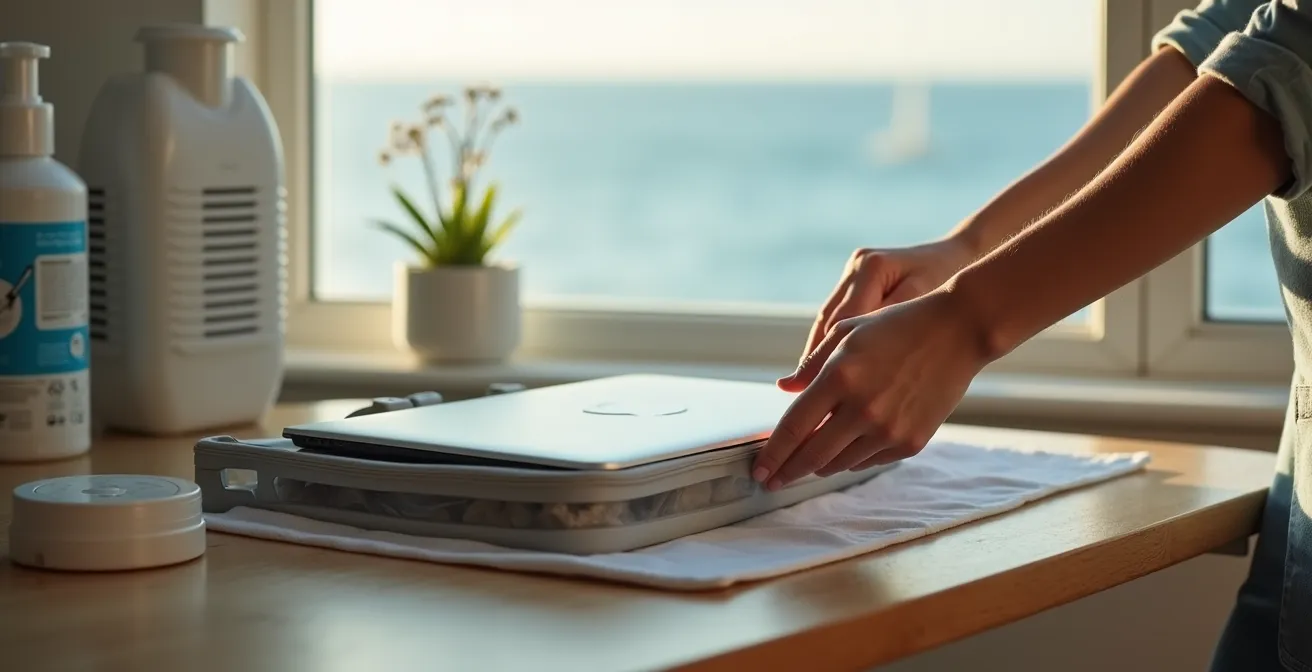
An effective setup, as illustrated, involves creating a controlled micro-environment. It’s about enjoying the view, not bathing your laptop in it. Positioning computers away from direct airflow from windows and using protective cases during transport are non-negotiable practices.
How to Configure Your Seaside Room Windows for Maximum Sleep Benefits?
Simply being in a seaside room is not enough; you must actively manage your environment to “harvest” the full therapeutic benefits of the coastal air. The configuration of your windows is the primary tool for this, allowing you to control airflow, ion intake, and acoustic exposure for an optimized sleep environment. The goal is to maximize the good (negative ions, wave sounds) while minimizing the bad (light pollution, disruptive high-frequency noises).
The concentration of negative ions fluctuates throughout the day, often peaking with the strongest onshore breezes. To capitalize on this, you need a dynamic window management strategy. While the studies measuring ion concentrations found that waterfalls are the ultimate source, the 4,000 ions per cubic centimeter at a beach are still a potent therapeutic dose worth capturing. This means opening windows wide when the breeze is blowing directly from the ocean, typically in the late afternoon and early evening, to “purge” the room of stale, low-ion indoor air.
As bedtime approaches, the strategy shifts. It’s about maintaining beneficial airflow while creating a sanctuary for sleep. This involves not just opening or closing a window, but creating a specific aerodynamic effect. By creating cross-ventilation using a high window on one side and a low window on the opposite, you can generate a gentle “Venturi effect,” which keeps the air moving consistently without creating a disruptive draft. This ensures a steady supply of fresh, ion-rich air all night long.
A strategic timeline for managing your windows can turn your room into a passive wellness device:
- Dusk Purge (6-8 PM): Open windows wide, especially those facing the sea, to coincide with strong onshore breezes. This floods the room with the highest concentration of negative ions.
- Sleep Filter (10 PM): Partially close windows or use adjustable louvers. The aim is to maintain airflow but block any artificial light from outside that could disrupt melatonin production.
- Night Position: Configure for cross-ventilation. If possible, a slightly open high window (e.g., a transom) and a slightly open lower window on an opposite or adjacent wall will create a silent, continuous air exchange.
- Dawn Draw (5-6 AM): Crack an east-facing window just slightly. This allows the first rays of morning blue light to enter, which is a powerful signal for resetting your circadian rhythm and promoting a natural, gentle awakening.
- Acoustic Management: Position your bed perpendicular to the main window. This allows the therapeutic, low-frequency sounds of the waves to fill the room while minimizing the jarring, high-frequency noises of wind or distant activity.
Pillow Menu: Genuine Comfort Feature or Just a Gimmick?
At first glance, a hotel’s pillow menu can seem like an indulgent gimmick. For the wellness-focused traveler in a coastal environment, however, it represents a crucial opportunity to fine-tune the sleep system for specific physiological needs. The right pillow is not just about softness; it’s a therapeutic tool that can address challenges unique to a seaside setting, such as humidity, changes in air pressure, and muscle tension from new activities.
The most significant environmental factor in many coastal areas is humidity. A standard down or synthetic pillow can trap moisture, becoming a breeding ground for allergens and feeling unpleasantly damp. This is where a pillow menu proves its worth. A breathable buckwheat or natural latex pillow is an ideal choice in these conditions. Their structures allow for constant air circulation, wicking away moisture and keeping your head cool and dry, which is essential for uninterrupted sleep in a humid climate.
Furthermore, travelers arriving from higher altitudes can experience sinus pressure as their bodies adjust to the denser, sea-level air. A standard pillow can exacerbate this discomfort. Requesting a wedge pillow from the menu can make a significant difference. By elevating the head and torso, it uses gravity to aid sinus drainage, preventing the congestion that can disrupt sleep. This simple choice can transform the first few nights of a trip from a stuffy, uncomfortable experience to a restful one.
Finally, a day spent swimming, surfing, or simply fighting the waves can lead to unaccustomed neck tension. A basic, unsupportive hotel pillow may not provide the necessary relief. A contoured memory foam pillow, often a staple on a good pillow menu, offers targeted support. It cradles the neck’s natural curve, alleviating strain on the muscles and promoting proper spinal alignment. This small adjustment can be the key to waking up refreshed and pain-free, rather than stiff and sore. Therefore, a pillow menu is far from a gimmick; it’s a valuable feature that allows you to customize your sleep environment to meet the specific demands of a coastal retreat.
Train vs. Plane: At What Distance Does the Train Become Cleaner?
When planning a getaway to the coast, the mode of transport is often a choice between speed and experience. While the carbon footprint is a valid concern—with trains generally becoming the “cleaner” option for the planet on trips under 500-700 kilometers—a thalassotherapy expert would argue for a different definition of “clean.” The truly superior choice is the one that delivers you to your destination in a better state of mind and body, primed for restorative sleep. From this perspective, the train is almost always the cleaner option.
The travel experience itself has a direct impact on your stress levels and sleep readiness. Air travel is an inherently stressful process. It involves navigating security, dealing with potential delays in a crowded terminal, and being confined in a pressurized cabin with recycled air. This entire experience elevates cortisol levels, putting your body in a state of high alert that can linger long after you’ve checked into your hotel, sabotaging your first night’s sleep.
In contrast, train travel is fundamentally more aligned with the principles of wellness and slow living. As research on the impact of travel stress highlights, the journey’s quality directly affects our ability to relax. People who can avoid the acute stressors of airports are better prepared to unwind. A scenic train journey allows the mind to decompress gradually. The ability to move around, enjoy changing landscapes, and even step out for fresh air at station platforms prevents the build-up of travel-related anxiety. You arrive not just at your destination, but in a state of mental calm.
The sounds and rhythms of train travel are also more conducive to relaxation than the roar of jet engines. The gentle, repetitive clatter of wheels on the track can be meditative, helping to quiet racing thoughts. This aligns with findings that natural, rhythmic sounds promote relaxation. By choosing the train, you are effectively starting your wellness retreat hours before you arrive, ensuring that your body and mind are receptive to the therapeutic coastal environment from the very first moment.
Key Takeaways
- The primary sleep benefit of sea air comes from high concentrations of negative ions, which measurably reduce the stress hormone cortisol.
- Effective respiratory function is enhanced by inhaling aerosolized salt, a process known as natural halotherapy, leading to deeper breathing.
- Protecting electronics from corrosive salt air is non-negotiable; use dehumidifiers, sealed containers, and regular cleaning to prevent permanent damage.
How to Use Solo Travel for Deep Contemplation and Reset?
A solo trip to the coast offers a unique and powerful opportunity for profound personal reset. Free from the social obligations and distractions of group travel, you can fully immerse yourself in the therapeutic environment and engage in deep contemplation. The coastline, with its vast horizon and rhythmic pulse, is a natural canvas for mindfulness. The key is to move beyond passive observation and engage in structured practices that harness the “blue space” effect to calm the mind and foster introspection.
The goal of these exercises is to quiet the “monkey mind”—the constant stream of internal chatter—by anchoring your awareness in the present sensory moment. The rhythmic, predictable nature of the ocean makes it an ideal focus point. By synchronizing your breath with the waves or mapping the layers of sound from the shore to the horizon, you gently guide your brain out of its habitual stress loops and into a state of heightened, calm awareness. This is not about emptying the mind, but rather about focusing it with intention.
This deep connection with the natural environment can trigger what psychologists call the “awe effect,” a feeling of being in the presence of something vast that transcends your own concerns. Experiencing a sunrise over the water or walking barefoot at the tidal edge engages multiple senses and can lead to a powerful shift in perspective, reducing anxiety and promoting a sense of connection. These are not passive activities; they are active mindfulness exercises designed for a solo traveler’s reset.
Here are several “Blue Space” mindfulness exercises specifically designed for a solo coastal retreat:
- Horizon Gazing: Find a comfortable spot and soft-focus your gaze on the line where the sea meets the sky. Hold this for 10-15 minutes. This practice is known to calm the prefrontal cortex, the part of the brain responsible for overthinking and mental chatter.
- Tidal Breathing: Stand or sit at the water’s edge and synchronize your breath with the waves. Inhale slowly as a wave recedes, and exhale fully as the next one crashes ashore. This powerfully aligns your body’s rhythm with nature’s.
- Sensory Mapping: Close your eyes and mentally document every sound you can hear, from the closest wave lapping at the sand to the most distant ship horn or bird call. This creates layers of awareness and grounds you firmly in the present.
- Dawn Observation: Make a point to wake 30 minutes before sunrise. Witnessing the complete transformation of the seascape as darkness gives way to light is a potent source of awe that can recalibrate your emotional state for the entire day.
- Walking Meditation: Practice barefoot walking right at the water’s edge, paying intense focus to the changing sensations of sand texture, water temperature, and the feeling of the earth beneath your feet.
By understanding and applying the science of coastal wellness, from the air you breathe to the way you travel and interact with your surroundings, you transform a simple trip into a potent strategy for deep sleep and lasting rejuvenation. The next step is to integrate these principles into your own travel planning.
Frequently Asked Questions on Coastal Sleep Benefits
Which pillow type is best for high coastal humidity?
Breathable buckwheat or latex pillows are ideal as they allow for robust air circulation and effectively prevent the moisture buildup that is common in humid coastal environments, ensuring a cooler and drier sleep surface.
How does the change in air pressure at sea level affect pillow choice?
A wedge pillow can significantly aid sinus drainage when your body is adjusting to the higher air pressure at sea level. This is especially helpful for those arriving from higher altitudes who may experience congestion.
What pillow features help with post-swimming neck tension?
Memory foam contour pillows provide excellent, targeted support for neck muscles that may be strained from swimming or other water activities during the day, helping to alleviate tension and ensure proper spinal alignment.