The secret to a perfect culinary trip isn’t restriction, but strategic design.
- Treat your itinerary like a balanced portfolio of experiences, mixing high-end indulgence with authentic, low-cost discovery.
- Master the psychology of budgeting and the art of pacing to enjoy more, not less, preventing both financial and physical burnout.
Recommendation: Shift from a mindset of ‘saving’ to one of ‘investing’ in unforgettable gastronomic moments through careful planning.
For the dedicated foodie, the allure of a trip is measured in tasting menus, bustling markets, and reservations at coveted tables. The dream is to experience it all, a sensory deep-dive into a new culture. Yet, this ambition often collides with two harsh realities: the limits of our stomachs and our wallets. The fear of the “food coma” and the ever-dwindling travel fund can cast a shadow over the most anticipated meals. Conventional wisdom offers little comfort, suggesting we simply “eat in moderation” or “stick to a strict budget”—advice that feels antithetical to the very spirit of gastronomic exploration.
But what if the goal wasn’t to limit indulgence, but to architect it? What if a culinary trip could be designed with the precision of an investment portfolio, balancing high-yield experiences with smart, diversified assets? This approach moves beyond the simplistic conflict between feasting and frugality. It reframes the challenge as an exercise in strategic planning, where every meal, from a three-star Michelin experience to a humble street-side snack, has a specific role to play in your overall journey. It’s about maximizing your “experience ROI” (Return on Investment) without sacrificing pleasure or well-being.
This guide provides the framework for that new mindset. We will deconstruct the art of culinary travel into a series of strategic decisions. You will learn how to pace yourself for a marathon of meals, when to secure those impossible reservations, and how to blend fine dining with street food to create a rich, balanced, and sustainable epicurean adventure. Prepare to plan not just a vacation, but a masterpiece of structured indulgence.
To help you navigate this delicious challenge, we’ve structured this guide to cover every aspect of your culinary trip’s architecture. Below, you’ll find a detailed roadmap to planning and executing the perfect gastronomic journey.
Summary: Your Blueprint for a Strategic Gastronomic Journey
- How to Be a Culinary Tourist with Allergies or Intolerances?
- Guided Food Tour or DIY Restaurant Hopping: Which Is Better?
- The “Food Coma” Risk: How to Pace Yourself on a Tasting Trip?
- When to Book Top Tables: The Reservation Calendar Strategy?
- How to Mix Street Food and Fine Dining to Balance the Budget?
- Daily Cap or Total Budget: Which Psychological Method Works Best?
- Why Ferries Are the Best “Hidden” Sightseeing Transport Mode?
- How to Navigate Foreign Dining Etiquette Without Offending Your Hosts?
How to Be a Culinary Tourist with Allergies or Intolerances?
Navigating a new food landscape with a dietary restriction isn’t just a matter of preference; it’s a critical safety issue. The excitement of discovery can quickly turn to anxiety when you’re unsure of ingredients or preparation methods. In fact, a recent survey revealed that nearly 15% of travelers reported a food-related allergic reaction while on vacation, a statistic that underscores the need for proactive planning. For the food-focused traveler, this doesn’t mean you must abandon your ambitions. Instead, it requires building a robust safety net through meticulous preparation.
The cornerstone of this preparation is clear and unambiguous communication. You cannot rely on assumptions or hope that a server will understand the nuances of your condition, especially across language barriers. Your mission is to eliminate ambiguity at every step. This involves researching the staple ingredients of your destination’s cuisine well before you book your flight, identifying potential red flags, and creating tools to help you communicate your needs effectively on the ground. Think of yourself as your own best advocate, armed with information and a clear plan.
An Allergy Passport—a card detailing your specific allergies, the severity of your reactions, and a critical note about cross-contamination—is non-negotiable. Having this professionally translated into the local language turns a potentially complex and stressful conversation into a simple, direct exchange of information. This, combined with pre-trip research to map out “safe haven” restaurants and pharmacies, transforms your journey from a source of worry into a well-managed and enjoyable experience.
Your Pre-Travel Food Allergy Safety Plan
- Create a detailed Allergy Passport card translated into local languages that lists allergens and cross-contamination risks.
- Research your destination’s cuisine staples before booking to identify potential allergen conflicts (e.g., prevalent use of peanut oil, shellfish, or dairy).
- Map out ‘safe haven’ restaurants, supermarkets, and pharmacies near your accommodation using online tools and foodie forums.
- Learn key phrases about cooking methods in the local language, such as “Is this fried in the same oil as shellfish?” or “Does this contain nuts?”.
- Carry multiple copies of your Food Allergy & Anaphylaxis Emergency Care Plan along with all necessary medications in your carry-on luggage.
Guided Food Tour or DIY Restaurant Hopping: Which Is Better?
The modern food traveler faces a fundamental choice: place your trust in a local expert for a curated guided tour, or venture out independently, armed with research and a spirit of adventure? There is no single correct answer, as the optimal strategy lies in a sophisticated blend of both. Viewing this choice as a binary “either/or” is a mistake; the savvy traveler sees a guided tour not as a complete solution, but as a strategic initial investment.
A well-chosen food tour on day one of your trip can serve as a powerful accelerator for your entire culinary journey. It provides you with more than just a few good meals; it offers a crash course in local food culture, teaches you how to navigate markets, and, most importantly, gives you direct access to an expert—your guide. This initial investment pays dividends throughout the rest of your trip, equipping you with the insider knowledge needed to explore confidently on your own.
A tour guide can show you which vendors to trust, what local specialties to look for, and the etiquette of ordering in a bustling market. This is a level of insight that hours of online research can rarely replicate. A great example is the hybrid approach used by many travel bloggers. They use a tour to get their bearings and gather recommendations, then use that foundation for successful self-directed exploration in the following days. The guided tour becomes the launchpad, not the entire mission.
This initial immersion provides the context and confidence to elevate your DIY restaurant hopping from a series of disconnected meals into a coherent and insightful exploration of the local food scene.
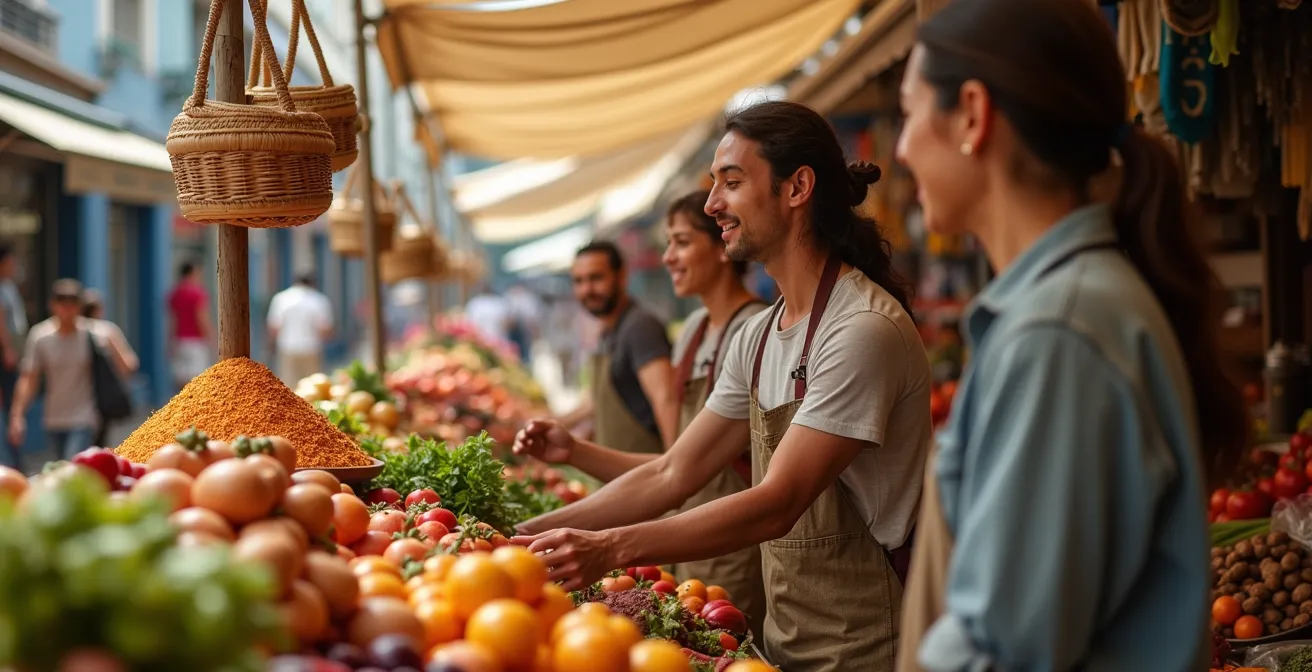
As this scene in a local market suggests, a guide’s expertise can unlock a deeper understanding of the ingredients and culture behind the food. They can point out details you might otherwise miss, turning a simple walk through a market into a rich learning experience.
The ‘Food Coma’ Risk: How to Pace Yourself on a Tasting Trip?
The greatest threat to a successful culinary trip is not a bad meal, but an excess of good ones. The dreaded “food coma”—that state of lethargy and over-fullness—can derail your plans and diminish your enjoyment. Pacing is an art form, and mastering it is essential for a trip built around eating. While the average tourist might spend around $58 per person on food daily, a dedicated foodie’s budget and consumption are significantly higher, making strategic pacing even more critical.
The key is to abandon the traditional three-meal-a-day structure and adopt a more fluid, strategic system. One of the most effective methods is the “1 Big, 1 Light, 1 Discovery” framework. Each day, you plan for one major, indulgent meal (e.g., a tasting menu or a multi-course dinner), one light and simple meal (like a soup, salad, or simple market bite), and one “discovery” snack (a local pastry, a unique street food item, or a visit to a specialty shop). This structure ensures you experience a wide range without overwhelming your system.
Beyond meal structure, consider the rhythm of your day. Schedule low-intensity activities, like a walk through a botanical garden or a relaxing ferry ride, for immediately after your main meal. This aids digestion and prevents the sluggishness that can follow a feast. Another effective strategy is to alternate “Feast Days” with “Forage Days.” On a Feast Day, you might have both a high-end lunch and dinner. The next day, you “forage” by grazing on market finds, street food, and small bites, giving your body and budget a chance to recover. Finally, strategic hydration with mineral water and digestive teas can make a significant difference in your overall energy levels.
When to Book Top Tables: The Reservation Calendar Strategy?
In the world of high-end gastronomy, spontaneity is a luxury few can afford. Securing a table at the world’s most sought-after restaurants is a competitive sport, requiring a level of strategic planning akin to booking international flights. The best tables are not found; they are hunted. Your reservation calendar is one of the most critical tools in your travel planning arsenal, and knowing how to wield it determines whether your trip is a culinary triumph or a series of disappointments.
The first rule is to know the specific booking window for each of your target restaurants. There is no universal standard. Some release tables exactly 30, 60, or 90 days in advance at a specific time (often midnight or noon local time). Others use rolling booking systems or third-party apps like Resy, Tock, or TheFork, each with its own rules. Create a detailed calendar with reminders set for the exact moment reservations open for your top-choice establishments. Have your credit card information and party details ready to go to complete the booking as quickly as possible.
Always have a tiered list of preferences. Your “Plan A” restaurant might be impossible to book, so having a well-researched “Plan B” and “Plan C” is crucial. Don’t underestimate the value of the waitlist; cancellations are common, and a polite follow-up can sometimes work wonders. For particularly tough reservations, consider using your hotel’s concierge service, as they often have established relationships and can access tables that are unavailable to the public. Finally, remember that booking for lunch instead of dinner can often be an easier way to experience a top restaurant, frequently with the added benefit of a more affordable prix-fixe menu.
This meticulous planning process is the architecture behind a seamless culinary journey, transforming wishful thinking into confirmed reservations.

This level of detailed planning, coordinating calendars and reservation apps, is the unseen work that goes into securing the most memorable dining experiences. It is a proactive and essential part of the modern foodie’s travel preparations.
How to Mix Street Food and Fine Dining to Balance the Budget?
A truly exceptional culinary trip is defined by its dynamic range. It’s the delightful contrast between a flawlessly executed dish in a hushed, elegant dining room and a vibrant, flavor-packed bite savored on a bustling street corner. This “high-low” approach is not just a way to experience the full spectrum of a culture’s cuisine; it’s also the most effective strategy for managing your budget. With food often accounting for a significant portion of travel costs— visitors typically allocate approximately 25% of their travel budget to dining—a balanced portfolio of eating experiences is essential.
Instead of viewing your budget as a single, monolithic sum, think of it as capital to be allocated across a diverse set of “assets.” Your fine dining experiences are your blue-chip investments: costly, but delivering a high return in terms of artistry and memory. Street food and market finds are your growth stocks: low-cost, high-volume, and offering an authentic connection to the daily life of a place. The key is to build a balanced portfolio rather than splurging sporadically.
One of the most powerful tactics is leveraging lunch. Many Michelin-starred or high-end restaurants offer lunch menus that feature the same quality of cooking and service as dinner but at a fraction of the price, sometimes representing savings of 40-50%. Another method is the “Bookend Strategy,” where you begin and end your trip with a spectacular meal, filling the days in between with more affordable, exploratory eating. This creates a memorable narrative for your journey while keeping costs in check.
The following table outlines several proven strategies for balancing your culinary portfolio, allowing you to tailor your approach to the length of your trip and your personal dining philosophy.
This table, based on an analysis of smart travel spending, provides a clear framework for making strategic choices.
| Strategy | Cost Impact | Experience Value | Best For |
|---|---|---|---|
| Bookend Strategy | 20% savings | Memorable start/end | Week-long trips |
| Lunch vs Dinner | 40-50% savings | Same quality | Michelin experiences |
| Portfolio Approach | Balanced spending | Diverse experiences | Extended travel |
| High-Low Theme Days | 30% savings | Cultural contrast | Food enthusiasts |
Daily Cap or Total Budget: Which Psychological Method Works Best?
Managing money on a food-centric trip is as much a psychological game as it is a mathematical one. The method you choose to track your spending can profoundly impact your enjoyment and your decisions. The two primary approaches are setting a strict daily cap or operating with a flexible total budget for the entire trip. For the indulgent-yet-structured traveler, the total budget method is almost always psychologically superior.
A strict daily cap can create a feeling of restriction. On a day you find an unexpected, must-try market, you might hold back for fear of exceeding your limit. Conversely, on a quieter day, you might feel pressured to spend up to the cap to “not waste” the allocation. This method can lead to anxiety and suboptimal choices. In contrast, a total trip budget provides flexibility and empowerment. It allows you to splurge on a truly exceptional tasting menu one day, knowing you can balance it with a more frugal “forage day” later. This aligns perfectly with the “portfolio management” approach to culinary travel.
So, how do you set a realistic budget? A surprisingly useful tool can be found in government data. For instance, the U.S. General Services Administration sets per-diem rates for federal employees’ meals and incidental expenses. These benchmarks provide a data-driven starting point. In 2023, the rate for San Francisco was $79, while it was $59 for less expensive rural areas. While a foodie’s budget will likely be higher, these figures offer a realistic baseline for daily sustenance costs, which you can then adjust upward based on your fine-dining ambitions. Using this as a benchmark helps you build a total budget that is grounded in reality, giving you the freedom to allocate your funds where they will deliver the most memorable experiences.
Why Ferries Are the Best ‘Hidden’ Sightseeing Transport Mode?
In the quest for authentic and budget-friendly experiences, the savvy food traveler learns to look beyond the obvious. While tourist buses and taxis have their place, one of the most overlooked assets in a coastal city or archipelago is its network of commuter ferries. These humble vessels are more than just transportation; they are mobile viewing platforms, floating community centers, and, most importantly, unparalleled venues for unique culinary experiences.
The real magic of a ferry lies in its dual function as both transport and destination. As noted by the travel and food blogging community, ferries should be seen as more than just a way to get from A to B. In a post on the Wonder & Sundry travel blog, one writer eloquently captures this idea:
Ferries as mobile picnic platforms – frame them not just as transport, but as the perfect venue for a budget-friendly gourmet picnic assembled from local markets
– Travel and food bloggers community, Wonder & Sundry Travel Blog
This reframing is powerful. Imagine assembling a picnic of local cheeses, charcuterie, bread, and wine from a morning market visit, and then enjoying it on the open-air deck of a ferry with a multi-million-dollar view that tour boats charge a premium for. Furthermore, many commuter ferries, like Venice’s Vaporetto or Hong Kong’s iconic Star Ferry, have onboard cafeterias. These are not tourist traps; they are where locals grab a quick, affordable meal. Observing what people eat and drink in this everyday context offers a cultural snapshot that is as authentic as it gets, all while saving significantly compared to formal dining.
Key Takeaways
- Strategic Design Over Restriction: A successful food trip is planned like a balanced investment portfolio, not a diet.
- The High-Low Method: Systematically mix fine dining with authentic street food to manage budget and experience cultural diversity.
- Pacing is Paramount: Use a ‘1 Big, 1 Light, 1 Discovery’ daily meal structure to prevent burnout and maximize enjoyment.
How to Navigate Foreign Dining Etiquette Without Offending Your Hosts?
Successfully navigating foreign dining etiquette is the final, crucial element of a well-executed culinary journey. It demonstrates respect for the culture you have traveled to experience and enriches your interactions with hosts, chefs, and fellow diners. A minor faux pas is rarely a disaster, but a conscious effort to understand and adhere to local customs shows a level of engagement that elevates you from a mere tourist to a welcome guest. The most effective approach is one of humility and observation.
Your goal is not to become an instant expert, but to be a respectful participant. This begins with pre-trip research on a few key topics for your destination: tipping customs, the use of utensils (or hands), and basic table manners such as seating arrangements or the protocol for pouring drinks. In many countries, for example, tipping can be seen as unnecessary or even insulting, while in others it’s an expected and integral part of the service economy. Knowing this distinction is fundamental.
When in doubt on the ground, the “Observe, Mirror, and Ask” method is your best friend. Watch how locals handle their food and utensils, and discreetly mirror their actions. If you’re truly unsure, asking politely—”What is the customary way to eat this?”—is always appreciated. It signals a genuine interest in and respect for their traditions. Ultimately, showing that you care about their culture is far more important than achieving perfect execution of every rule.
Armed with this framework, you are now ready to design your own indulgent yet intelligent gastronomic adventure. The next step is to start building your culinary portfolio, one reservation at a time.
Frequently Asked Questions About Culinary Travel
How should I handle tipping in countries where it might be considered offensive?
Research the difference between mandatory ‘service charges’ and optional tips. In Japan and South Korea, tipping can be insulting, while in the US it’s expected at 15-20%. Check if service is included in your bill.
What’s the best approach when unsure about local dining customs?
Follow the ‘Observe, Mirror, and Ask’ method: watch what locals do, copy their actions, and politely ask if uncertain. Saying ‘What is the customary way to eat this?’ shows respect for local traditions.
Should I bring a gift when invited to someone’s home for a meal?
Yes, prepare a small ‘Grateful Guest Kit’ with items from your home country. This universal gesture of appreciation can smooth over minor etiquette mistakes and shows cultural respect.