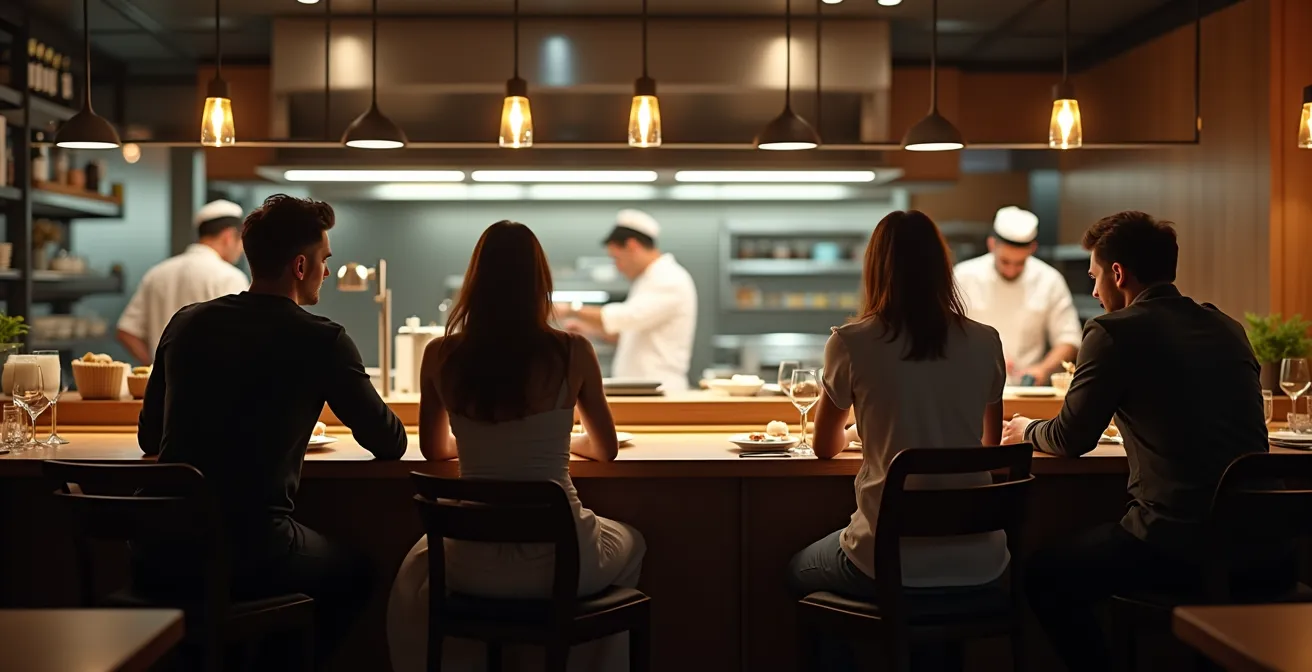
The best seat at an open kitchen isn’t about proximity; it’s about perspective.
- Observing the kitchen’s flow and hygiene reveals more about a restaurant’s quality than any menu.
- Strategic requests, timed correctly, can secure you a seat at the heart of the action—the pass.
Recommendation: Treat your next counter reservation not as a booking, but as a calculated move to gain an insider’s view of the culinary theater.
The air crackles with a controlled energy. It’s a symphony of sharp, percussive sounds: the clang of a pan hitting the range, the swift chop of a knife on a wooden board, a chef’s low, urgent call of “Oui, chef!” This is the sensory overture of the open kitchen, an experience that has become a hallmark of modern dining. For many, securing a seat at the chef’s counter is about “dinner and a show,” a chance to watch the culinary magic unfold. It’s an undeniable thrill, a peek behind the curtain that a standard table can never offer.
But what if this perspective was more than just entertainment? The common advice is to book early and enjoy the spectacle. However, this passive approach misses the true potential of the experience. The discerning diner understands that the counter is not a spectator sport; it’s a strategic vantage point. It offers a layer of transparency and engagement that, when understood, can fundamentally elevate a meal from great to unforgettable. The real art lies in learning to read the kitchen’s choreography, to decode its unspoken language, and to use that insight to inform your entire dining narrative.
This is not about distracting the artists at work. On the contrary, it’s about becoming a more informed, appreciative audience. By understanding the rhythm, the pressure points, and the subtle cues of a professional kitchen, you transform from a mere customer into a connoisseur. This guide will take you beyond the simple act of watching, teaching you how to interpret the culinary theater, what to look for, how to ask for the best seat, and ultimately, how to turn your proximity to the flame into a deeply personal and superior dining experience.
To help you master this art, this article breaks down the essential strategies for navigating the chef’s counter. From decoding the kitchen’s silent language to making the smartest booking choices, you will find a complete roadmap to becoming an expert observer.
Summary: A Connoisseur’s Playbook for the Open Kitchen Experience
- Why You Shouldn’t Distract the Chef During Service?
- How to Handle the Heat and Noise of a Chef’s Table?
- Counter or Table: Which Seat Offers the Best Value for Money?
- The Hygiene Details You Can Only Spot from an Open Kitchen
- How to Specifically Request the “Best Seat” at the Counter?
- Apps or Phone Calls: Which Is Better for Snagging Cancellations?
- Why a Long Line of Locals Is Your Best Safety Guarantee?
- How to Plan a Culinary Trip Without Gaining Weight or Blowing the Budget?
Why You Shouldn’t Distract the Chef During Service?
The desire to engage with the creators of your meal is natural, but a professional kitchen during service is a zone of intense, high-stakes focus. It’s a ballet of precise timing and flawless execution where every second counts. An interruption, however well-intentioned, can disrupt this delicate flow. This isn’t about chefs being antisocial; it’s about them navigating a high-pressure environment where concentration is directly linked to quality and safety. The expediter at the pass, for instance, is the kitchen’s air traffic controller, coordinating every dish. A moment’s distraction can throw off the entire sequence.
True appreciation comes not from conversation but from observation. The key is to learn to read the kitchen’s body language. Watch for the indicators of peak stress: rapid-fire communication between stations, a flurry of movement at the pass, and a long line of order tickets. These are the moments for silent observation. Conversely, approachable moments do exist. Look for chefs cleaning their stations between rushes or staff taking a quick water break. These lulls in the “kitchen choreography” are your windows for a brief, respectful interaction.
Some restaurants masterfully curate this interaction. At London’s Social Eating House, the exclusive Chef’s Counter is set in a basement kitchen, isolating diners from the main restaurant’s chaos. Here, Chef Paul Hood’s team prepares a tasting menu directly for guests, but this experience is specifically scheduled to avoid peak service times. This allows for genuine chef interaction without disrupting the main operation. It’s a model that respects both the guest’s curiosity and the kitchen’s professional sanctity, proving that the best interactions are often planned.
Ultimately, respecting the line’s focus is the highest compliment a diner can pay. It shows an understanding that you are there not just to eat, but to witness a craft performed at its highest level.
How to Handle the Heat and Noise of a Chef’s Table?
A seat at the counter is an immersion into the raw, unfiltered environment of a kitchen. This means embracing the sensory data that a traditional table shields you from: the radiant heat from the grill, the percussive clang of pans, and the constant hum of the ventilation. For the unprepared, this can be overwhelming. For the connoisseur, it’s part of the sensory narrative. The key is to anticipate and manage these elements to enhance, rather than detract from, your experience.
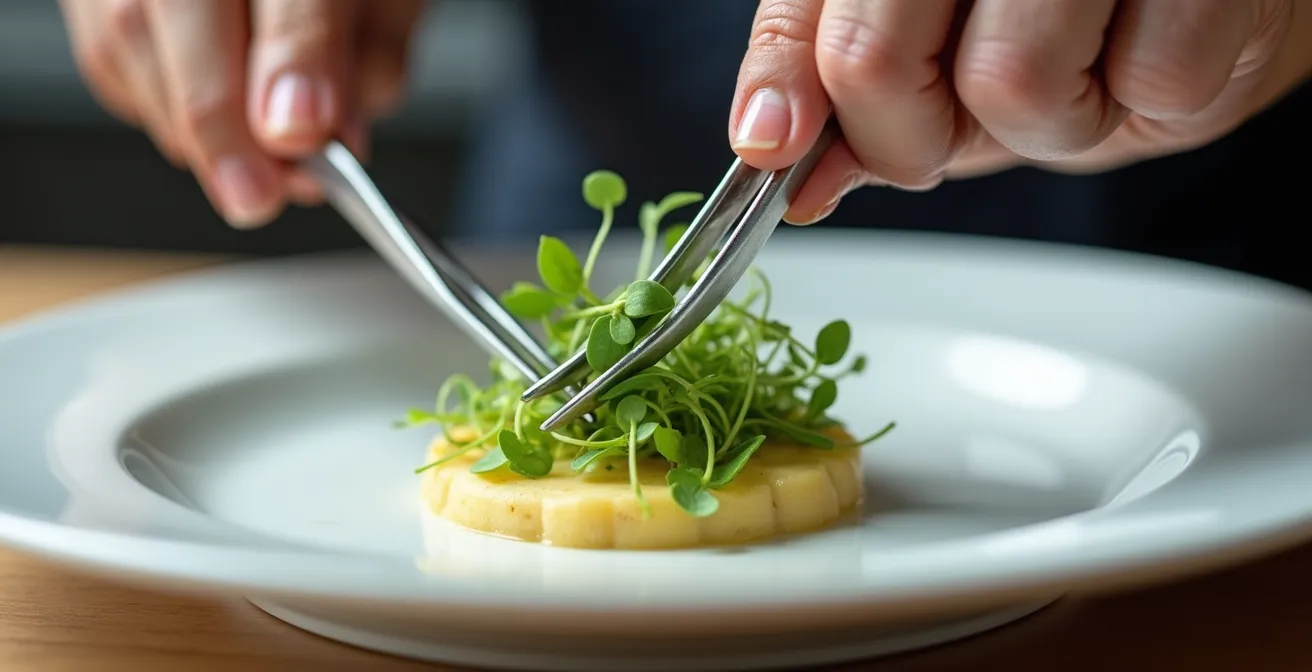
Amidst this intense environment, moments of incredible finesse occur. The close-up view reveals the steady hand of a chef plating delicate herbs with tweezers, a quiet act of artistry in the heart of the storm. This contrast between the kitchen’s raw power and the team’s precise execution is a core part of the culinary theater. However, comfort is key to appreciation. Understanding the kitchen layout can help you choose your seat wisely, as a few feet can make a world of difference in temperature and sound.
As this comparative analysis from restaurant design experts shows, not all counter seats are created equal. Different stations produce vastly different ambient environments. Requesting a seat near the garde manger or pastry station, for example, promises a cooler and quieter experience.
| Kitchen Station | Heat Level | Noise Level | Best For |
|---|---|---|---|
| Grill/Salamander | High (95-105°F) | High (sizzling, flames) | Heat-tolerant diners seeking drama |
| Sauté Line | Medium-High (85-95°F) | High (pan clanging, orders) | Action seekers |
| Pass/Expediting | Medium (80-85°F) | Very High (all orders called) | Those wanting full theater |
| Garde Manger (Cold) | Low (70-75°F) | Low (quieter prep) | Heat-sensitive diners |
| Pastry Station | Low (68-72°F) | Very Low (precision work) | Quiet conversation seekers |
When booking, don’t hesitate to voice your preferences. Mention any sensitivity to heat or noise. Inquire about corner seats, which often provide better angles for conversation and a wider view of the kitchen line. Many modern kitchens feature advanced ventilation that creates “air curtains,” but bringing a light layer of clothing is always a prudent move.
By strategically selecting your position and preparing for the elements, you can fully embrace the kitchen’s energy without sacrificing comfort, turning potential drawbacks into integral parts of an authentic experience.
Counter or Table: Which Seat Offers the Best Value for Money?
The question of value extends beyond the price on the menu. It’s about the return on your investment in time and attention. A table offers privacy, comfort, and an environment conducive to conversation. A counter seat, while often the same price, offers a different currency: education, entertainment, and a direct connection to the craft. The “best” seat is therefore not an objective truth but a subjective match between the diner’s personality and the experience they seek.
For some, the “value” is in the intimacy of a shared meal. For others, it’s in gaining an insider’s perspective that demystifies the culinary process. The socializer might find kinship with fellow food lovers at the counter, while a business diner will almost always require the discretion of a table. To determine the optimal choice, it’s useful to consider what type of diner you are and what you prioritize in a restaurant outing. The right choice amplifies the pleasure of the meal by aligning the environment with your personal goals for the evening.
This decision matrix, based on an analysis of different diner profiles, can help you determine where you’ll find the greatest personal value.
| Diner Type | Counter Benefits | Table Benefits | Best Choice |
|---|---|---|---|
| The Observer | Front-row kitchen theater, see techniques up close | Can observe full dining room dynamics | Counter |
| The Socializer | Interact with chefs, meet fellow food enthusiasts | Better for group conversation | Table for groups, Counter for pairs |
| The Student | Learn techniques, ask questions during slow periods | Can take notes discreetly | Counter |
| The Romantic | Unique shared experience | More intimate, private atmosphere | Table |
| Business Diner | Memorable for clients who appreciate food | Quieter for discussions | Table |
As the matrix illustrates, the counter overwhelmingly favors those who are actively seeking engagement and learning. The “value” lies in the unscripted moments: watching a new technique, understanding the synergy between stations, or seeing the final flourish on your dish. It transforms a meal from a simple transaction into a memorable, educational event. For a group focused on conversation or a couple seeking a private moment, the traditional table remains the superior, and thus more valuable, choice.
Ultimately, value is measured by fulfillment. Choose the seat that best serves your purpose for the evening, and you will always feel you’ve gotten your money’s worth.
The Hygiene Details You Can Only Spot from an Open Kitchen
An open kitchen is the ultimate statement of confidence. It is a restaurant’s voluntary submission to public scrutiny, a bold declaration that they have nothing to hide. For the observant diner, this transparency offers a unique opportunity to assess a kitchen’s commitment to hygiene beyond the letter grade on the door. In fact, CDC research shows that restaurants required to post inspection results have fewer outbreaks, and an open kitchen is the most immediate form of posting results.
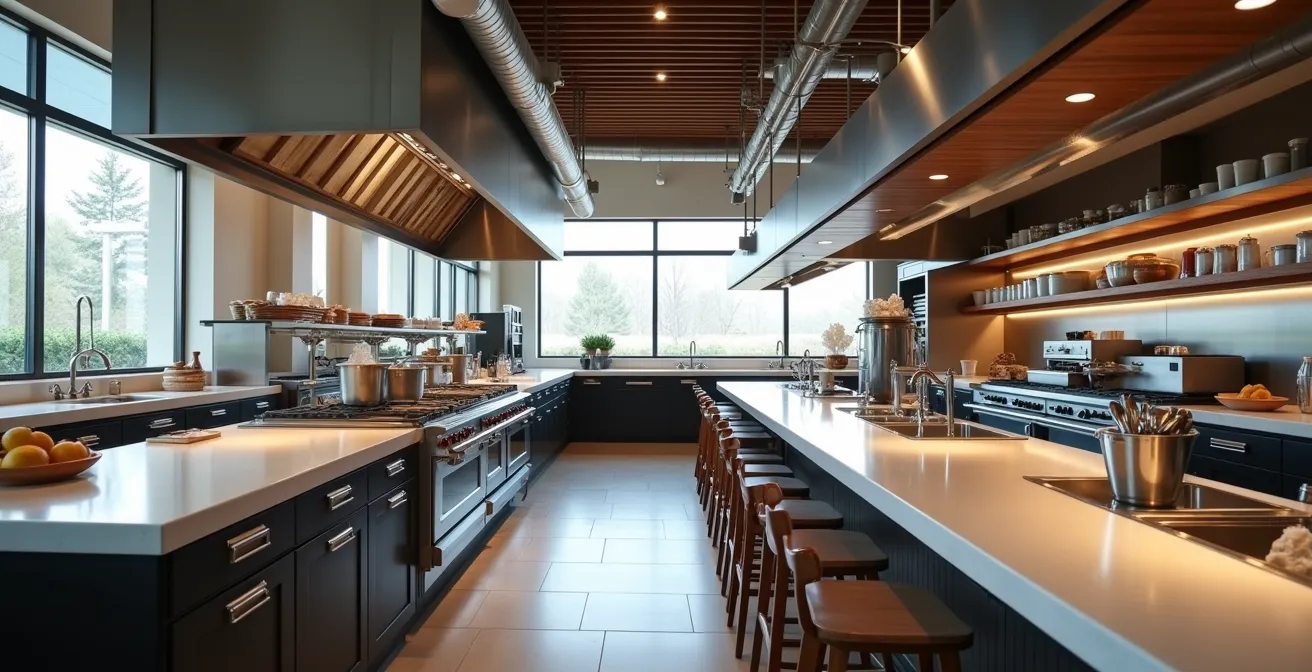
From your strategic vantage point at the counter, you can become your own health inspector. Look past the flames and the action to the small, crucial details. Are the stations clean and organized, even during the rush? Is there a clear system in place? These visual cues are powerful indicators of the discipline and professionalism that underpin a safe and high-quality kitchen operation. Your observations can provide a level of assurance that no written report can match.
The signs of impeccable hygiene are subtle but clear to the trained eye. Professional chefs operate with a set of non-negotiable protocols that are easily visible from a counter seat. Knowing what to look for allows you to appreciate the hidden discipline of a great kitchen and provides an invaluable layer of trust in the food you are about to consume.
Your Hygiene Audit Checklist: 5 Signs of a Top-Tier Kitchen
- Cutting Board Discipline: Look for a color-coded system. Professionals use different boards for different food types to prevent cross-contamination (e.g., red for raw meat, green for vegetables). This is a clear sign of a systematic approach to food safety.
- Tasting Protocol: Observe how chefs taste sauces and dishes. The gold standard is the “taste-and-toss” method, where a clean spoon is used for every single taste and is never, ever double-dipped into a pot.
- Hand Washing Frequency: A chef’s hands are their primary tool. Notice if they wash their hands frequently, especially after touching their face or hair, or when switching from one task (like handling raw protein) to another (like plating a finished dish).
- Towel Management: Watch how kitchen towels are used. A highly disciplined kitchen will have separate, designated towels for handling hot pans, wiping plates clean before they go out, and drying hands. Using the same towel for multiple purposes is a major red flag.
- Temperature Control: See if chefs are using probe thermometers. This indicates they are actively checking that food is held at safe temperatures—hot foods hot (above 135°F) and cold foods cold (below 41°F)—a critical practice in preventing foodborne illness.
When you see these practices in action, you’re not just watching good technique; you’re witnessing a profound respect for the craft and for the well-being of the diner.
How to Specifically Request the “Best Seat” at the Counter?
Simply asking for “a seat at the counter” is a novice’s move. The seasoned diner knows that, like a theater, the counter has its own prime locations and obstructed views. The “best seat” is rarely in the middle; it’s often at the corner, offering a panoramic view, or directly in front of the most critical station: the pass. The pass is where the head chef or expediter inspects, finishes, and orchestrates the departure of every single dish. It is the dramatic heart of the kitchen, and a seat with a view of it is the ultimate prize.
Fine dining establishments are often designed around these “action zones.” Restaurants like Pavyllon in London and Paris intentionally place their premium counter seats to face the pass, understanding that this is the epicenter of the culinary theater. Securing these seats requires more than luck; it requires specific, informed language. When you call to book, asking for “a seat with a view of the pass” or “a spot facing the expediting area” signals that you are an informed guest who will appreciate the nuances of the experience. It elevates your request from a simple preference to a knowledgeable choice.
Case Study: Mapping Counter Zones at NOMA
At the world-renowned NOMA in Copenhagen, the counter experience is meticulously mapped. The seating is not arbitrary; it’s strategically placed to offer different perspectives on the kitchen’s various sections. Insiders know that certain seats offer a direct view of the intricate plating process, while others face the intense fire of the grill station. Successful diners often do their research, looking at photos or reading reviews to understand the layout, and then make highly specific requests when booking, demonstrating an insider knowledge that is often rewarded by the reservation team.
Using the right language is key. Instead of a generic request, be specific and show your enthusiasm. Timing your call to the restaurant’s “shoulder hours” (typically between 3 and 5 PM) also makes a significant difference. During these quieter periods, the host or reservationist has more time and flexibility to accommodate a special request from a guest who clearly knows what they’re looking for.
By moving beyond a simple counter request to a precise, informed ask, you are not just booking a seat; you are curating your own front-row experience.
Apps or Phone Calls: Which Is Better for Snagging Cancellations?
In the quest for a coveted, last-minute counter seat at a top restaurant, technology can be a powerful ally. Reservation apps with “notify me” features are essential tools, acting as digital scouts that alert you the moment a table opens up. However, relying solely on an app is a passive strategy. The moment an alert dings, you are in a race against every other person who received the same notification. The truly strategic diner uses the app as a starting pistol, not the finish line.
The most effective approach is a hybrid one: use the app for the alert, but use the phone for the close. A direct call to the restaurant immediately after receiving a cancellation notification can make all the difference. It allows you to add a human element and make a specific, compelling case. You can say, “I just saw a cancellation for two pop up on the app—is there any chance that opening is at the chef’s counter?” This demonstrates enthusiasm and specificity that an anonymous click cannot convey.
The Hybrid Strategy at Greywind NYC
New York’s Greywind provides a perfect example of this dual approach in action. While special events with Chef Dan Kluger are ticketed online, regular counter reservations are best secured via a personal touch. When app alerts show new availability, the diners who succeed are often those who immediately call the restaurant. By mentioning their specific interest in the counter and showing flexibility with their timing, they build a rapport with the host, turning a simple transaction into a personal request that is more likely to be accommodated.
Rapport and flexibility are your greatest assets. Calling during the slower afternoon hours (3-5 PM) allows you to speak with staff who aren’t in the midst of a service rush. Express your enthusiasm for their open kitchen concept. Be specific about your desire for a pass view or a corner seat. And most importantly, be flexible. A phrase like, “We can come anytime between 7 and 9 PM if a pair of counter seats opens up,” transforms you from a demanding customer into a welcome guest the restaurant wants to help.
By treating the app as the signal and the phone call as the action, you significantly increase your chances of snagging that perfect last-minute seat at the heart of the action.
Why a Long Line of Locals Is Your Best Safety Guarantee?
In an unfamiliar city, navigating the culinary landscape can be daunting. With endless options, how do you separate the tourist traps from the genuine gems? The most reliable and time-tested indicator of quality and safety is not a review score or a guidebook recommendation, but a line of local, regular customers. This queue is a powerful form of social proof, a real-time endorsement from the people who know the city best.
Locals are discerning. They have endless choices and are not swayed by fleeting trends. Their repeat business signifies consistent quality, fair value, and, crucially, trust. This trust is often built on transparency. This is where the open kitchen plays a pivotal role. As demonstrated by the success of chains like Chipotle, the combination of an open kitchen design with a consistent line of local patrons creates a “trust multiplier.” Customers can see the ingredients and preparation, and the presence of their neighbors validates that what they are seeing is consistently good.
This crowd-sourced seal of approval is often more telling than an official inspection report. Locals will not repeatedly patronize an establishment with questionable hygiene or poor food handling, regardless of its official rating. This anecdotal evidence is backed by data; a 2024 CDC study found that establishments with managers certified in food safety are significantly more likely to pass inspections, and these well-run businesses are precisely the ones that build a loyal local following. A long line of locals is an external indicator of these internal best practices.
When you see a queue of residents patiently waiting, you are seeing the result of a restaurant that has earned its community’s trust day after day. It’s the most honest and reliable review you will ever find.
Key Takeaways
- The ultimate value of a counter seat comes from an informed perspective, not just a good view.
- Mastering the art of the request—using specific language and timing—is crucial for securing the best seats.
- True dining connoisseurship involves valuing the density of the experience (learning, observing) over the sheer volume of consumption.
How to Plan a Culinary Trip Without Gaining Weight or Blowing the Budget?
A culinary trip is a journey of indulgence, but it doesn’t have to result in an expanded waistline or an empty wallet. The chef’s counter, often associated with extravagant tasting menus, can paradoxically be a powerful tool for a more balanced and budget-conscious approach. The key is to shift your focus from consumption to observation, from volume to value. This is the strategy of “experience density.”
This approach prioritizes learning and engagement over sheer quantity of food. As seen at luxury hotel restaurants like Nobu Miami Beach, an intimate counter experience can provide more satisfaction and memorable value than three standard meals combined. The educational component—watching techniques, understanding ingredient pairings, interacting with the chef—fulfills the diner on a different level. You leave not just full, but enriched. This focus on the “why” and “how” of cooking often leads to less actual eating, as the mind is as stimulated as the palate.
From a budget perspective, the counter offers several strategic advantages. Booking a prix-fixe lunch at the counter instead of dinner can often be 40-60% less expensive for a nearly identical experience. The transparency of the open kitchen also empowers you to make healthier choices in real-time. You can see the amount of butter or oil being used and make a simple request like, “That looks wonderful, could you perhaps use a touch less butter on my portion?” This level of customized, on-the-fly adjustment is impossible at a traditional table. Sharing multiple small plates rather than ordering individual full portions is another excellent strategy that the social, fluid environment of a counter encourages.
By planning your culinary travels around these high-density experiences, you can enjoy the best a city’s food scene has to offer, returning home with rich memories and new knowledge, rather than just extra pounds and credit card debt. Your next reservation is the first step; book it not just as a meal, but as a lesson in the art of dining well.