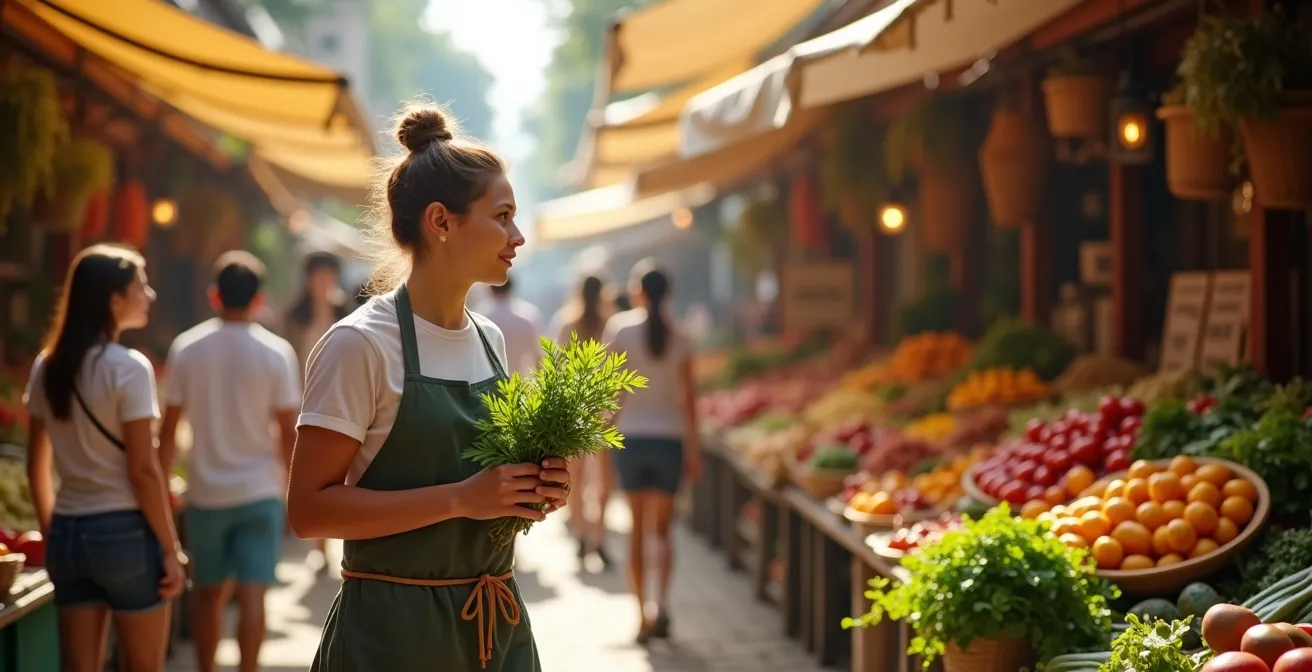
The greatest value of a travel cooking class lies not in the dish you make, but in the transferable skills and sensory awareness you take home.
- A class that skips a detailed market tour is often a “tourist trap” focused on recipes, not ingredient intelligence.
- True learning is measured by your ability to substitute ingredients and adapt techniques, a skill that separates a good instructor from a simple host.
Recommendation: Prioritize classes that explicitly teach technique, sensory evaluation, and food safety principles over those that merely promise a fun meal.
The disappointment is palpable. You’ve spent a significant portion of your travel budget on a cooking class, dreaming of unlocking the secrets of a foreign cuisine. Instead, you find yourself in a crowded room, chopping pre-portioned vegetables and following a recipe you could have downloaded for free. The final dish looks great on Instagram, but you leave with no real, lasting skills. This experience is frustratingly common for food-focused travelers who genuinely want to learn.
Most advice falls into generic platitudes: “read reviews,” “check the menu,” or “pick a popular dish.” But this approach is flawed because it focuses on the wrong metric—the final product. It treats the class as a one-off activity rather than what it should be: a long-term investment in your culinary abilities. A truly exceptional cooking class isn’t about replicating one meal; it’s about acquiring technique, ingredient intelligence, and a critical mindset that you can apply in your own kitchen for years to come.
This guide changes the focus. As a culinary instructor, I will teach you to think like a professional chef vetting a new course. We will move beyond superficial reviews and analyze the structural components that signal a high-quality, skill-building experience. From evaluating the market tour to decoding hygiene standards and negotiating dietary needs, you will learn to spot the difference between a tourist demonstration and a true culinary education. This is how you ensure your next cooking class pays dividends long after your trip is over.
To help you systematically identify a class that delivers real value, this guide is structured to walk you through the critical checkpoints. The following sections break down the key indicators of quality, from the initial sourcing of ingredients to the final planning of your culinary journey.
Summary: How to Find a Cooking Class That Teaches Real Skills
- Why You Should Never Book a Class That Skips the Market Tour?
- How to Substitute Exotic Ingredients Once You Are Back Home?
- Hands-On or Demo: Which Style Fits Your Learning Curve?
- The Hygiene Red Flag in Home-Based Cooking Classes to Watch For
- How to Negotiate a Vegetarian Option in a Meat-Heavy Cuisine?
- Why Bright Color Doesn’t Always Mean High Quality in Spices?
- How to Navigate “Guest First” Service at a Family Dinner?
- How to Plan a Culinary Trip Without Gaining Weight or Blowing the Budget?
Why You Should Never Book a Class That Skips the Market Tour?
Let’s be unequivocally clear: a cooking class that begins in the kitchen, with all ingredients pre-chopped and waiting in neat bowls, is not a class. It’s an assembly line. The first, and arguably most important, lesson in any cuisine is ingredient intelligence. This skill is not learned from a recipe card; it is developed at the source—the local market. A class that omits the market tour is deliberately hiding half of the culinary process from you.
The market is where you learn the “why” behind the “what.” Why this specific type of tomato? How do you select a ripe mango by smell and touch? What is in season right now, and how does that dictate the local diet? An instructor who guides you through a bustling market, pointing out their trusted vendors and explaining the sensory cues of quality, is teaching you a transferable skill. You learn to see food through a local’s eyes. This foundational knowledge is far more valuable than simply learning to chop an onion.
Furthermore, the market tour is your first and best indicator of the instructor’s professionalism and authenticity. Do they have established relationships with vendors? Do they teach you about local etiquette? The absence of a market tour signals a focus on convenience over education, a hallmark of a low-quality, high-volume tourist experience. As industry research shows, the best classes integrate market visits to deepen cultural connection, not just to gather supplies.
Your Action Plan: Vetting the Market Tour
- Assess Vendor Relationships: Observe if the instructor greets specific vendors personally. A quality chef has trusted, long-standing suppliers they rely on for the best produce.
- Analyze Sensory Guidance: Verify the chef explains how to evaluate ingredients using multiple senses—smell for ripeness, texture for freshness, and visual cues beyond just color.
- Check for Hands-On Selection: Note whether you are allowed to handle and choose ingredients under guidance. This is crucial for building your own selection skills.
- Listen for Substitution Strategy: A good instructor will discuss seasonal availability and proactively explain what you could use as an alternative back home.
- Observe Cultural Context: Pay attention to whether the tour includes explanations of local bargaining customs, food traditions, and market etiquette.
How to Substitute Exotic Ingredients Once You Are Back Home?
A common anxiety after an amazing travel cooking class is the realization that you may never find galangal or fresh tamarind paste at your local supermarket. This is where a great class proves its long-term value. An instructor focused on teaching, not just entertaining, will equip you with the principles of functional substitution. Their goal isn’t for you to perfectly replicate a single dish; it’s to teach you the role each ingredient plays so you can adapt, improvise, and innovate.
Instead of just saying “add a teaspoon of fish sauce,” a skilled instructor will explain its function: to provide a deep, savory, umami flavor. With that knowledge, you can logically deduce a substitute back home—perhaps a mix of soy sauce and a dash of Worcestershire. This focus on “why” over “what” is the essence of technique transferability. The class becomes a lesson in flavor profiles, not a rigid set of instructions. If your instructor brushes off substitution questions, it’s a major red flag that they lack a deeper understanding of their own cuisine.
This macro view of ingredients is essential. To truly master a recipe, you need to understand the building blocks of flavor—is an ingredient sour, sweet, aromatic, or a source of heat? The illustration below shows how exotic ingredients and their common counterparts can be bridged by understanding their core function.
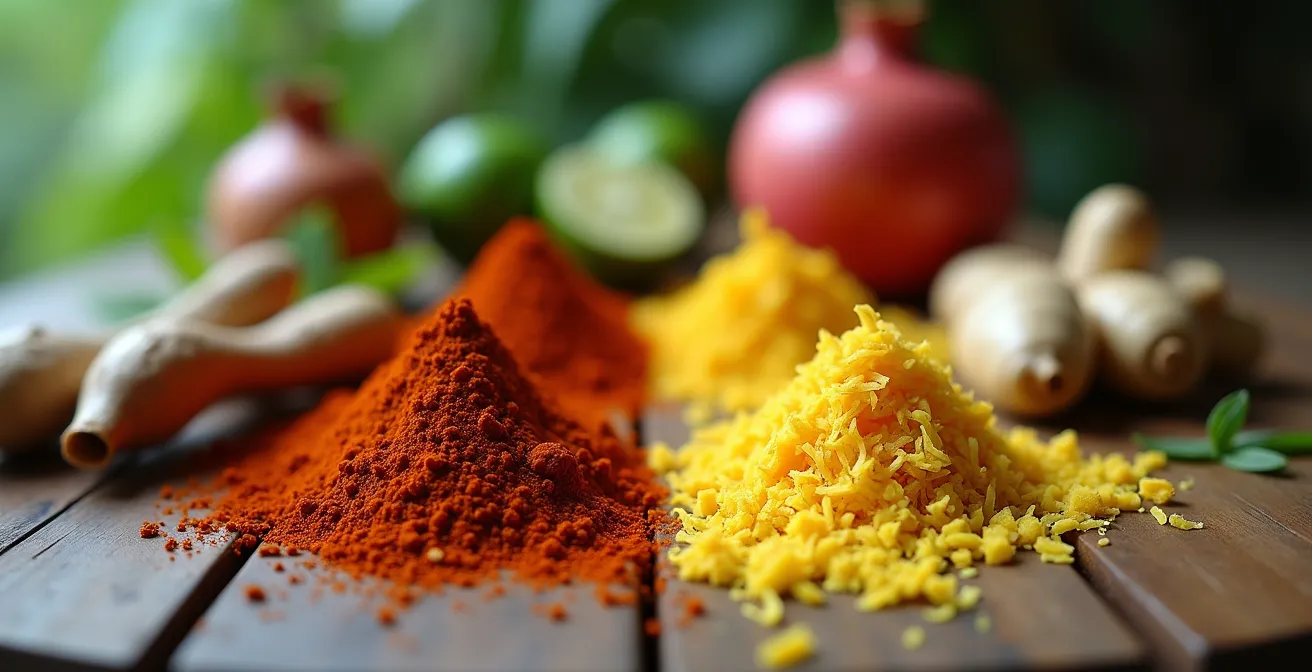
As you can see, the key is not finding an identical match but a functional equivalent. A good class will provide a framework for these substitutions, empowering you to continue your culinary exploration long after you’ve returned home. The following table breaks down common substitutions based on their primary function.
| Original Ingredient | Primary Function | Best Substitute | Usage Ratio |
|---|---|---|---|
| Fish Sauce | Umami/Salt | Soy Sauce + Worcestershire | 1:1 mix |
| Tamarind Paste | Sour/Sweet | Pomegranate Molasses | 3/4 amount |
| Galangal | Aromatic Heat | Ginger + Black Pepper | 1:1 + pinch |
| Kaffir Lime Leaves | Citrus Aroma | Lime Zest + Bay Leaf | 2:1 ratio |
Hands-On or Demo: Which Style Fits Your Learning Curve?
The conventional wisdom is that “hands-on” classes are always superior to “demonstration” style classes. This is a dangerous oversimplification. The ideal format depends entirely on your learning goals and the complexity of the techniques being taught. Choosing the wrong style can lead to frustration and a wasted opportunity, so a critical assessment is necessary before booking.
A hands-on class is excellent for developing muscle memory for repetitive tasks like knife skills, dough kneading, or dumpling folding. However, if the student-to-instructor ratio is too high, it can quickly devolve into chaos. You may get minimal personal feedback and end up reinforcing bad habits. A poorly managed hands-on class feels more like a frantic race to finish a meal than a structured lesson. It’s crucial to ask about the class size and the amount of individual correction you can expect.
Conversely, a well-executed demonstration class led by a master chef can be incredibly valuable, especially for complex, technique-heavy dishes like mole or a perfect French mother sauce. In a demo, you can focus 100% of your attention on observing the nuance of the chef’s movements, heat management, and timing—details you would miss while fumbling with your own ingredients. A great demo is not passive; it’s an intense observational study. The key is whether you can ask questions and get close enough to see the details.
Before you book, be an informed consumer. Don’t just ask “Is it hands-on?” Ask the right questions to determine if the class structure truly supports learning.
- What is the student-to-instructor ratio for hands-on classes?
- How much individual correction and feedback time is allocated per student?
- Are complex techniques demonstrated first before students attempt them?
- Can participants take photos or videos during demonstration segments for later reference?
- Is there a practice round before the final dish preparation?
The Hygiene Red Flag in Home-Based Cooking Classes to Watch For
The allure of a “home-based” cooking class is strong. It promises an authentic, intimate glimpse into local life. However, this intimacy can come at a steep price if basic food safety standards are ignored. A charmingly rustic kitchen can also be a breeding ground for bacteria. As an instructor, I consider hygiene non-negotiable. A single food safety violation undermines the entire educational experience.
The most critical red flag is the handling of raw meat. Cross-contamination is a serious risk, and in a home setting without professional protocols, it’s alarmingly common. Watch for one cutting board being used for both raw chicken and vegetables, or the instructor handling raw meat and then touching other utensils or ingredients without thoroughly washing their hands. These aren’t minor oversights; they are major health hazards. According to authoritative food safety guidelines, raw meat, poultry, seafood, and eggs must always be kept separate from ready-to-eat foods to prevent the spread of germs.
A professional setup, even in a home, will show clear signs of proper hygiene protocols. This includes separate, often color-coded, cutting boards, ample access to soap and hot water, and a logical workflow that keeps raw and cooked ingredients apart. Look for a sense of order and cleanliness—what chefs call ‘mise en place’. If the kitchen looks chaotic and cluttered from the start, it’s a sign that hygiene is not a priority.
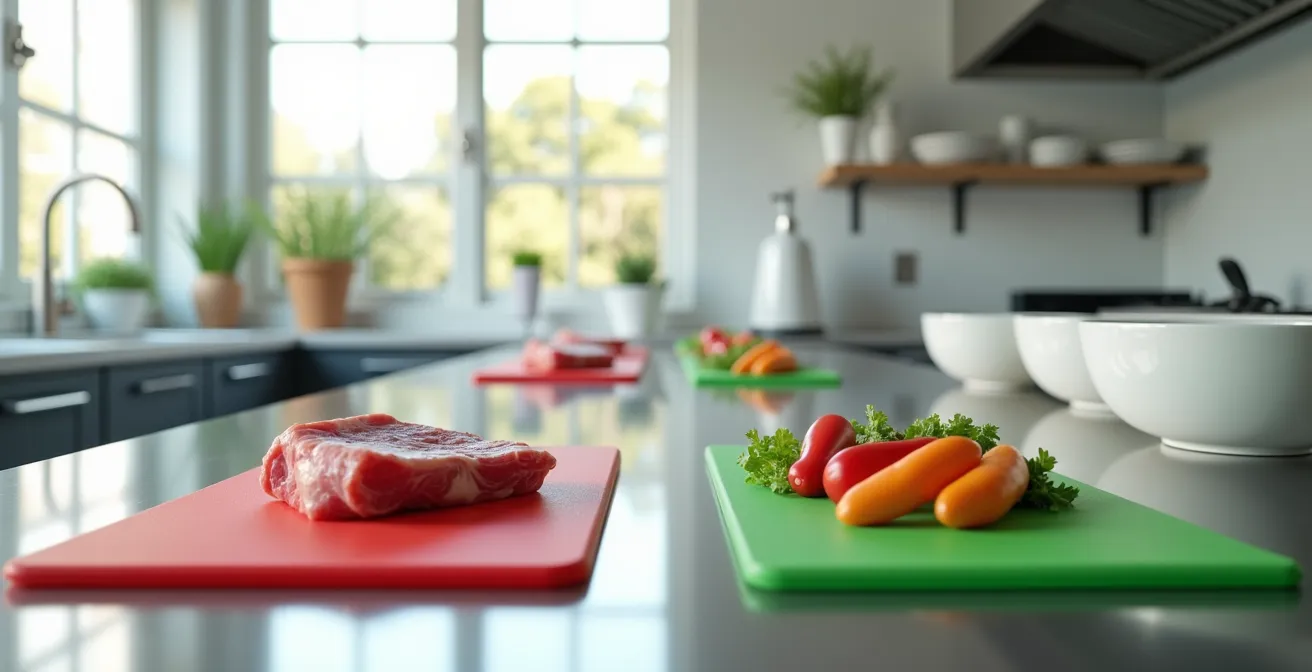
This image represents the gold standard. While a home kitchen won’t be a commercial-grade facility, the principles of organization, separation, and cleanliness should still be evident. Do not be charmed by rustic aesthetics into ignoring fundamental safety. Your health is more important than a quaint photo-op.
How to Negotiate a Vegetarian Option in a Meat-Heavy Cuisine?
Requesting a vegetarian meal in a culture known for its meat-centric dishes can feel daunting. However, how an instructor responds to this request is a powerful litmus test of their skill, creativity, and professionalism. A great chef will see it as an interesting challenge, not an inconvenience. It’s an opportunity for them to demonstrate the true depth of their culinary knowledge.
The key to a successful negotiation is to be polite, respectful, and, most importantly, to inquire well in advance. A last-minute request puts undue pressure on the host and is unlikely to yield a thoughtful result. When you contact them, frame your request not as a demand, but as a collaborative question: “I am a vegetarian and would love to learn about your cuisine. Would it be possible to adapt the dishes, perhaps focusing on the wonderful local vegetables?” This shows respect and an eagerness to learn within their tradition.
A chef’s reaction is telling. A dismissive response or an offer to simply “leave the meat out” is a sign of a rigid, uncreative instructor. This person is likely just following a script. A true professional, however, will engage with the request. They might suggest an alternative, equally traditional dish that is naturally vegetarian, or propose creative ways to build umami and depth without meat, using mushrooms, fermented products, or specific vegetable-roasting techniques. This response shows that they teach principles, not just recipes. As market research indicates, modern travelers are increasingly seeking experiences that align with their dietary choices, and the best operators are adapting.
Be prepared for a “no,” but understand what it signifies. In some highly traditional contexts, a specific dish may be fundamentally un-adaptable without losing its identity. In this case, a good instructor will be honest and explain why, perhaps suggesting a different class or date that focuses on more vegetable-forward dishes. This honesty is far more respectable than a reluctant, poor-quality adaptation.
Why Bright Color Doesn’t Always Mean High Quality in Spices?
In the vibrant chaos of a spice market, it’s tempting to be seduced by the most intensely colored powders. Bright yellow turmeric, fiery red paprika, and deep green herbs seem to scream freshness and potency. This is a common and often costly mistake. When it comes to spices, intense color can be a major red flag, often indicating the presence of artificial dyes used to mask old, low-quality, or adulterated products.
Professional chefs and spice buyers rely on a multi-sensory approach to evaluate quality, and visual inspection is only the first, least reliable step. The real test of a spice’s quality is its aroma. The volatile oils that give spices their flavor and medicinal properties begin to degrade the moment they are ground. A high-quality spice should release a powerful, complex fragrance when you rub a small amount between your fingers. This is the “rub test,” and a lack of a strong scent is a sure sign of old stock, regardless of its color.
A good cooking class, especially one with a market tour, should teach you these sensory evaluation techniques. An instructor might demonstrate how to spot adulterants by performing a water test—where artificial dyes will bleed unnaturally into a glass of water—or by explaining the textural differences between pure spice and one cut with flour or brick dust. As spice adulteration detection guides point out, purchasing whole spices and grinding them yourself is always the safest bet for ensuring purity and potency.
So, the next time you are at a market, resist the lure of the most vivid colors. Instead, ask for a small sample to smell. Trust your nose more than your eyes. A slightly duller, earth-toned spice with a powerful, intoxicating aroma is always a better investment than a brilliantly colored but scentless powder.
How to Navigate “Guest First” Service at a Family Dinner?
Being invited into a local’s home for a meal is one of the most profound honors of culinary travel. It is also one of the most socially complex situations to navigate. In many cultures, the guest is treated with extreme deference, which often translates into an unrelenting pressure to eat. Your plate will be refilled the moment it is half-empty, and hosts may seem offended if you refuse a third or fourth serving. Navigating this “guest first” hospitality requires grace and strategy to show appreciation without making yourself physically ill.
The worst thing you can do is to bluntly say “I’m full” after the first serving. This can be interpreted as a polite refusal or, in some cases, an insult to the cook. Instead, you need to employ a series of subtle, respectful tactics to pace yourself. The most effective of these is the small portion technique. By taking only a very modest first serving of each dish, you leave ample room for the inevitable seconds (and thirds) that your host will insist upon. This allows you to sample everything and accept more food without overeating.
Another powerful tool is non-verbal appreciation. Compliment the food effusively. Use key local phrases for “delicious” and “thank you.” A particularly useful modern strategy is the “camera trick”—taking photos of the dishes. This shows immense appreciation and, conveniently, buys you a few moments between bites. Engaging with other family members, especially elders or children, also helps to shift the focus away from your plate.
Here are some universal strategies to manage the situation gracefully:
- Master the ‘small portion’ technique: Take modest first servings to leave room for inevitable seconds.
- Use the ‘camera trick’: Take photos of dishes to show appreciation and buy time between servings.
- Learn key phrases in the local language: ‘Delicious,’ ‘I’m full,’ and ‘thank you’ carry more weight in the native tongue.
- Bring a meaningful gift: Research appropriate host gifts for the culture to establish goodwill from the start.
- Focus on children or elders present: Engaging with family members deflects attention from constant eating.
Key Takeaways
- The best cooking classes are skill investments, not just tourist meals; prioritize technique over recipes.
- A class’s quality is revealed before you cook: a detailed market tour and impeccable hygiene are non-negotiable.
- True culinary education empowers you to adapt, improvise, and substitute ingredients with confidence in your own kitchen.
How to Plan a Culinary Trip Without Gaining Weight or Blowing the Budget?
A culinary-focused trip presents a dual challenge: managing your budget in the face of endless temptation and managing your waistline while indulging. Success requires a strategic framework, not just willpower. Treating your trip like a marathon, not a sprint, allows for both decadent splurges and healthy, budget-friendly choices, ensuring a balanced and rewarding experience.
On the budget front, avoid a scattergun approach to spending. Instead, implement a portfolio allocation strategy for your food expenses. Dedicate the largest portion of your budget (around 40%) to one or two truly high-value experiences, like a top-tier cooking class or a meal at a renowned restaurant. This is your “investment.” Allocate the rest to lower-cost, high-reward activities: 30% for fresh market ingredients if you can cook at your accommodation, and 20% for exploring street food and casual local eateries. This balanced approach ensures you experience the full spectrum of the food scene without financial regret.
For health, the key is balance and activity. Don’t try to “be good” all the time; it’s a vacation. Instead, plan for indulgence. If you know you have a rich, multi-course dinner planned, have a lighter, vegetable-heavy lunch from the market. Stay hydrated, as thirst is often mistaken for hunger. Most importantly, integrate physical activity into your culinary exploration. Walk to the market instead of taking a taxi. Sign up for a food tour on foot. The calories from a morning pastry are easily offset by a few hours of walking through a new city.
A smart framework for your culinary travel budget might look like this:
- Allocate 40% to one premium experience (a high-end class or restaurant).
- Reserve 30% for market ingredients and self-cooking if your accommodation allows.
- Dedicate 20% to street food and local casual dining exploration.
- Keep 10% as a contingency for spontaneous food discoveries.
- Book your cooking class early in the trip to use the skills you learn for the remaining days.
Ultimately, choosing a cooking class is an act of critical discernment. By applying this framework, you shift from being a passive tourist to an active, informed student. You are no longer just buying a meal; you are investing in skills, knowledge, and a deeper connection to the culture you are visiting. The next step is to start researching your next destination with this new, critical perspective.