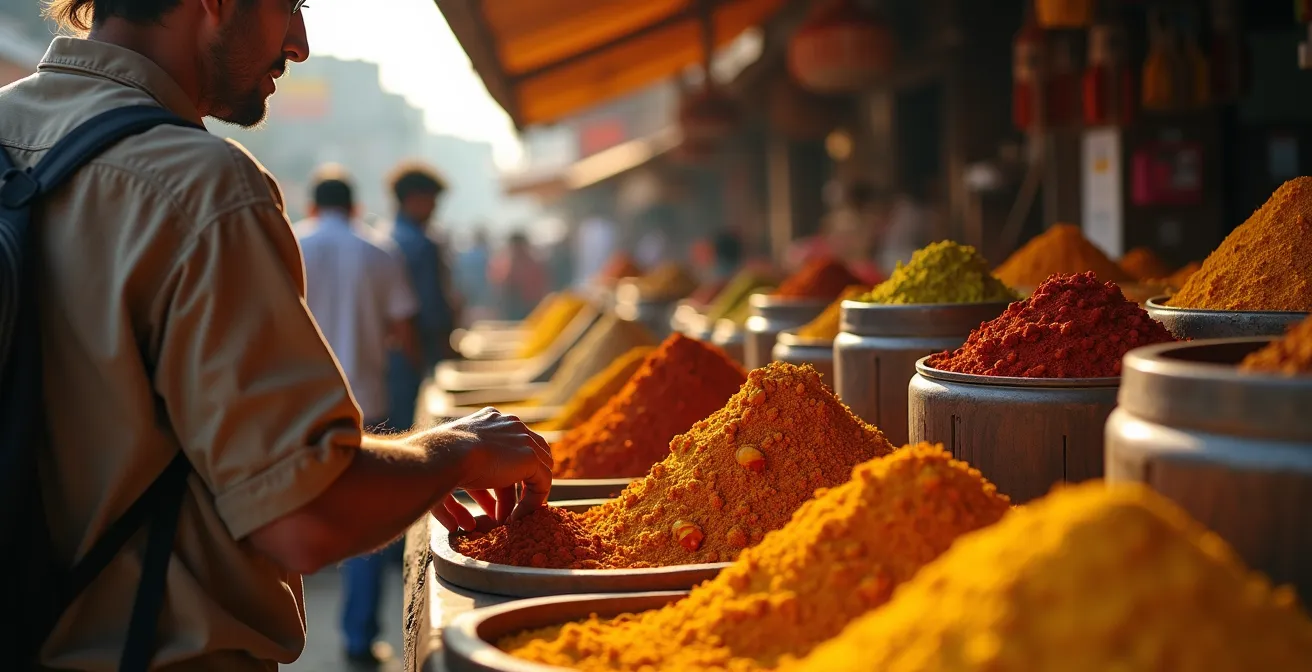
In summary:
- Trust your nose and touch over sight; vibrant color can be a sign of dangerous adulterants like lead.
- Always choose whole spices over ground to preserve their flavor and extend shelf life significantly.
- Understand customs regulations for your destination to avoid confiscation and hefty fines.
- Use a multi-layer packing system (foil, Ziploc, hard container) to prevent odor contamination in your luggage.
- Gain insider knowledge by taking a local cooking class early in your trip to identify the best vendors and prices.
The scent of a foreign market is a powerful memory—a heady mix of sizzling street food, fragrant flowers, and the unmistakable aroma of exotic spices. For any home cook, the temptation to capture that magic and bring it home is irresistible. You envision recreating that perfect curry or tagine, the authentic flavor transporting you back to your travels. The common advice is to buy what looks and smells good, and hope for the best at customs.
But this approach often leads to disappointment. That vibrant “saffron” bleeds red dye, the potent-smelling powder loses its punch within weeks, or worse, your entire suitcase ends up smelling like cumin. The true art of bringing spices home isn’t just about shopping; it’s a logistical exercise in preserving the very soul of the flavor. It requires adopting the mindset of a spice merchant, one who understands that a spice’s value lies in its volatile essential oils and unique sensory terroir.
But what if the key wasn’t just smelling the spice, but understanding the signs of its degradation? What if protecting its flavor was less about the bag it’s in and more about its form? This guide moves beyond simple tips to reveal a merchant’s secrets. We will explore how to verify quality, navigate the complex world of customs, and implement a packing strategy that ensures the logistical integrity of your precious cargo from the market stall to your home pantry.
This article provides a comprehensive framework for selecting, verifying, and transporting spices. You will learn to move beyond superficial appearances and assess the true quality of what you’re buying, ensuring your culinary souvenirs arrive home safe, legal, and bursting with authentic flavor.
Summary: A Merchant’s Guide to Buying and Transporting Spices
- Why Bright Color Doesn’t Always Mean High Quality in Spices?
- Whole Spices or Ground: Which Should You Buy for Souvenirs?
- The Customs Trap: Which Spices Are Confiscated at the Border?
- Why Freshly Roasted Spices Have Higher Medicinal Value?
- How to Pack Strong-Smelling Spices Without Ruining Your Clothes?
- The Pesticide Risk of Eating Out-of-Season Fruits Abroad
- How to Handle “Touts” Who Try to Drag You Into Shops?
- How to Choose a Cooking Class That Actually Teaches You Skills?
Why Bright Color Doesn’t Always Mean High Quality in Spices?
In the visual chaos of a bustling spice market, pyramids of vibrant powders are designed to catch your eye. Bright yellow turmeric, fiery red chili, and rich brown cinnamon seem to pulse with flavor. However, a seasoned merchant knows that a spice’s color can be its most deceptive quality. While fresh, high-quality spices do have a natural vibrancy, an unnaturally bright or uniform hue is often a major red flag for adulteration. Unscrupulous vendors may use industrial dyes, brick powder, or even harmful chemicals to enhance color and increase weight.
Lead chromate, for instance, is a toxic yellow pigment sometimes added to turmeric to give it a brilliant, uniform color that appeals to unsuspecting tourists. This practice is dangerously common in some regions. A UK Health Security Agency investigation traced a resident’s lead poisoning back to spices from Southeast Asia, where one coriander sample was found to contain 3,400mg of lead per kilogram—a staggering amount compared to the legal limit of 0.9mg/kg. This highlights the critical need to look beyond a pretty color.
Instead of relying on sight, engage your other senses. True quality is revealed through aroma and texture. Here’s how to perform your own sensory tests at the market:
- The Saffron Test: Place a single thread in a small cup of water. Real saffron will slowly release a golden, hay-like hue. Fakes, often dyed corn silk, will bleed a bright red or orange color almost instantly.
- The Turmeric Test: Rub a small pinch between your fingers or on your palm. Pure turmeric will leave a strong, bright yellow stain and feel slightly oily. Adulterated powders often feel gritty or chalky due to fillers.
- The Smell Test: Ask the vendor to grind a small piece of a whole spice if possible. The aroma should be potent, complex, and true to the spice. A faint, dusty, or “off” smell indicates old or poor-quality stock.
- Visual Inspection: Look for signs of sun damage. Spices that appear faded, dull, or dusty have likely been exposed to light and air for too long, degrading their volatile essential oils.
Whole Spices or Ground: Which Should You Buy for Souvenirs?
Once you’ve identified a quality vendor, you face a crucial decision: buy the convenient, ready-to-use ground powder or the more robust whole spice? From a merchant’s perspective, the answer is almost always the same: choose whole spices. A ground spice is like an uncorked bottle of wine; its aromatic soul begins to dissipate the moment it’s pulverized. The increased surface area exposes the delicate essential oils to oxygen, light, and heat, leading to rapid flavor loss through a process called oxidation.
Whole spices, on the other hand, are nature’s perfect storage containers. Their tough outer layers protect the precious oils inside, preserving their potency and complexity for years. A whole nutmeg, a stick of cinnamon, or a handful of cardamom pods are capsules of pure sensory terroir, waiting to be released at the exact moment you need them. While they require a bit more effort at home—a grinder or a mortar and pestle—the payoff in flavor is immeasurable.
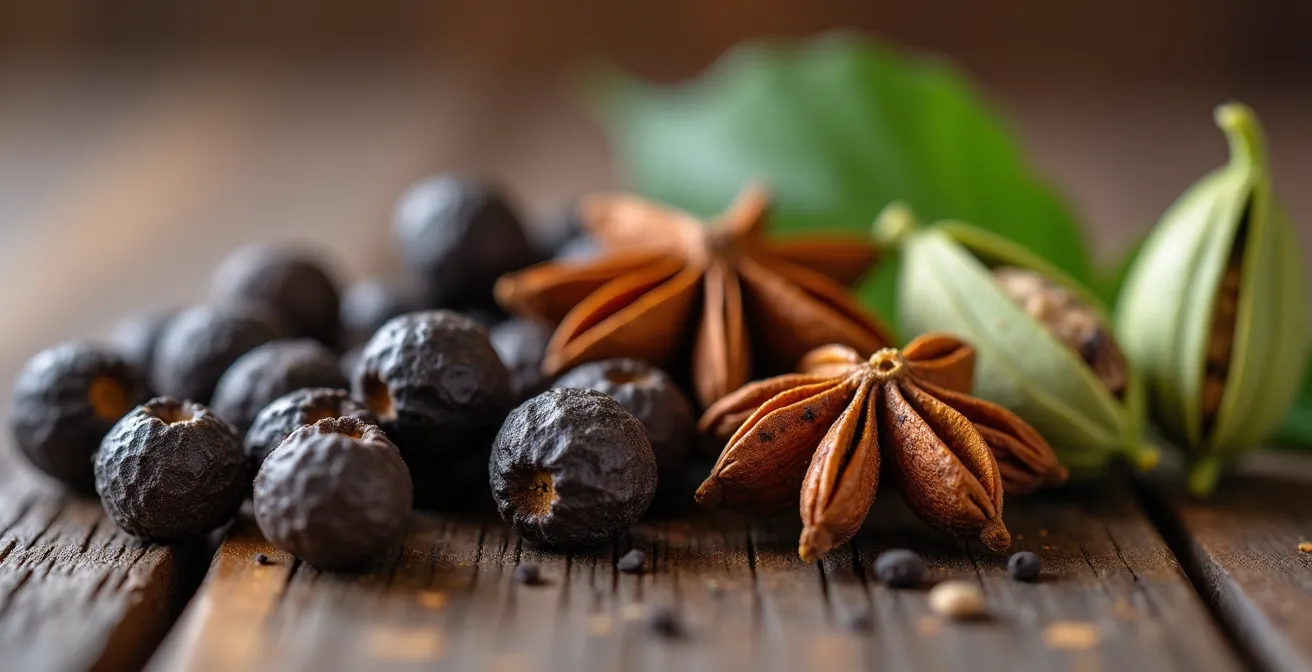
The tactile difference is also telling. As the image above illustrates, the wrinkled skin of a peppercorn or the woody ridges of star anise are testaments to their natural state. This durability also makes them far better for travel, as they are less prone to creating a fine, pervasive dust in your luggage. The following table breaks down the key differences for travelers:
| Aspect | Whole Spices | Ground Spices |
|---|---|---|
| Shelf Life | 2-3 years | 1-2 years |
| Flavor Retention | Essential oils sealed inside | Lose flavor fast due to oxidation |
| Grinding Requirements | Need grinder or mortar & pestle | Ready to use |
| Best For | Single spices, long-term storage | Complex blends, immediate use |
| Travel Considerations | More durable, less messy | Risk of leakage in luggage |
The Customs Trap: Which Spices Are Confiscated at the Border?
You’ve successfully sourced beautiful, aromatic whole spices and are ready to head home. Now comes the final logistical hurdle: customs. The fear of having your precious finds confiscated is real, but navigating the rules is simpler than you might think if you understand the logic behind them. Customs agencies aren’t trying to deprive you of flavor; their primary concern is protecting local agriculture from invasive pests and diseases.
For most countries, including the U.S., Canada, and the EU, dried, commercially packaged spices are generally admissible. This means spices that are fully cured and free of any plant matter that could sprout or harbor insects. The “customs trap” usually springs on travelers with items that are not fully processed. This includes:
- Fresh Leaves and Stems: Items like fresh curry leaves, kaffir lime leaves, or lemongrass stalks are often prohibited because they can carry pests. Opt for the dried versions instead.
- Whole Seeds for Planting: If a seed is capable of germination, it’s considered an agricultural product and is highly restricted. Spices intended for consumption (like cumin or coriander seeds) are usually fine, but be clear about their purpose if asked.
- Citrus Peels and Leaves: Many countries have strict regulations on all parts of citrus plants to prevent the spread of diseases like citrus greening. Dried, powdered citrus zest is typically allowed, but fresh peels may be confiscated.
- Meat-Based Products: Bouillon cubes or spice blends containing meat powder (like some from certain Asian countries) are often restricted. Check the ingredients list carefully.
The golden rule is to always declare your items. Ticking the “food” or “agricultural products” box on your customs form may lead to a brief secondary inspection, but it shows you’re being transparent. Failing to declare can be costly. For example, U.S. Customs and Border Protection notes that civil penalties for first-time offenders can be $300, quickly escalating for repeat violations. It’s a small administrative step to protect your investment and avoid a significant fine.
Why Freshly Roasted Spices Have Higher Medicinal Value?
Bringing whole spices home is only half the battle. The true magic, both in terms of flavor and potential health benefits, is unlocked just before you use them through a simple process: toasting. Toasting spices in a dry pan is a transformative step that does far more than just make your kitchen smell wonderful. From a chemical perspective, the application of gentle heat awakens the spice’s volatile soul, triggering a cascade of aromatic reactions.
Heat causes the natural oils trapped within the spice’s cellular walls to become more volatile and expressive, releasing a deeper, more complex, and nuttier aroma. This process, known as the Maillard reaction in the presence of proteins and sugars, creates new flavor compounds that simply don’t exist in the raw spice. This is why freshly toasted and ground cumin smells profoundly different—and more delicious—than the pre-ground powder from a jar.
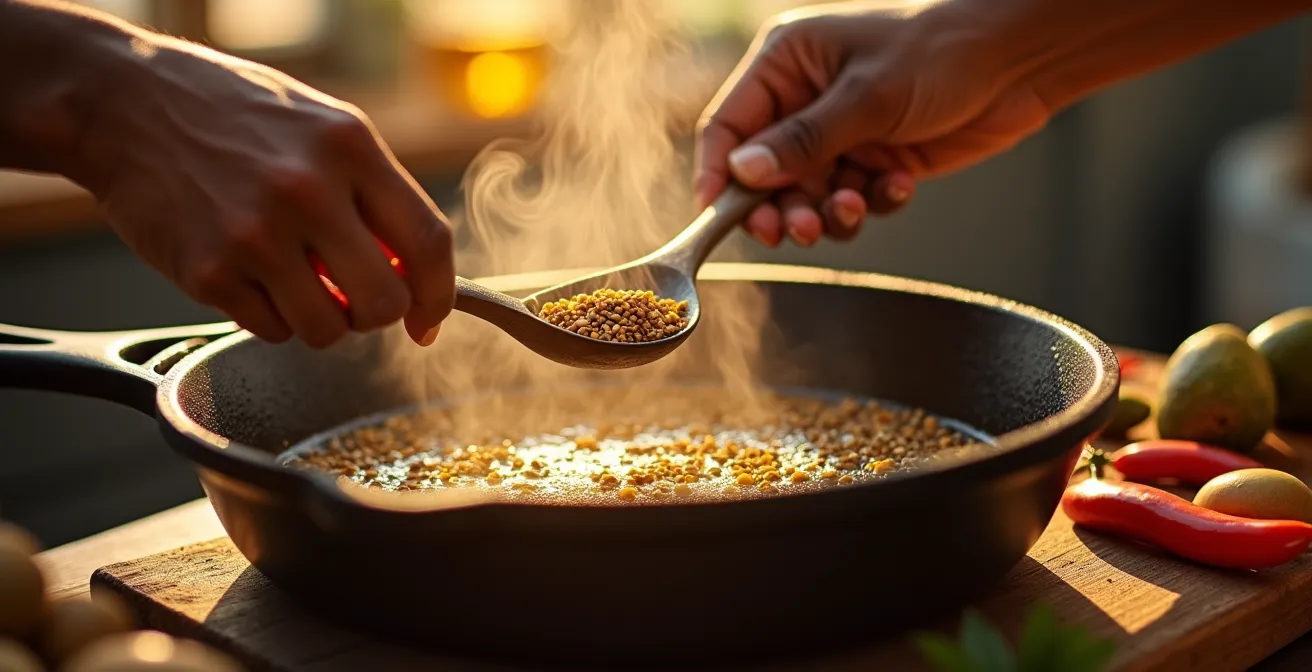
Furthermore, many of the beneficial compounds in spices, such as curcumin in turmeric or piperine in black pepper, are fat-soluble. Toasting, followed by “blooming” the spices in hot oil (a technique known as *tadka* or *tempering* in Indian cuisine), helps make these medicinal compounds more bioavailable, meaning your body can absorb and utilize them more effectively. The Santa Fe School of Cooking champions this technique, advising home cooks to buy whole spices and toast them just before grinding. Their method is simple: spread seeds in a dry skillet in a single layer over medium heat. As the heat releases their oils, you’ll notice a fragrant aroma and see the seeds darken, which both intensifies and enhances their flavor.
How to Pack Strong-Smelling Spices Without Ruining Your Clothes?
You’ve navigated the market and understand the customs rules. The final logistical challenge is ensuring your pungent treasures don’t create a case of aromatic contamination, turning your entire wardrobe into a potpourri of cardamom, cloves, and fenugreek. The key is a multi-layered, defense-in-depth strategy that contains odors and protects against spills. Think of it as building a Fort Knox for your spices.
A simple plastic bag is not enough. The fine, oily particles of ground spices and the powerful aromas of whole ones can easily permeate thin plastic. You need to create multiple barriers, each serving a specific purpose. This method ensures that even the most aggressive aromas are contained, and your clothes remain fresh. For powdered or finely ground spices, adding a small cotton ball or a folded paper towel inside the primary container can help absorb excess oils and prevent clumping.
Remember that powders can be subject to extra screening. The U.S. Transportation Security Administration (TSA) recommends that powders in quantities greater than 12 oz (350 ml) be placed in a separate bin for X-ray screening, so packing them in an accessible part of your carry-on can save time.
Your Action Plan: The Fort Knox Spice Packing Method
- Layer 1 (Primary Containment): Whenever possible, leave the spices in their original, sealed containers. If purchased loose, transfer them into small, screw-top containers or heavy-duty Ziploc-style bags.
- Layer 2 (Odor Barrier): Wrap each individual container or bag tightly in aluminum foil. Foil is an excellent and inexpensive odor barrier that contains volatile aromatic compounds.
- Layer 3 (Secondary Containment): Place all the foil-wrapped spices into a single, high-quality freezer-grade Ziploc bag. Squeeze out as much air as possible before sealing to minimize volume.
- Layer 4 (Crush-Proofing): Put the sealed Ziploc bag inside a hard-sided container, like a Tupperware box. This protects the spices from being crushed and can be repurposed for food storage on your trip.
- Liquids & Carry-On: Any liquid-based spice extracts (like vanilla) must adhere to the 3.4 oz (100 ml) rule and be packed in your TSA-approved liquids bag if in your carry-on luggage.
The Pesticide Risk of Eating Out-of-Season Fruits Abroad
While this article focuses on spices, the vendors who sell them often have stalls overflowing with a variety of other goods, including fresh and dried fruits. The quality of these surrounding products can be a powerful indicator of the vendor’s overall standards and can help you mitigate risks like pesticide exposure. The same logic that applies to out-of-season fruit—which may be grown with more chemical assistance—can be extended to the entire supply chain of a market vendor.
A vendor committed to quality will care about the sourcing of all their products. A stall with fresh, vibrant, seasonal produce alongside well-maintained spice racks suggests a professional who understands and respects their ingredients. Conversely, a stall with wilted herbs, dusty-looking spices, and out-of-season fruits that look suspiciously perfect might be cutting corners elsewhere, potentially in their sourcing or handling practices. This could mean a higher risk of pesticide residue or other contaminants.
Choosing the right vendor is your first line of defense. A popular, busy stall isn’t just a sign of good prices; it’s a testament to quality and freshness. High turnover means the spices are less likely to be old, dusty, and flavorless. Use this checklist to assess potential vendors:
- Look for High Turnover: A busy stall, especially one frequented by locals, is the best sign. The spice racks are likely replenished often, ensuring fresher offerings than in conventional stores.
- Assess Cleanliness: The stall should be clean and organized, even if it’s not flashy. This indicates professional pride and good hygiene standards.
- Ask About the Source: Don’t be shy. Ask the vendor where the spices come from and when they were harvested. A knowledgeable and passionate vendor will be happy to share this information.
- Consider Direct Sourcing: If your travels take you near spice-growing regions, try to buy directly from a farm or cooperative. This is the ultimate way to guarantee freshness and reduce the risk of contamination from long supply chains.
How to Handle “Touts” Who Try to Drag You Into Shops?
In many of the world’s most famous markets, the biggest challenge isn’t finding spices—it’s fending off the “touts.” These aggressive salespeople use a variety of tactics to lure tourists into their shops, often with promises of “the best quality” or “special prices.” While some are simply enthusiastic, many are running sophisticated scams that prey on a traveler’s lack of local knowledge. Handling them effectively requires a strategy of confident avoidance and informed skepticism.
Touts thrive on engagement. The moment you make eye contact, respond to a question, or accept a “free gift” like a cup of tea, you’ve opened the door to a high-pressure sales pitch. Their goal is to get you into the shop, where it becomes much harder to leave without buying something. Common scams include “saffron demonstrations” using fake, dyed threads or pushing “medicinal” spices with unverified health claims at inflated prices. The most dangerous scams involve selling spices adulterated with lead to enhance color and weight, a practice commonly found in imported herbs with reddish or brown coloring.
The best defense is to appear purposeful and knowledgeable. Touts are less likely to approach someone who looks like they know exactly where they’re going. Before you even enter the market, do your research. Organizations like the Centre for the Promotion of Imports from developing countries (CBI) offer detailed market information. You can learn about specific spices like cardamom or turmeric, which equips you with the knowledge to ask pointed questions and not fall for generic pitches. Your anti-tout strategy should include:
- Walk with Purpose: Keep your head up and walk at a steady pace. Confident body language is a powerful deterrent.
- Avoid Eye Contact: A polite but firm “no, thank you” without breaking your stride is usually sufficient. Do not stop or engage in conversation.
- Seek Out Busy Local Vendors: As mentioned before, the best vendors don’t need touts. Their quality and reputation attract a steady stream of local customers. Follow the locals.
- Ask Specific Questions: When you find a vendor you’re interested in, ask specific questions about origin, harvest date, or a spice’s specific varietal (e.g., “Is this Korintje or Ceylon cinnamon?”). This signals you are an informed buyer, not an easy target.
Key Takeaways
- True quality assessment is multi-sensory; never trust vibrant color alone as it can hide dangerous adulterants.
- Always prioritize whole spices over pre-ground powders to guarantee long-term freshness and protect the spice’s ‘volatile soul’.
- Proactive packing with a multi-layer system (foil, Ziploc, hard container) is non-negotiable to prevent odor contamination.
How to Choose a Cooking Class That Actually Teaches You Skills?
Perhaps the single most effective strategy for buying spices like a local is to first learn from one. A well-chosen cooking class, taken early in your trip, can be an invaluable form of reconnaissance. It’s more than just a fun meal; it’s an opportunity to gain insider knowledge that will transform your market shopping experience from a confusing ordeal into a targeted mission. The right class will arm you with the context, vocabulary, and confidence to buy the best.
Look for classes that explicitly include a market tour and shopping component. This is where the real learning happens. Walking through the market with a local chef, you’ll see firsthand which vendors they trust, how they assess the quality of ingredients, and how they negotiate. It’s a live demonstration of all the principles of sourcing authentic products. As one traveler noted in a review of a cooking class in Syracuse, the experience goes beyond the kitchen:
We met Maurizio at the Apollo Temple and walked through the food market. He shared his philosophy on cooking and we bought some fresh and seasonal food to prepare.
– Emily R., Syracuse Cooking Class Review
To get the most out of this experience, go prepared with a list of strategic questions. Your goal is to extract practical, actionable information that you can use when you return to the market on your own. Your chef-instructor is a temporary expert consultant—use their knowledge. Here are the key questions to ask:
- “Where do you personally buy your spices for your own home?”
- “Which vendor here has the highest quality [local specialty, e.g., saffron, vanilla]?”
- “What is a fair local price for 10 grams of this spice, so I know I’m not getting a tourist price?”
- “How do you store this spice at home to keep it fresh in this climate?”
- “Are there any common scams or fake spices I should watch out for in this particular market?”
Now, armed with the logistical mindset of a merchant, you are ready to transform your next trip. Go beyond simply buying a souvenir and instead curate a collection of authentic, vibrant flavors that will bring the soul of your travels into your kitchen for years to come.